e-learning platforms: What They Are and Which Ones Actually Work
When you think of e-learning platforms, digital systems designed to deliver education online through video, quizzes, assignments, and live sessions. Also known as online learning platforms, they’re the backbone of modern classrooms—from rural schools in India to corporate training centers in New York. They’re not just fancy video portals. A real e-learning platform gives structure: progress tracking, feedback loops, and tools that turn passive watching into active learning.
Some tools like Google Classroom, a free, simple system used by millions of teachers to assign work, grade submissions, and communicate with students are built for everyday use. Others, like online teaching platforms, specialized software that lets educators build, sell, and manage their own courses, are designed for professionals who want to turn teaching into a business. The difference? One helps a teacher manage 30 students. The other helps a coach reach 30,000.
But here’s the truth: most people don’t fail because the tech is bad. They fail because they pick the wrong platform for their goal. Want to prep for JEE? You need a platform with live doubt-solving and timed mocks. Want to learn coding basics? A simple video library with projects beats a fancy LMS with 50 features you’ll never use. And don’t confuse Google’s free tools—like Docs or YouTube—with full e-learning platforms. They’re helpers, not systems. Real platforms track your progress, adapt to your pace, and hold you accountable.
What you’ll find below isn’t a list of the "best" platforms. It’s a collection of real stories: how teachers picked tools that actually worked for their students, why some platforms failed despite big marketing, and which ones helped learners go from zero to job-ready in months. You’ll see how the same tool can be magic for one person and useless for another. No fluff. No hype. Just what happens when real people use e-learning platforms to get results.
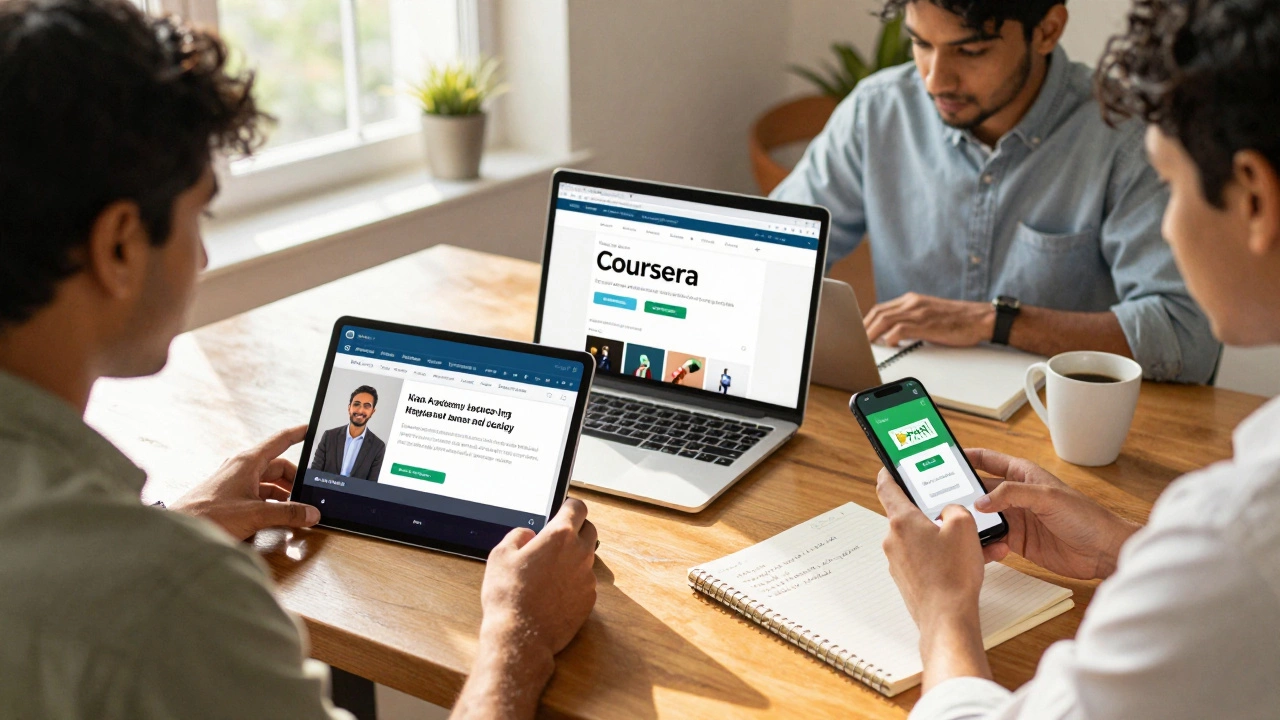
What Are the Most Used Online Learning Platforms in 2026?
Discover the most used online learning platforms in 2026 - Coursera, Udemy, edX, Khan Academy, and LinkedIn Learning. Learn which one fits your goals, whether you're seeking degrees, skills, or career growth.
Is Online Learning the Same as eLearning? The Real Difference Explained
Online learning and eLearning are often used interchangeably, but they're not the same. eLearning is structured, assessed, and designed for skill development. Online learning is any education delivered over the internet-free, flexible, but often unstructured.
What Are Digital Learning Platforms? A Simple Guide for Students and Professionals
Digital learning platforms are online systems that deliver courses, track progress, and connect learners anywhere. They power everything from school lessons to professional certifications - and anyone can use them.

Coursera Monthly Cost: Real Pricing, Plans, and Tips for 2025
Explore how much Coursera costs each month in 2025, including subscriptions, individual courses, tips to save, and key facts you need before paying for online learning.

Virtual vs eLearning: Are They Really the Same Thing?
Confused about the difference between virtual learning and eLearning? This article breaks down what sets these two apart, where they overlap, and how you can pick the right one for your needs. It highlights real-life examples, covers the must-know facts, and shares tips to help you get more out of digital education. If you’re wondering what each term really means and why it matters, you’re in the right place. Spoiler: they’re not exactly the same, and knowing the difference can save you time and frustratio

Exploring the Dominant E-Learning Platforms for Online Classes
The world of online classes has witnessed tremendous growth, with diverse platforms catering to the educational needs of learners worldwide. From interactive tools to comprehensive course offerings, these platforms have revolutionized education by making it more accessible and flexible. As digital learning continues to evolve, understanding the most popular platform can help educators and students make informed choices for a better learning experience.