
Problem Breakdown Calculator
How It Works
This tool helps you think like a real developer by breaking projects into concrete steps. Start with what you want to build (e.g., "calculator" or "to-do list"), and we'll guide you through defining:
- Input - What information will your program receive?
- Output - What will it produce?
- Steps - What intermediate actions connect input to output?
Thousands start coding every month. Many quit before they write their first working program. Why? It’s not because they’re not smart. It’s not because coding is too hard. It’s because they’re following the wrong path - and no one tells them until it’s too late.
You’re learning syntax, not problem-solving
Most beginners think coding is about memorizing keywords like for, if, or return. They watch videos where someone types fast and gets a result. They copy it. Then they try it themselves - and nothing works. They feel stuck. But the real issue isn’t the code. It’s that they never learned how to break down a problem.
Imagine trying to build a shelf without knowing how to measure, cut, or nail. You’d buy all the tools, watch ten YouTube tutorials, and still end up with a wobbly mess. Coding is the same. You can memorize every Python function, but if you can’t figure out how to turn “I want a calculator” into steps a computer can follow, you’ll hit a wall. Real coding starts with asking: What’s the input? What’s the output? What happens in between?
You’re learning alone, without feedback
Learning coding in isolation is like practicing basketball in your garage with no one to tell you your form is wrong. You might shoot 100 baskets a day, but if your elbow is bent the wrong way, you’ll never improve. Most people rely on free tutorials that don’t correct their mistakes. They write code that runs - but it’s messy, inefficient, or just plain broken in ways they can’t see.
Code that runs doesn’t mean it’s good. A beginner might write a program that adds two numbers using 20 lines of code when it could be done in two. They think they’re done. But without someone reviewing it, they never learn cleaner ways. That’s why people get stuck for months. They don’t know what “good code” looks like. They think they’re learning - but they’re just repeating the same errors.
You’re switching languages every week
“Should I learn Python or JavaScript?” “Is Java better for jobs?” “I heard Rust is the future.” These questions sound smart. But they’re distractions. People jump between languages every few weeks, thinking each one is the “right” one. They spend more time researching tools than writing code.
Python and JavaScript are both fine for beginners. Neither is magic. The difference between them matters less than the fact that you’re practicing consistently. Switching languages doesn’t make you better - it just resets your progress. You end up knowing a little bit of ten languages, but nothing deeply. You can’t build anything real because you never finish anything.
You’re waiting for perfection
Many people think they need to understand every concept before they start building. They want to master variables, loops, functions, objects, APIs, databases - all before writing a single program that does something useful. That’s like refusing to drive until you’ve read every page of the car manual. You’ll never get behind the wheel.
Real learning happens by doing. Build a to-do list app. Make a calculator. Create a simple game. Even if it’s ugly. Even if it crashes. You’ll learn more from one broken app than from ten hours of theory. The best coders aren’t the ones who understood everything first. They’re the ones who built something, broke it, fixed it, and kept going.
You’re comparing yourself to others
Scroll through social media and you’ll see people posting: “Built a full-stack app in 30 days!” “Got a coding job after 6 weeks!” “Self-taught at 16!” It’s inspiring - until you realize these posts are highlights, not the full story. Most people don’t show the 3 months of frustration before the win. They don’t show the failed projects, the sleepless nights, the times they cried over a missing semicolon.
Comparing your behind-the-scenes to someone else’s highlight reel kills motivation. You start thinking: “I’m too slow.” “I’m not cut out for this.” But speed doesn’t matter. Consistency does. One hour a day, five days a week, for six months will beat someone who crams for 40 hours in one week and quits.
You’re not solving real problems
Most beginner exercises are pointless. “Print numbers 1 to 100.” “Reverse a string.” “Find the largest number in an array.” These feel like busywork. They don’t connect to anything real. So you lose interest.
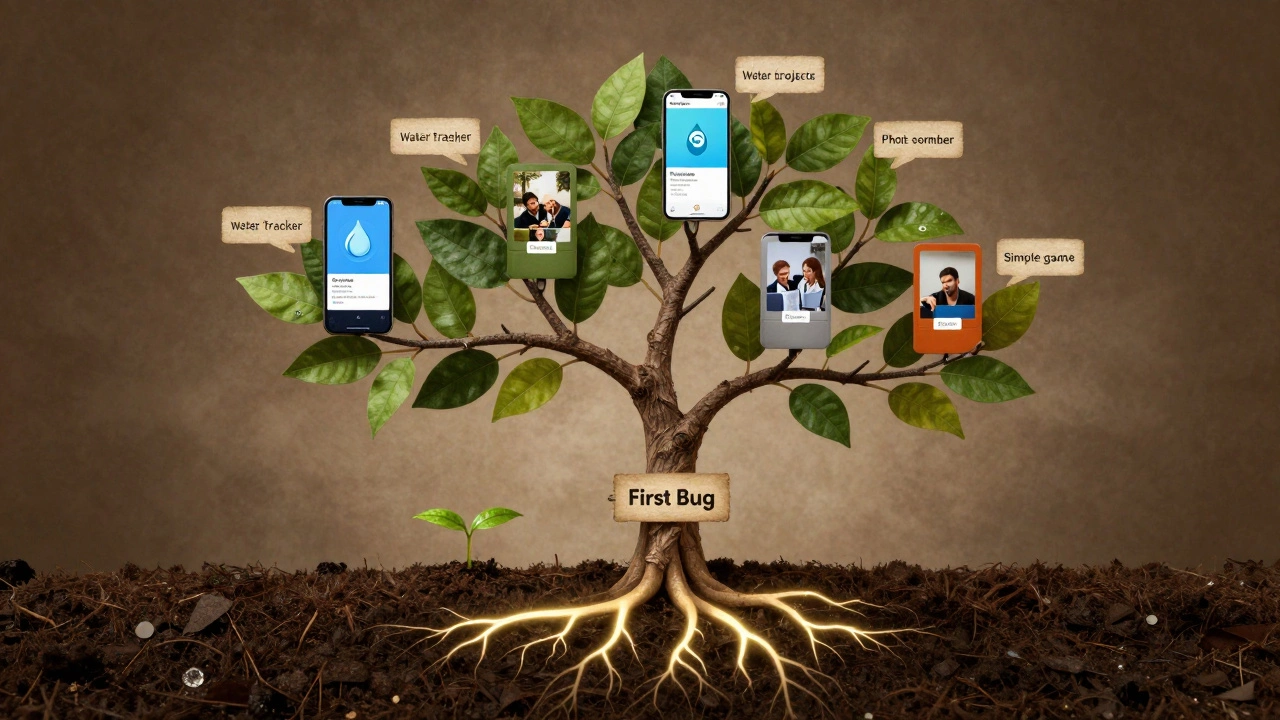
Code becomes meaningful when it solves something you care about. Want to track your daily water intake? Build a simple app. Hate organizing your photos? Write a script that sorts them by date. Curious how often your favorite YouTube creator posts? Scrape the page (legally) and count. When your code solves a problem you actually have, you’ll stick with it. You’ll fix bugs because you want the app to work - not because an instructor told you to.
You’re ignoring debugging
Debugging isn’t a side skill. It’s the core of coding. Yet most beginners treat errors like failures. They panic when they see “SyntaxError” or “undefined variable.” They copy-paste the error into Google, find a random Stack Overflow answer, and hope it fixes everything - without understanding why.
Good coders live in the error messages. They read them. They test small parts of their code. They use print statements to see what’s happening inside. They don’t fear bugs - they expect them. Every error is a clue. If you learn to read errors like a detective, you’ll stop feeling helpless. You’ll start feeling in control.
You’re not building a habit
Coding isn’t a subject you study. It’s a skill you practice. Like playing guitar or cooking. You don’t become good by reading about it. You become good by doing it - again and again.
People fail because they treat coding like a class with a start and end date. They enroll in a course. They do the assignments. Then they stop. No more practice. No more projects. Two months later, they can’t remember how to write a loop.
Success comes from showing up, even for 20 minutes. Write one line of code today. Fix one bug tomorrow. Build one small thing next week. Momentum matters more than intensity. One hour a week for a year beats 40 hours in one week and then nothing.
You think it’s about talent
Some people believe you’re born with a “coding brain.” That if you didn’t ace math in school, you’re out of luck. That’s false. Coding isn’t about math skills. It’s about patience, curiosity, and persistence. The people who succeed aren’t the fastest typists or the smartest. They’re the ones who keep going after the third failure.
There’s no secret formula. No magic trick. Just time, practice, and the willingness to be bad at first. If you’re willing to sit with confusion for 30 minutes, to try again after a crash, to ask for help when you’re stuck - you already have what it takes.
Is it too late to learn coding if I’m older?
No. Many successful coders started in their 30s, 40s, or even 50s. Age doesn’t matter. What matters is how much time you put in. The brain learns new skills at any age - it just needs consistent practice. People who start later often bring valuable life experience that helps them solve problems more creatively.
Do I need a computer science degree to get a coding job?
No. Most entry-level coding jobs today don’t require a degree. Companies care more about what you can build than where you studied. A portfolio of real projects - even small ones - speaks louder than a diploma. Many self-taught developers landed jobs by contributing to open-source projects or building apps that solved real problems.
Which programming language should I start with?
Start with Python if you want to build apps, analyze data, or automate tasks. Start with JavaScript if you want to make websites interactive. Both are beginner-friendly and widely used. Don’t overthink it. Pick one, stick with it for at least three months, and build something real. Switching languages early won’t help you learn faster.
Why do I understand tutorials but can’t code on my own?
Watching someone code is passive. Doing it yourself is active. It’s like watching a chef cook - you think you know how to make pasta until you try it yourself. The gap between understanding and doing is normal. To close it, pause every tutorial and try to rebuild what you just saw - without looking. Even if you get stuck, you’ll learn more than if you just kept watching.
How long does it take to get good at coding?
You’ll be able to build simple projects in 3-6 months with consistent practice. Becoming confident enough to apply for jobs takes 6-12 months. But “good” isn’t a finish line. Even experienced developers keep learning. The goal isn’t to master everything - it’s to keep building, keep fixing, and keep improving one small step at a time.