
Coding Career Path Finder
What excites you most about technology?
Select the option that resonates with you most
You don’t need a computer science degree to realize that code is everywhere. It runs your banking app, recommends your next Netflix show, and controls the lights in your smart home. But if you are looking at coding classes or wondering if learning to program is worth the effort, the real question isn't "Is it hard?" It's "What can I actually do with this skill?" The short answer: almost anything.
The misconception that coding is only for introverted engineers sitting in dark rooms is outdated. Today, coding is a tool used by marketers, artists, scientists, and even chefs. Understanding which jobs use coding helps you map out a career path that fits your interests, not just the tech industry's needs.
The Core Builders: Software Engineering Roles
When people talk about coding jobs, they usually mean these roles first. These are the positions where writing code is the primary daily activity. If you love solving logic puzzles and building things from scratch, this is where you start.
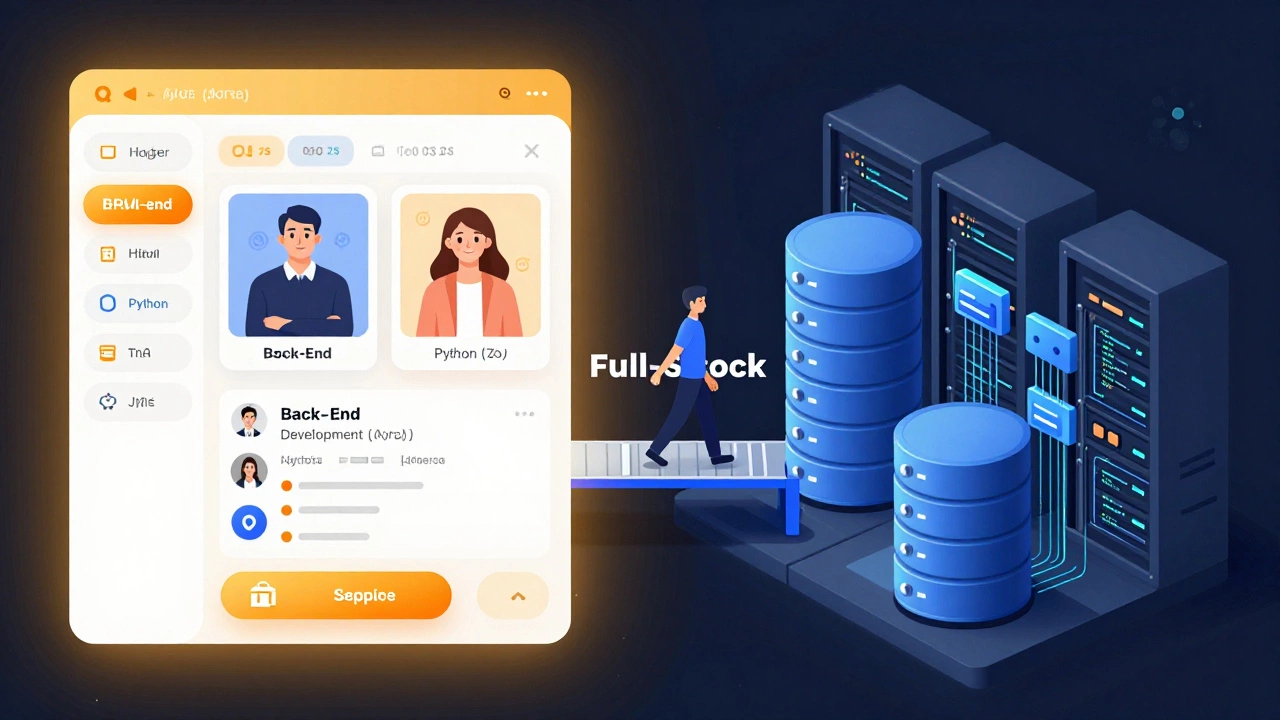
On the other hand, Back-End Developer is a specialist who manages the server side of applications, handling databases, application logic, and servers. While front-end developers worry about colors and animations, back-end developers worry about security, speed, and data storage. They often work with Python, Java, Ruby, or Go.
Then there is the Full-Stack Developer is a versatile engineer capable of working on both front-end and back-end systems. This role requires a broad knowledge base and is highly valued by startups that need one person to handle multiple aspects of product development.
Beyond Web Development: Data and Artificial Intelligence
If you enjoy patterns, statistics, and making sense of chaos, the data sector offers some of the highest-paying coding jobs available today. Here, code is used not to build user interfaces, but to extract insights from massive amounts of information.
- Data Scientist: Uses Python or R to analyze complex datasets, build predictive models, and help companies make strategic decisions. They combine coding skills with statistical knowledge.
- Machine Learning Engineer: Focuses specifically on creating algorithms that allow computers to learn from data. This role powers features like facial recognition and spam filters.
- Data Analyst: Often uses SQL (Structured Query Language) to query databases and create reports. While less intensive than data science, it still requires strong coding fundamentals to manipulate large datasets efficiently.
The demand for these roles has skyrocketed because businesses no longer rely on gut feelings; they rely on data-driven evidence. Knowing how to code allows you to automate analysis tasks that would take weeks manually.
Security and Infrastructure: The Guardians
Not all coding jobs involve building new products. Some focus entirely on protecting existing ones. As cyber threats become more sophisticated, the need for skilled professionals who understand code well enough to break it-or fix it-is critical.
A Cybersecurity Analyst is a professional who protects an organization's computer networks and systems from cyberattacks. They write scripts to monitor network traffic, identify vulnerabilities, and patch security holes before hackers can exploit them. Knowledge of networking protocols and scripting languages like Bash or Python is essential.
Similarly, a DevOps Engineer is a specialist who bridges the gap between software development and IT operations. They use coding to automate deployment processes, ensuring that new code updates reach users quickly and without errors. Tools like Docker, Kubernetes, and Terraform are central to their workflow.
Creative and Niche Applications of Code
This is where the story gets interesting. You don't have to be a traditional engineer to benefit from coding skills. Many creative fields now integrate programming to enhance productivity and innovation.
- Digital Marketing Specialist: Modern marketers use JavaScript to track user behavior, Python to scrape competitor data, and HTML/CSS to customize landing pages without waiting for developers. Understanding basic code gives marketers independence and deeper insight into campaign performance.
- Game Developer: Combines artistic vision with technical skill using engines like Unity (C#) or Unreal Engine (C++). This role requires understanding physics simulations, graphics rendering, and interactive storytelling through code.
- FinTech Analyst: In finance, coders build algorithmic trading bots, risk assessment models, and blockchain applications. Languages like C++ and Python dominate this space due to their speed and precision.
- Biotech Researcher: Scientists use bioinformatics tools written in Python or Perl to analyze genetic sequences and model protein structures. Coding accelerates medical discoveries significantly.
Comparison of Popular Coding Career Paths
| Job Title | Primary Languages | Key Skills Required | Typical Industry |
|---|---|---|---|
| Front-End Developer | JavaScript, HTML, CSS | UI/UX Design, Responsive Layouts | Web Agencies, Tech Companies |
| Back-End Developer | Python, Java, Node.js | Database Management, API Design | Enterprise Software, SaaS |
| Data Scientist | Python, R, SQL | Statistics, Machine Learning | Finance, Healthcare, Retail |
| Cybersecurity Analyst | Bash, Python, C | Network Security, Ethical Hacking | Government, Banking, Defense |
| DevOps Engineer | Go, Python, Shell Scripting | Cloud Computing, Automation | Tech Startups, Cloud Providers |

How to Choose Your Path
With so many options, how do you decide which job suits you? Start by identifying what kind of problems excite you.
If you get satisfaction from seeing immediate visual results, try front-end development. Build a simple website and see if tweaking CSS brings you joy. If you prefer logical structures and hidden mechanics, explore back-end or data science. Try analyzing a dataset using Excel first, then move to Python pandas library to see if the complexity intrigues rather than frustrates you.
Consider taking introductory coding classes that cover multiple languages. Many online platforms offer free tiers where you can test-drive different environments. Don't commit to a single path until you've spent at least twenty hours practicing each type of coding.
Steps to Validate Your Interest
- Pick two distinct roles from the list above.
- Find a beginner tutorial for each (e.g., "Build a To-Do List App" for web dev, "Analyze Titanic Dataset" for data science).
- Spend ten hours on each project.
- Reflect: Which process felt less like work and more like play?
- Research salary expectations and job availability in your local area for those specific roles.
Future-Proofing Your Career
The tech landscape changes rapidly. Frameworks come and go, but core programming concepts remain stable. Focus on learning problem-solving methodologies rather than memorizing syntax. Employers value candidates who can adapt to new technologies over those who only know one specific tool.
Additionally, soft skills matter immensely. Communication, teamwork, and business acumen differentiate senior developers from junior ones. Being able to explain technical constraints to non-technical stakeholders is a superpower in any coding-related job.
Do I need a degree to get a coding job?
No, many companies prioritize practical skills and portfolio projects over formal education. Bootcamps, self-study, and open-source contributions can demonstrate competence effectively. However, some large enterprises may still require degrees for visa sponsorship purposes.
Which programming language should I learn first?
Python is widely recommended for beginners due to its readable syntax and versatility across web development, data science, and automation. JavaScript is ideal if you want to build interactive websites immediately. Choose based on your career goals rather than popularity alone.
Are coding jobs safe from AI replacement?
While AI assists with code generation, human oversight remains crucial for architecture design, ethical considerations, and complex problem-solving. Developers who leverage AI tools will thrive, while those refusing to adapt may face challenges. The role shifts from writing every line to reviewing and integrating generated code.
Can I switch to a coding career mid-life?
Absolutely. Many successful developers transitioned from unrelated fields like teaching, nursing, or sales. Transferable skills such as project management, communication, and domain expertise add unique value to tech teams. Age diversity strengthens team perspectives.
What is the average salary for coding jobs?
Salaries vary significantly by location, experience, and specialization. Entry-level positions typically range from $60,000 to $90,000 annually in major US cities, while senior roles often exceed $150,000. Remote work opportunities also expand access to global compensation standards.