
English Fluency Time Estimator
Your Roadmap
Total Guided Hours Needed:
Estimated Time to Reach Goal:
You know the feeling. You’re in a meeting, or maybe just ordering coffee, and the words you want to say get stuck somewhere between your brain and your mouth. You know the concept, but the English expression eludes you. It’s frustrating. Most people think the solution is memorizing more dictionary definitions or drilling complex grammar rules until their eyes glaze over. That approach rarely works because it treats language like a math problem instead of a skill.
Improving your English isn’t about studying harder; it’s about studying smarter. The secret lies in balancing input (what you hear and read) with output (what you speak and write). If you only study grammar books, you’ll understand the theory but freeze in conversation. If you only watch movies without structure, you’ll pick up slang but struggle with clarity. To actually improve, you need a targeted mix of specific skills. Here is exactly what you should focus on to break through that plateau.
Mastering the Sounds: Pronunciation and Intonation
Before you worry about perfect grammar, you need to worry about being understood. Many learners spend years studying vocabulary but neglect Pronunciation, which is the way sounds are produced in speech. In English, this goes beyond just saying individual letters correctly. It’s about rhythm, stress, and flow.
English is a stress-timed language. This means the stressed syllables in a sentence happen at regular intervals, while the unstressed parts are squashed together. If you pronounce every word with equal weight, you sound robotic and hard to follow. For example, in the phrase "I want to go home," a native speaker often says "I wanna go home." The "want to" blends into a single sound. Ignoring these reductions makes you sound formal and distant, even if your grammar is perfect.
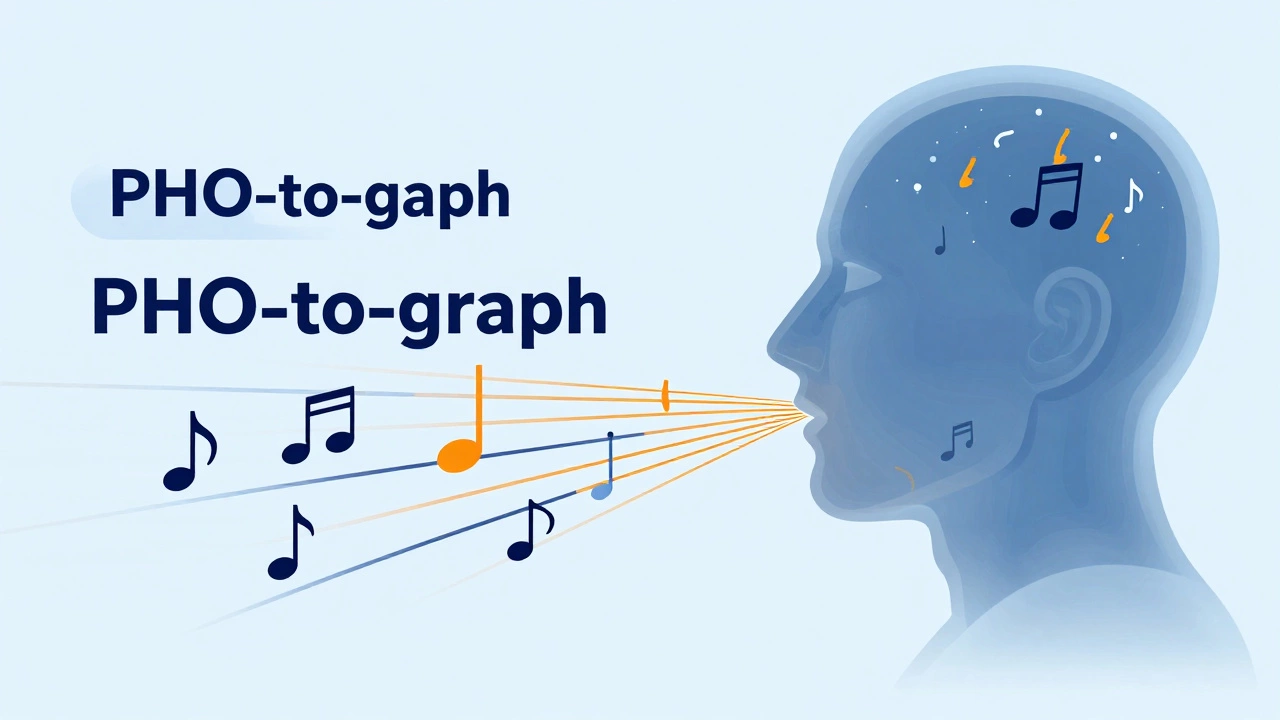
- Focus on Word Stress: Learn which syllable is emphasized in multi-syllable words. "PHO-to-graph" vs. "pho-TOG-ra-pher." Getting this wrong can change the meaning or make the word unrecognizable.
- Practice Connected Speech: Listen to how words link together. "Check it out" often sounds like "check-i-tout." Practice linking the end of one word to the start of the next.
- Shadowing Technique: Listen to a short audio clip of a native speaker and repeat it immediately after them, mimicking their speed, pause, and emotion. This builds muscle memory in your mouth.
Don’t aim for a British or American accent unless you specifically want one. Aim for clarity. Your goal is intelligibility, not imitation. When you focus on intonation-the rise and fall of your voice-you convey attitude and question forms naturally, rather than relying solely on word order.
Building Functional Vocabulary Over Random Words
A common mistake is trying to learn obscure words like "ubiquitous" or "ephemeral" before mastering high-frequency verbs. You don’t need to know the name of every bird species to talk about nature. You need to know how to describe what the bird is doing.
Focus on Collocations, which are words that naturally go together. Native speakers don’t think "make" + "a decision." They think "make a decision" as a single unit. Learning words in isolation leads to awkward phrasing like "do a decision" or "strong rain" (instead of "heavy rain").
| Incorrect/Awkward | Natural/Native-like | Context Note |
|---|---|---|
| Do a mistake | Make a mistake | Use 'make' for creation/errors, 'do' for actions/tasks. |
| Strong rain | Heavy rain | Rain has weight/volume, not physical strength. |
| Big lunch | Large lunch / Big meal | 'Big' is vague; 'large' fits quantity better. |
| Fast food eating | Eating fast food | Gerund placement matters for natural flow. |
Prioritize the top 1,000 most frequent words in English. These cover roughly 85% of daily conversation. Once you have those down, expand into topic-specific vocabulary relevant to your job or hobbies. If you’re an engineer, learn terms like "debug," "deploy," and "latency." If you’re a parent, focus on phrases like "time to clean up" or "brush your teeth." Contextual vocabulary sticks better than random lists.
Grammar for Communication, Not Perfection
Let’s be honest: no native speaker uses perfect grammar all the time. We drop subjects in casual chat ("Went to the store") and mix tenses when telling exciting stories. However, there are core structures that, if broken, cause confusion. You should study grammar as a tool for clarity, not a set of rigid laws.
Focus on these three pillars first:
- Tense Consistency: Understand the difference between past simple ("I went") and present perfect ("I have gone"). This distinction is crucial in English but doesn’t exist in many other languages. It tells the listener whether the action is finished or still relevant now.
- Articles (A/An/The): This is notoriously difficult. A simple rule of thumb: use "the" when both you and the listener know which specific thing you mean. Use "a/an" when introducing something new. Don’t obsess over every article error, but try to get the logic right.
- Sentence Structure (SVO): Subject-Verb-Object. Keep your sentences structured this way initially. As you improve, you can add complexity with clauses and conjunctions.
Instead of reading grammar textbooks cover-to-cover, use "grammar in context." Read a news article, highlight the verb tenses used, and ask yourself why they chose that tense. Did they use past continuous to set a scene? Did they use future perfect to predict a deadline? Active analysis beats passive memorization.
Active Listening: Training Your Ear
You cannot produce sounds you haven’t heard clearly. Many learners struggle because they listen passively-having English TV on in the background while scrolling through their phone. This doesn’t count. You need active listening.
Start with content that matches your level. If you’re a beginner, children’s stories or slow-news podcasts are gold mines. They use clear articulation and simpler vocabulary. As you progress, move to native-level content like TED Talks, YouTube vlogs, or industry-specific webinars.
Try the "Dictation Method." Find a one-minute audio clip. Listen to it once. Write down everything you hear. Listen again and fill in the gaps. Then, check the transcript. You will likely find you missed small words like "in," "on," or "that" because your ear wasn’t trained to catch them in connected speech. This exercise bridges the gap between hearing noise and understanding language.
Speaking Without Fear: The Output Loop
This is where most people quit. They wait until they feel "ready" to speak. You will never feel ready. You must speak to improve. The fear of making mistakes is the biggest barrier to fluency.
Create low-stakes environments to practice. Talk to yourself. Narrate your day. "I am making coffee. The water is boiling. I need a spoon." It feels silly, but it forces your brain to retrieve vocabulary quickly without the pressure of a listener judging you.
If you can afford it, hire a tutor for conversation practice, not lesson teaching. Tell them, "I don’t want you to correct every mistake. Just help me express my idea." Alternatively, join online language exchange communities. Apps like HelloTalk or Tandem connect you with native speakers who want to learn your language. It’s a fair trade: you help them with your native tongue, they help you with English.
Record yourself speaking on your phone. Listen to it. You will cringe, but you’ll also spot patterns. Do you always say "um" before starting a sentence? Do you rush when you’re nervous? Awareness is the first step to correction.

Reading for Flow and Context
Reading reinforces everything else. It shows you how words fit together in sentences and paragraphs. But don’t just read textbooks. Read what interests you. If you love cooking, read recipes and food blogs. If you love tech, read gadget reviews.
Use the "Five-Finger Rule" to choose books. Open a page and read it. Put up one finger for every word you don’t know. If you hit five fingers, the book is too hard. It’s okay to use easier materials. Graded readers are excellent for this-they adapt classic stories or original plots to specific proficiency levels (A1, B2, C1, etc.).
When you encounter a new word, don’t immediately look it up. Try to guess the meaning from the context. Only check the dictionary if the word appears repeatedly or blocks your understanding of the main point. This trains your brain to deduce meaning, a critical skill for real-world conversations where you can’t pause and ask for definitions.
Creating a Sustainable Routine
Consistency beats intensity. Studying for ten minutes every day is far more effective than cramming for five hours once a week. Language acquisition is a marathon, not a sprint. Your brain needs sleep to consolidate new neural connections. If you study intensely and then take three days off, you lose most of the gain.
Integrate English into your existing habits. Change your phone’s language setting to English. Follow English-speaking influencers on social media. Listen to an English podcast during your commute. Make English a part of your life, not a separate chore.
Track your progress not by test scores, but by milestones. Can you understand a joke without explanation? Can you order food confidently? Can you explain your job to a stranger? These are the real metrics of improvement. Celebrate small wins. Every time you successfully communicate a complex idea, you’ve won.
How long does it take to become fluent in English?
There is no fixed timeline, as it depends on your native language, previous exposure, and study intensity. However, the Common European Framework of Reference for Languages (CEFR) suggests it takes approximately 600-800 guided learning hours to reach an upper-intermediate (B2) level from scratch. With consistent daily practice (30-60 minutes), this could take 1.5 to 2 years. Fluency is a spectrum, not a destination, so you will continue improving indefinitely.
Is it better to learn British or American English?
It doesn’t matter significantly for global communication. Both variants are mutually intelligible. Choose based on your personal preference, career goals, or where you plan to live/work. Mixing them slightly is common and usually harmless. Avoid switching accents mid-sentence, as that can be distracting. Stick to one variety for consistency in spelling and pronunciation resources.
Can I improve my English without a teacher?
Yes, absolutely. Many self-taught learners achieve high proficiency using apps, podcasts, YouTube channels, and language exchange partners. However, a teacher provides valuable feedback on errors you can’t detect yourself, such as subtle pronunciation issues or grammatical fossilization. If you self-study, ensure you have some form of external feedback mechanism, like recording yourself or using AI tools for correction.
What is the best app for learning English vocabulary?
Apps like Anki or Quizlet use spaced repetition systems (SRS), which are scientifically proven to enhance long-term memory retention. Instead of traditional flashcards, SRS algorithms show you words just before you’re likely to forget them. Combine this with context-based learning (using sentences, not isolated words) for maximum effectiveness. Duolingo is good for gamified basics, but Anki is superior for serious vocabulary building.
Why do I understand English well but can’t speak it?
This is known as the "passive-active gap." You have built a large receptive vocabulary (input) but lack productive vocabulary (output). Speaking requires rapid retrieval of words and structures under pressure. To fix this, you must increase your output activities: shadowing, talking to yourself, journaling, and engaging in conversations. Force your brain to retrieve words actively rather than just recognizing them passively.