
E-Learning Completion Rate Calculator
How Group Accountability Improves Completion Rates
Research shows that isolation is the biggest reason people drop out of online courses. The Khoj platform in India found that when learners worked in small groups with structured accountability, completion rates jumped from 22% to 61%.
How This Calculator Works
Based on the University of Sydney study and Khoj platform data, this tool estimates how much your course completion rate could improve with different accountability structures. Enter your current completion rate and see the potential impact.
Your Estimated Completion Rate
With your current setup, your completion rate is 22%. But with structured accountability, it could reach 61%.
What this means: This is based on the Khoj platform's research showing a 3.5x improvement in completion rates with structured group accountability.
Your Action Plan
To achieve these results, implement these 3 key strategies:
- Group learners into teams of 3-4 people
- Require weekly 15-minute check-ins
- Use written feedback instead of multiple-choice quizzes
Think about the last time you tried to finish an online course. Maybe it was a certificate program you signed up for, or a free class on productivity you thought would change your life. You started strong. You watched the first few videos. You took notes. Then life happened. Work got busy. Kids needed help. Your phone buzzed. And suddenly, three weeks later, you realized you hadn’t logged in since day two. You weren’t lazy. You weren’t unmotivated. You just… lost track. And you’re not alone.
Isolation Is the Real Killer
The biggest problem with e-learning isn’t bad video quality, slow loading times, or confusing interfaces. It’s isolation. People drop out of online courses not because the content is hard - but because they feel completely alone while trying to learn it.
Compare that to a traditional classroom. You raise your hand. Someone else asks the same question. The teacher nods. You feel seen. You’re part of a group. There’s accountability. In e-learning, none of that exists by default. You’re staring at a screen, typing answers into a quiz, and wondering if anyone even knows you’re there.
A 2024 study from the University of Sydney tracked over 12,000 learners using major platforms like Coursera, Udemy, and local Indian platforms like Unacademy. The dropout rate after the first module? 78%. The main reason cited? "I didn’t feel connected to anyone." Not the course. Not the instructor. Not even the other students.
Why Interaction Doesn’t Happen by Accident
Most e-learning platforms assume that if you give someone videos, quizzes, and a discussion forum, interaction will follow. It doesn’t. Forums are ghost towns. Comments get buried. Peer reviews go ignored. Even live webinars often feel like one-way broadcasts - no real back-and-forth, just a Q&A at the end that 3% of people bother to use.
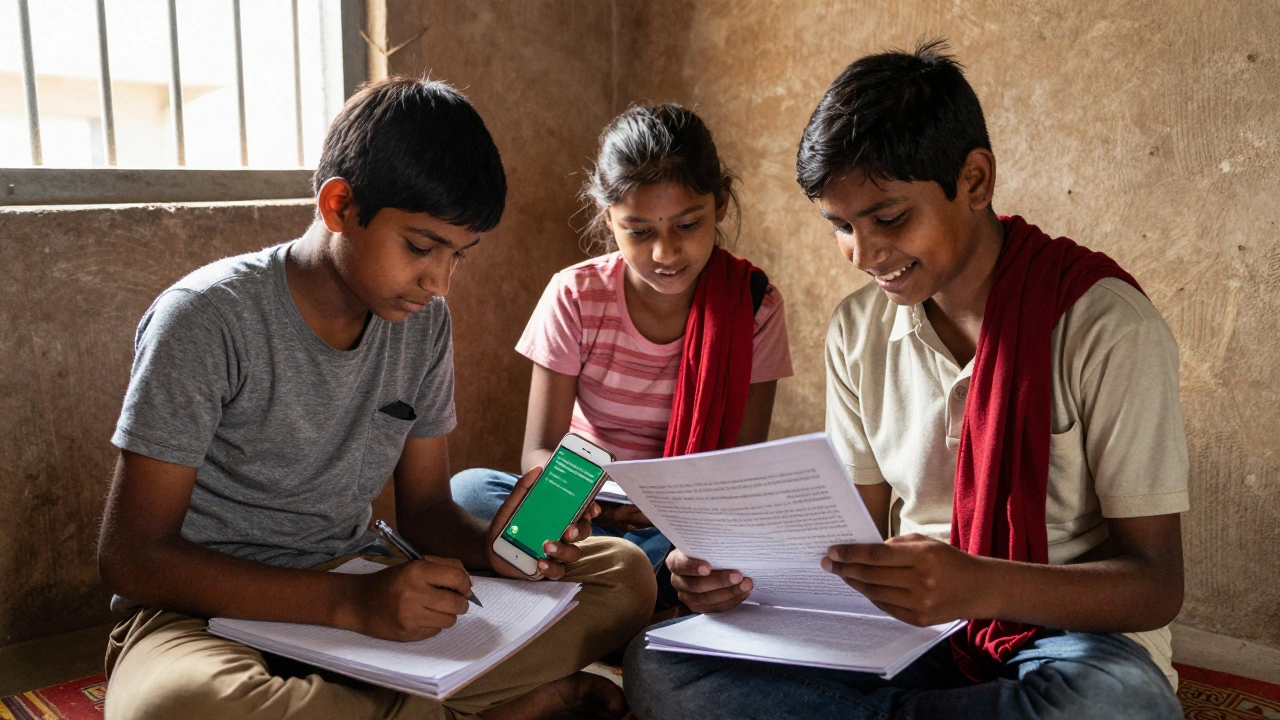
Here’s what actually works: structured peer accountability. One platform in India, Khoj, started pairing learners into small groups of three. Each group had to submit one project together every two weeks. They had to schedule a 15-minute video call. No grades. No certificates. Just responsibility to each other. Completion rates jumped from 22% to 61% in six months.
That’s not magic. That’s human behavior. We show up when someone is counting on us - not because a course says "you should."
Design Flaws That Make It Worse
Many platforms are built like TV streaming services. You scroll. You click. You binge. But learning isn’t passive. It’s active. It needs feedback loops, reflection, and correction.
Take a typical MOOC: watch a 12-minute lecture, answer five multiple-choice questions, move on. No chance to explain your thinking. No instructor to say, "That’s a common misunderstanding - here’s why." No peer to debate with. You get a green checkmark. You feel good. And you learn nothing.
Real learning happens when you’re wrong - and someone helps you see why. That’s why platforms like Khan Academy and BYJU’S are starting to add live tutoring slots. But they’re still optional. Rare. And often paid.
Meanwhile, learners in rural India, Southeast Asia, and parts of Africa are logging in from low-bandwidth phones. They can’t stream videos. They download PDFs. They text questions to group chats. But the platforms don’t adapt. They keep designing for high-speed Wi-Fi and high-end tablets. The system assumes everyone has the same access - and that’s not true.
It’s Not About the Tech - It’s About the Trust
Here’s a quiet truth: people don’t trust online learning. Not really.
Why? Because they’ve been burned. They paid for a course that promised "get hired in 30 days" - and nothing changed. They spent hours on a certification that no employer recognized. They watched instructors who sounded smart but had never worked in the field they were teaching.
Trust doesn’t come from flashy animations or celebrity teachers. It comes from consistency. From seeing someone who’s been where you are. From knowing that the person guiding you actually understands your struggle.
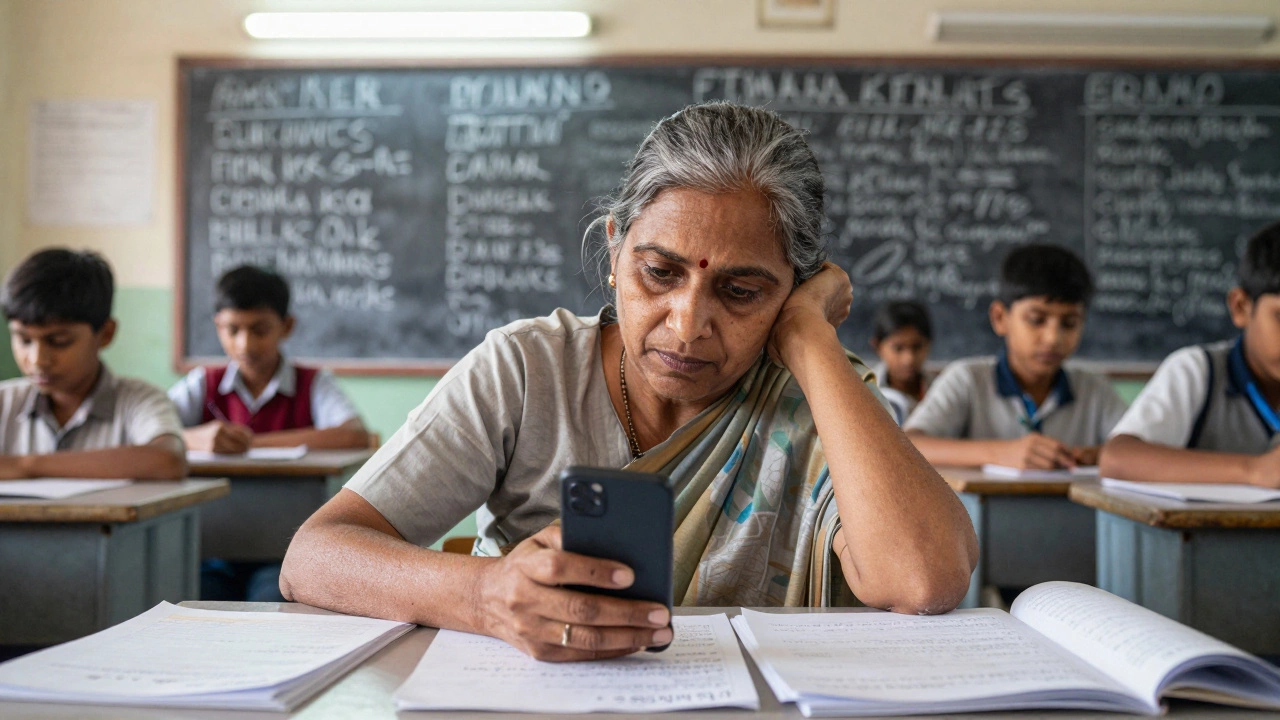
One of the most successful e-learning programs in India isn’t from a big tech company. It’s run by a retired high school teacher in Varanasi. She runs a WhatsApp group for 500 students preparing for state exams. Every morning, she sends one practice question. Every evening, she replies to every single reply - even if it’s just "I don’t get this." She doesn’t charge a rupee. But her students finish 90% of the material. Why? Because they know she’s there.
What Fixes This? Simple Changes, Big Impact
Fixing the biggest problem in e-learning doesn’t require AI, VR, or blockchain. It requires human-centered design.
- Small group accountability: Force learners into teams of 2-4 with shared goals. Not optional. Required.
- Real feedback loops: Replace multiple-choice quizzes with short written responses reviewed by peers or instructors - even if it’s just one comment per submission.
- Human presence: Every course should include at least one live, weekly 20-minute session where the instructor answers real questions from learners - not scripted ones.
- Offline-first design: If your platform can’t work on a 2G connection, you’re leaving out half the world.
- No fake promises: Stop saying "Get a job in 30 days." Say "This course helps you build skills employers look for. Here’s how to prove them."
These aren’t fancy ideas. They’re basic human needs. We learn better together. We stay motivated when we’re seen. We trust people who show up - consistently - even when it’s inconvenient.
What Happens When You Fix This?
When you solve for isolation, everything else improves.
Completion rates go up. Learners start recommending courses to friends. Employers begin recognizing certificates because they see actual results - not just clicks. Instructors stop feeling like content bots and start feeling like mentors.
In a pilot program with a government-run vocational training center in Rajasthan, they added weekly group video check-ins to a 12-week digital literacy course. Dropout rate dropped from 74% to 29%. The average score on final assessments went up by 41%. And 68% of participants said they felt "more confident" - not because they learned Excel, but because they knew someone was checking in on them.
That’s the power of connection. Not technology. Not content. Connection.
So What’s the Real Problem?
The biggest problem with e-learning isn’t the platform. It’s the belief that learning can be automated. That if we just deliver information faster, cheaper, and more efficiently, people will learn.
They won’t.
People learn when they feel part of something. When they’re not alone. When someone - even just one person - believes they can do it.
Fix that, and e-learning stops being a chore. It becomes a community.
Why do most people quit online courses?
Most people quit because they feel isolated. Without peer interaction, instructor feedback, or a sense of accountability, motivation fades quickly. Studies show over 75% of learners drop out within the first two weeks - not because the material is too hard, but because they don’t feel connected to anyone.
Is e-learning less effective than in-person learning?
It’s not inherently less effective - but most platforms are designed to be. In-person learning includes natural social cues, spontaneous questions, and real-time feedback. E-learning can match that, but only if it’s intentionally built around human interaction - not just video lectures and quizzes.
Do online certificates matter to employers?
Right now, most employers don’t care about certificates from big platforms unless they’re tied to real projects or verified skills. A certificate alone doesn’t prove competence. But if you can show a portfolio, a group project you completed with peers, or feedback from an instructor - that’s different. Employers value proof of application, not just completion.
Can e-learning work in low-connectivity areas?
Yes - but only if platforms are designed for it. Many learners in rural India and Southeast Asia access courses via SMS, WhatsApp, or downloaded PDFs. Platforms that require high-speed video streaming fail these users. The solution isn’t better tech - it’s simpler design: text-based lessons, offline quizzes, and group chats for support.
What’s the best way to stay motivated in an online course?
Find or create a small learning group - even just two other people. Schedule weekly check-ins. Share one thing you learned. Ask for help when you’re stuck. Accountability to real people is far more powerful than any app reminder or streak counter.