Vocational Career Earnings Calculator
Explore Your Vocational Career Path
Your Career Path Potential
Select your career and experience to see potential earnings
When you hear the word vocational in school, it doesn’t mean extra homework or a harder class. It means learning how to do a real job - not just study about it. Think of it like this: instead of spending all day reading about how a car engine works, you’re under the hood, fixing one. That’s vocational education. It’s not second-tier learning. It’s practical, direct, and designed to get you ready for work the moment you walk out of school.
What Exactly Is Vocational Education?
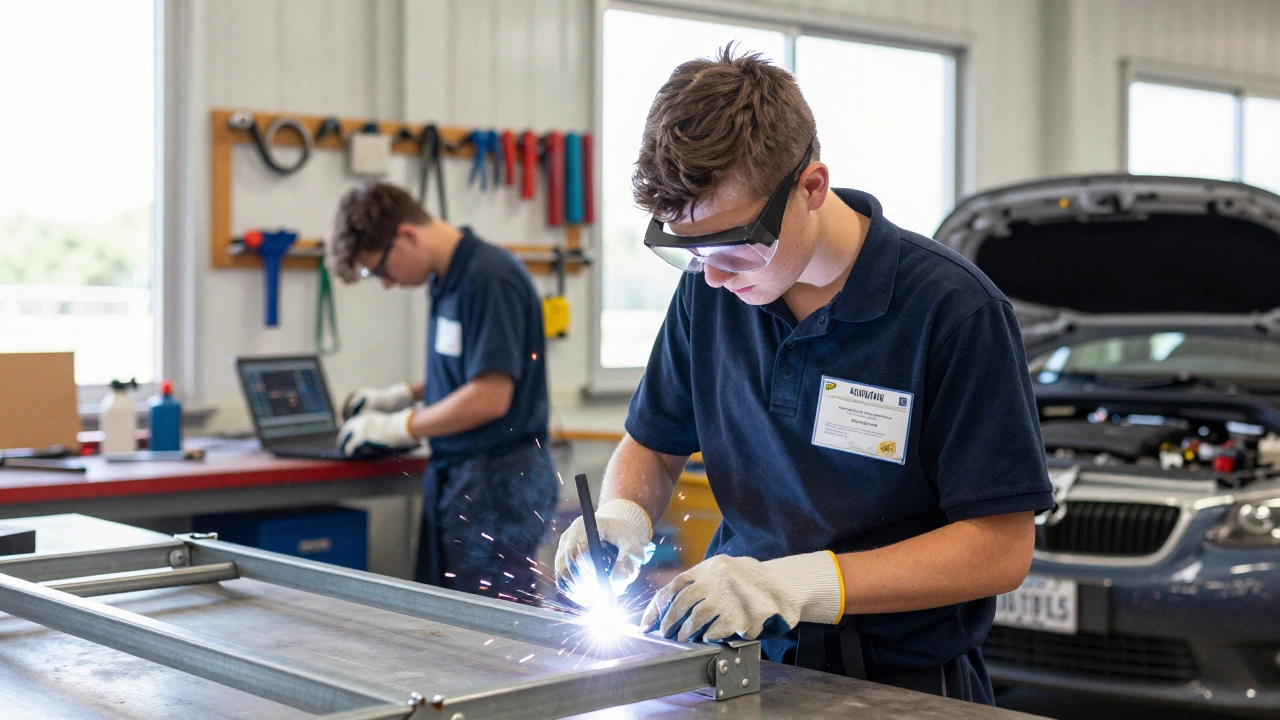
Vocational education, often called career and technical education, is training that teaches specific skills for a trade or job. It’s not about passing exams or memorizing theories. It’s about building things, fixing things, helping people, or running systems. In school, this might mean learning how to weld, cook meals in a commercial kitchen, code a website, care for patients in a clinic, or manage a small business.
Unlike traditional academic subjects like history or calculus, vocational courses focus on doing. A student in a vocational program might spend 60% of their time in a workshop, lab, or real workplace - not a classroom. They learn by repeating tasks, making mistakes, and getting feedback from experienced professionals.
In Australia, schools like TAFE and many public high schools offer vocational tracks. By Year 10 or 11, students can start picking programs like Automotive Technology, Early Childhood Education, or Digital Media. These aren’t electives - they’re structured pathways that lead to nationally recognized qualifications.
How Is It Different From Regular School Subjects?
Regular school subjects teach broad knowledge. You learn math to understand patterns. You learn English to communicate ideas. Vocational subjects teach you how to use that knowledge to earn a living.
For example:
- In regular science class: You learn how photosynthesis works.
- In vocational horticulture: You plant, prune, and sell flowers at a local nursery.
- In regular math class: You solve equations on paper.
- In vocational accounting: You use software to manage invoices for a small business.
The difference isn’t just the subject. It’s the outcome. One prepares you for university. The other prepares you for a job - sometimes even before you graduate.
What Kinds of Vocational Courses Are Available?
There’s a huge range. Schools don’t just offer plumbing or hairdressing anymore. Today’s vocational programs reflect modern job markets. Here are some common ones in Australian high schools:
- Information Technology: Network setup, cybersecurity basics, app development
- Health Services: First aid, aged care, mental health support
- Construction Trades: Carpentry, electrical basics, plumbing
- Creative Industries: Graphic design, video editing, photography
- Business and Administration: Office software, customer service, bookkeeping
- Food Services: Commercial cooking, food safety, barista training
- Automotive: Engine repair, diagnostics, electric vehicle maintenance
Some schools even partner with local businesses. A student in a hospitality course might spend one day a week working at a hotel. Another might build a website for a real client - and get paid for it.

Why Do Vocational Programs Work So Well?
They work because they match what employers actually need. A 2025 report from the Australian Industry Group found that 72% of employers struggle to find workers with hands-on skills. That’s not because people are lazy. It’s because schools have spent decades focusing on university prep - and ignoring the skills that keep the economy running.
Vocational training fills that gap. Students don’t just learn theory. They earn:
- Industry-recognized certificates - like a Certificate II in Automotive Servicing
- Work experience - often with paid placements
- Real references - from bosses, not just teachers
- Confidence - because they’ve already done the job
One student from a Sydney vocational program started working part-time at a local electrical firm while still in Year 12. By graduation, she had her license, two job offers, and no student debt.
Who Benefits From Vocational Education?
It’s not just for students who don’t want to go to university. It’s for everyone.
Some students discover they hate sitting in lectures. They thrive when they’re moving, building, or solving real problems. Others know exactly what job they want - maybe electrician, chef, or nurse - and want to start training early. And many just want to graduate without $50,000 in debt.
Studies from the University of Melbourne show that students in vocational programs have higher attendance rates and lower dropout rates than peers in purely academic tracks. Why? Because they see the point. They can picture themselves in the job. They’re not guessing what they’ll do after school - they’re already doing it.
How Do You Get Into a Vocational Program?
If you’re in Year 9 or 10, talk to your school counselor. Ask if your school offers vocational pathways. Most public schools in Australia do. You don’t need perfect grades. You don’t need to be the top of your class. You just need to be willing to show up, work hard, and learn by doing.
Here’s what to ask:
- Which vocational courses are available this year?
- Can I get a nationally recognized qualification while still in school?
- Do any of these courses include work placements?
- Will I earn credits toward a future apprenticeship?
Some programs even let you start part-time while still in Year 10. You might spend one day a week at TAFE, learning welding or childcare. The rest of the week, you’re still in school - but now you’re learning math and English through real job tasks.
What Happens After You Finish?
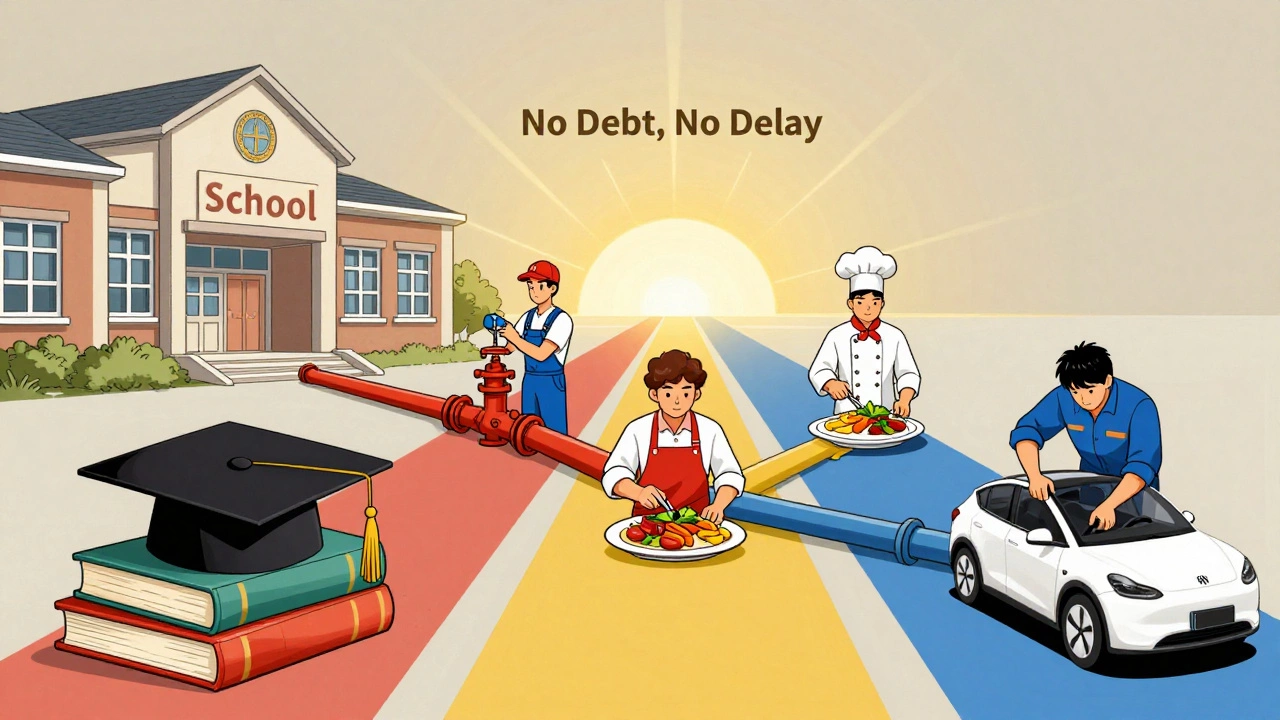
You have options - and they’re all good.
- Go straight to work: Many students land full-time jobs after finishing their vocational course. Especially in trades like plumbing, electrical work, or aged care - where demand is high.
- Start an apprenticeship: You get paid to train. Most apprenticeships take 3-4 years and lead to a trade certificate.
- Go to university later: Many vocational qualifications count as credit toward a degree. For example, a Certificate III in Early Childhood Education can reduce your university time by a year.
- Start your own business: A student who learns digital marketing in school might launch a social media agency by 18.
There’s no single path. Vocational education gives you a head start - not a dead end.
Myths About Vocational Education
Let’s clear up some lies you might have heard:
- Myth: It’s for students who aren’t smart. - False. It’s for students who learn differently. You need problem-solving, precision, and discipline to be a good electrician or chef.
- Myth: It doesn’t lead to good careers. - False. A qualified tradesperson in Australia can earn $80,000+ a year by age 25. No university debt.
- Myth: You’ll be stuck in one job. - False. Many people switch from welding to project management, from cooking to food tech startups. Vocational skills are transferable.
Vocational education isn’t a backup plan. It’s a smart, fast, and respected route to a stable, well-paid career.
Final Thought: It’s Not About Choosing Between School and Work
The old system made you pick: either go to university, or drop out. Vocational education breaks that false choice. You can do both. You can finish Year 12, earn a trade certificate, and still go to university later. Or you can start working now - and go back to study when you’re ready.
What matters isn’t the path. It’s whether you’re learning something that matters to your future. If you want to build things, fix things, help people, or create things - vocational training isn’t just an option. It’s the best place to start.
Is vocational education only for students who don’t do well in school?
No. Vocational education isn’t a last resort - it’s a strategic choice. Many high-achieving students choose it because they want to enter the workforce faster, avoid student debt, or gain real skills before university. It’s designed for students who learn best by doing - not for those who struggle academically.
Can I still go to university if I take vocational courses?
Yes. Many vocational qualifications, especially at Certificate III level or higher, give you credit toward a university degree. For example, a Certificate III in Business can reduce your first-year university workload. Some universities even offer direct entry into second year for students with relevant vocational certificates.
Are vocational courses cheaper than university?
In most cases, yes. Many vocational courses offered in high schools are free or low-cost. Even when you move to TAFE or private providers, government subsidies make them far cheaper than university. Plus, you can start earning money while training - something you can’t do while studying full-time at university.
Do employers value vocational qualifications?
Absolutely. In Australia, vocational qualifications are nationally recognized and regulated. Employers in trades, healthcare, IT, and hospitality actively seek candidates with these credentials. A Certificate III in Information Technology, for example, is seen as proof you can handle real work - not just theory.
What’s the difference between vocational training and an apprenticeship?
Vocational training in school is usually part-time and classroom-based, with some work experience. An apprenticeship is full-time: you’re employed by a company, earn a wage, and train on the job while studying part-time. Apprenticeships typically last 3-4 years and lead to a full trade qualification. Many students start with school-based vocational programs and then move into apprenticeships after graduation.