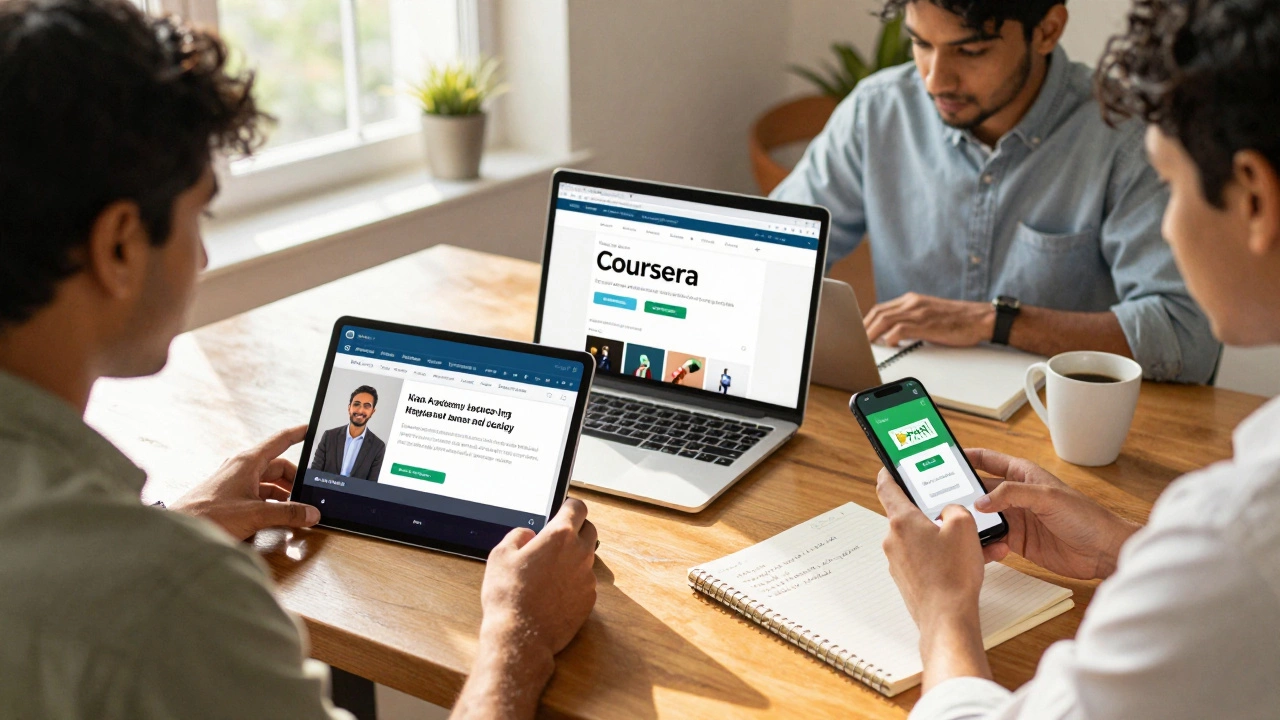
When you think about learning something new online, which platforms come to mind? If you’re trying to upskill, switch careers, or just learn for fun, you’re not alone. Millions of people worldwide use online learning platforms every single day. But not all platforms are created equal. Some are built for university-level courses. Others focus on quick, practical skills. A few even connect you directly with employers. So which ones are actually the most used - and why?
Coursera: The University Bridge
Coursera isn’t just another course site. It’s a partnership between top universities like Stanford, Yale, and the University of London, and big companies like Google and IBM. If you want a credential that looks good on your resume, Coursera is where most people go. Over 100 million learners have signed up since it launched in 2012. That’s more than the population of Japan.
What makes Coursera stand out? It offers full degree programs - yes, actual bachelor’s and master’s degrees - online. You can earn a Master of Science in Data Science from the University of Illinois for under $15,000. Or take a Google Data Analytics Professional Certificate in six months. Employers recognize these credentials. A 2025 LinkedIn survey found that 68% of hiring managers in tech and business fields actively look for Coursera certifications.
Udemy: The Marketplace of Skills
If Coursera feels like a university, Udemy feels like a digital bazaar. Anyone can create a course here. That means you’ll find everything from Python programming to sourdough bread baking. Over 250 million enrollments have happened on Udemy since 2010. That’s not just users - that’s course purchases. Most people on Udemy aren’t looking for degrees. They’re looking for one specific skill: how to use Excel better, how to set up a home Wi-Fi network, how to edit videos in Premiere Pro.
Udemy’s big advantage? Price. Courses often drop to $10-$15 during sales. No subscription. No long-term commitment. You buy one course, learn it, move on. It’s the go-to platform for freelancers, small business owners, and people doing side hustles. A 2026 survey of 15,000 Australian freelancers showed that 74% had taken at least one Udemy course in the past year.
edX: The Nonprofit Alternative
edX started as a nonprofit spin-off from MIT and Harvard. It still carries that mission: free, high-quality education for everyone. Unlike Coursera, edX doesn’t push paid certificates as hard. Many courses are completely free to audit. You just can’t get the official credential unless you pay.
edX is especially popular among students in developing countries and adult learners in regions with limited access to universities. In India alone, over 12 million users have taken edX courses since 2015. The platform partners with MIT, Berkeley, and even the United Nations. If you’re studying public health, climate change, or computer science, edX has some of the most rigorous free content available.
Khan Academy: Free for Everyone
Khan Academy doesn’t sell anything. Not even a certificate. It’s funded entirely by donations. And it’s the most used platform for K-12 learning - but also for adult learners going back to basics. Think of it as the YouTube of education. No ads. No paywalls. Just clear, short videos and practice exercises.
It’s used by over 150 million students globally. In Australia, 1 in 4 high school students use Khan Academy for math and science revision. Teachers assign it. Parents rely on it. Even college students use it to review calculus or chemistry before exams. The platform covers everything from fractions to differential equations - all in under 10-minute chunks. It’s the ultimate no-brainer for anyone who needs to fill a knowledge gap without spending a cent.
LinkedIn Learning: Career-Driven Learning
LinkedIn Learning used to be called Lynda.com. It got bought by LinkedIn in 2015, and everything changed. Now, it’s built into your professional network. When you complete a course, it shows up on your profile. Recruiters see it. Your connections see it. It’s not just learning - it’s visibility.
Over 70 million professionals use LinkedIn Learning every month. The platform has 17,000+ courses in business, tech, and creative fields. What makes it unique? The content is curated around real job skills. Want to learn how to write a LinkedIn post that gets noticed? There’s a course. How to use Notion for project management? Covered. How to negotiate a raise? Yes. The platform tracks which skills are in demand globally and updates its library weekly.
A 2025 study by LinkedIn’s own data team found that users who completed 3+ courses on LinkedIn Learning were 27% more likely to get hired than those who didn’t. For people already in the workforce, this is the platform that connects learning directly to job outcomes.
Other Notable Platforms
There are others worth mentioning. FutureLearn, backed by UK universities, is huge in Europe and Australia. It focuses on short, social learning experiences - think discussion boards and peer feedback. Pluralsight is the go-to for IT professionals learning cloud computing or cybersecurity. And then there’s Skillshare, popular with creatives for design, illustration, and photography courses.
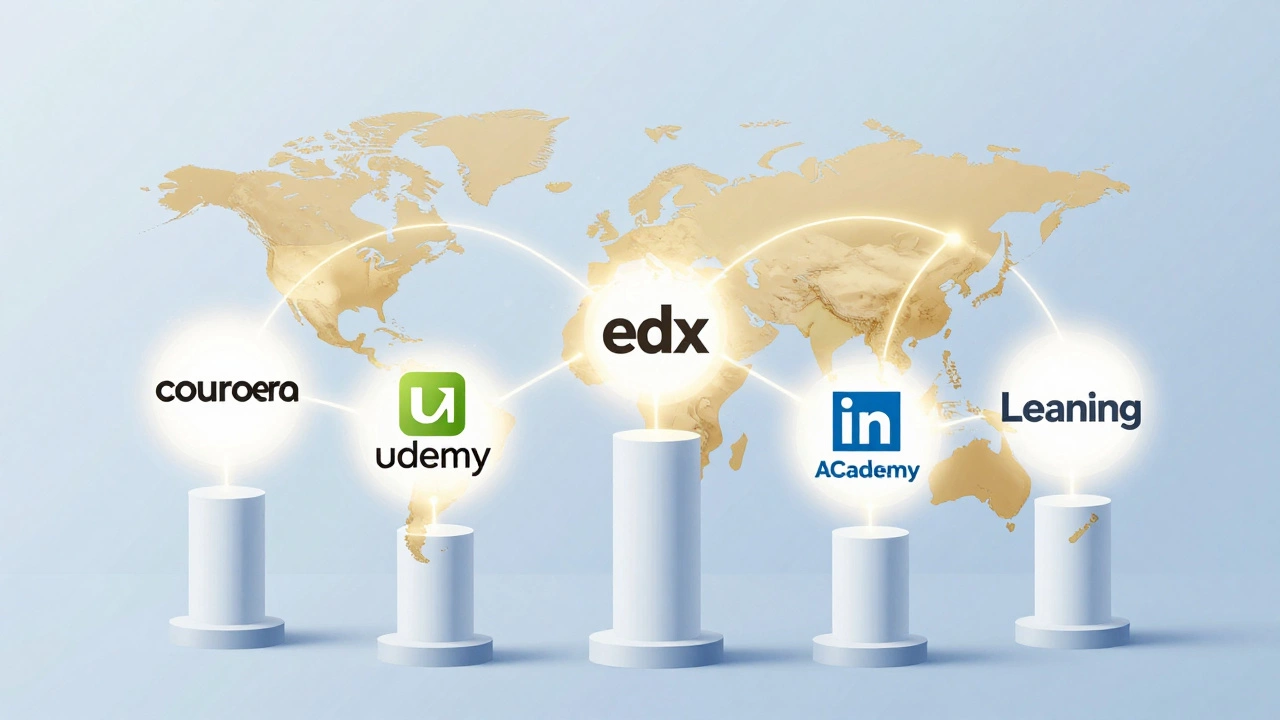
But none of them come close to the scale of the top five. If you’re looking for the most used, it’s Coursera, Udemy, edX, Khan Academy, and LinkedIn Learning - in that order.
Which One Should You Choose?
It depends on what you want.
- If you want a degree or formal credential, go with Coursera.
- If you need to learn one practical skill fast, pick Udemy.
- If you want free, university-level content without paying, use edX.
- If you’re rebuilding foundations or helping a child learn, Khan Academy is unbeatable.
- If you’re job hunting or climbing the corporate ladder, LinkedIn Learning gives you visibility.
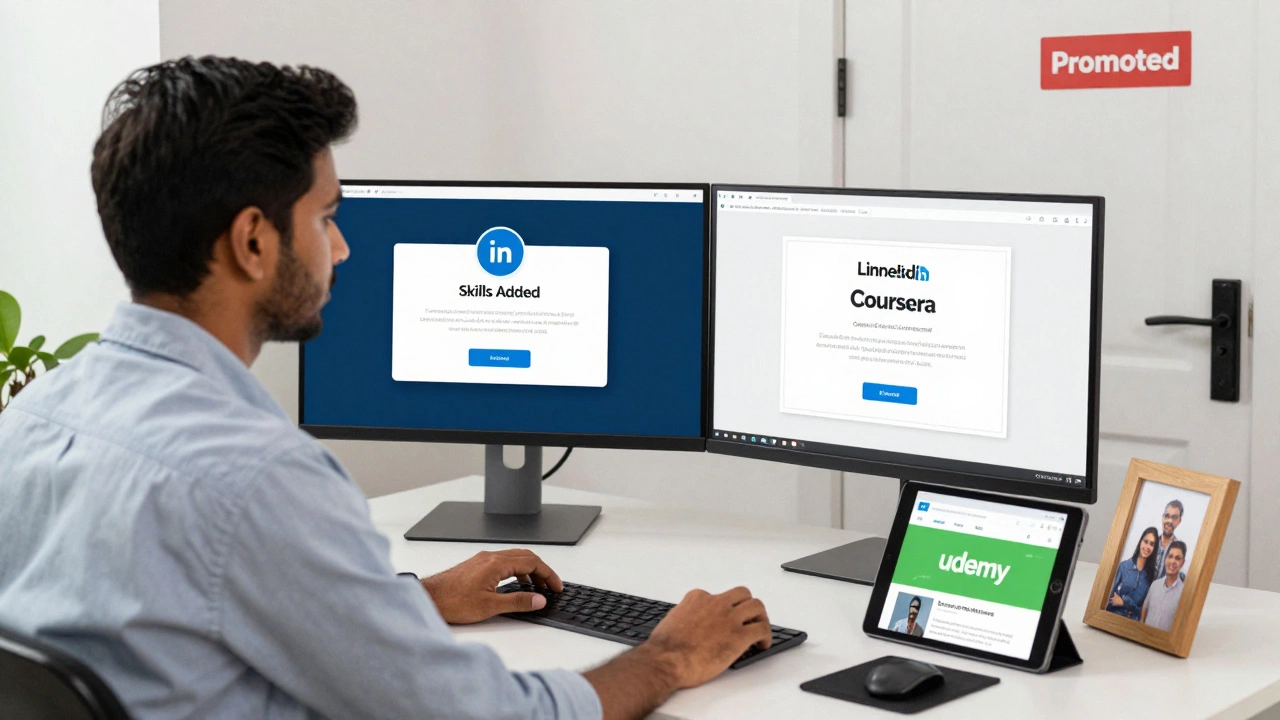
There’s no single ‘best’ platform. The best one is the one that matches your goal. Most successful learners use at least two. A student might take free math lessons on Khan Academy, then enroll in a Coursera data science course, and finally add a LinkedIn Learning Excel course to their profile.
Are online learning platforms worth it?
Yes - but only if you use them with a clear goal. Platforms like Coursera and LinkedIn Learning offer credentials that employers recognize. Udemy and Khan Academy help you build real skills. But if you just sign up and never finish, you won’t get results. The key is consistency. Even 20 minutes a day, five days a week, can change your career path.
Do employers take online certificates seriously?
Absolutely - if they’re from credible providers. Google, IBM, and Microsoft certificates on Coursera or LinkedIn Learning are highly respected. Even Udemy certificates are taken seriously if they’re in high-demand fields like cybersecurity or data analysis. Employers care less about the platform and more about what you learned and how you applied it. Show them projects, not just certificates.
Can I learn coding for free?
Yes, and you should start with Khan Academy or edX. Both offer full beginner-to-intermediate coding paths for free. Khan Academy has a great JavaScript and Python track. edX has MIT’s Introduction to Computer Science. After that, use Udemy for project-based learning - like building a website or an app. Free resources are enough to land your first job if you build a portfolio.
Which platform is best for non-native English speakers?
Khan Academy and edX lead here. Khan Academy offers subtitles in over 50 languages. edX courses from universities in non-English countries often include localized content. Coursera also has many courses with auto-translated subtitles. Avoid platforms like LinkedIn Learning if your English isn’t strong - most of their content assumes fluency. Start with visual, slow-paced lessons before moving to fast-paced professional training.
Do I need to pay for all these platforms?
No. Khan Academy is completely free. edX lets you audit most courses for free. Coursera and LinkedIn Learning offer free trials and financial aid. Udemy courses are often on sale for under $15. You can learn a lot without spending a cent. Pay only when you need a certificate or access to graded assignments. Most people don’t need to pay for everything.