
eLearning Suitability Assessment
How suitable is eLearning for your learning needs?
Answer these 6 questions to find out if eLearning matches your learning style and circumstances.
Your eLearning Suitability Assessment
Recommendations
- Choose platforms with community features like discussion forums or study groups
- Set up weekly check-ins with a peer or mentor
- Consider hybrid learning for hands-on components
- Use productivity tools like Pomodoro timers to maintain focus
Online learning looks perfect on paper: learn anytime, anywhere, save money, move at your own pace. But if you’ve ever sat in front of a screen for hours, staring at a video that won’t load, or felt completely lost without a teacher nearby, you know the reality is messier. eLearning isn’t the magic solution it’s sold as. For every success story, there are real, daily struggles that get ignored in marketing brochures.
It’s isolating - and your brain notices
Humans aren’t wired to learn alone for long. When you’re stuck in your bedroom, watching a lecture on a laptop, your brain misses the subtle cues that help learning stick: a teacher’s raised eyebrow, a classmate’s confused sigh, the energy of a group discussion. A 2024 study from the University of Sydney found that students in fully online programs reported 42% higher levels of loneliness than those in hybrid or in-person classes. That loneliness doesn’t just hurt your mood - it kills retention. Without social feedback, you start doubting yourself. You wonder if you’re even on the right track.
Technical problems break momentum
Ever had a quiz due at midnight, and your internet drops? Or spent 20 minutes trying to get Zoom to work before your live session starts? These aren’t minor annoyances - they’re learning killers. Not everyone has reliable Wi-Fi, especially in rural areas or low-income households. A 2025 report from Australia’s Digital Inclusion Network showed that 1 in 5 students in regional NSW struggled with consistent connectivity during online courses. Even small glitches - a laggy video, a crashed platform, a forgotten password - can derail an entire study session. Unlike a physical classroom, where you walk in and sit down, eLearning demands you fix tech issues before you can even start learning.
You can’t fake engagement
In a traditional class, you might nod along even if you’re zoning out. In eLearning, there’s no one watching. It’s easy to open the course, start the video, then switch to TikTok or check your phone. A 2023 analysis of 12,000 learners across 3 major platforms found that 68% of users stopped watching videos before the 5-minute mark. And it’s not just distraction - it’s design. Many platforms treat learners like data points, not people. If you don’t click, comment, or complete a quiz, no one notices. No one checks in. No one cares. That lack of accountability makes it easy to fall behind - and harder to catch up.
Hands-on learning doesn’t translate
Trying to learn nursing, welding, carpentry, or even basic lab techniques through a screen? It doesn’t work. You can watch a video of someone stitching a wound or calibrating a microscope, but you can’t feel the resistance of the needle or smell the chemicals. A 2024 survey of healthcare educators found that 89% of clinical skills training still required in-person practice. Even in fields like coding or design, you can’t replace the feedback you get from a mentor watching you type, pointing out bad habits, or suggesting better workflows. eLearning is great for theory. It’s terrible for doing.
Self-discipline is rare - and not taught
Most eLearning platforms assume you’re already a self-starter. They don’t teach you how to manage time, set goals, or push through boredom. They just give you a syllabus and say, “Go.” But self-discipline isn’t a trait you’re born with - it’s a skill you build with structure, support, and consequences. In a physical classroom, deadlines are enforced. Teachers remind you. Peers keep you on track. Online? You’re on your own. A 2025 study from the University of Melbourne found that only 27% of adult learners in fully online programs completed their courses within the expected timeframe. The rest dropped out, not because they couldn’t learn, but because no one held them accountable.
Quality varies wildly - and you can’t tell until it’s too late
Anyone can upload a course. There’s no universal standard for what makes an eLearning program good. One platform might have content designed by university professors. Another might be run by a YouTuber with no teaching credentials. You won’t know the difference until you’ve paid, signed up, and sunk hours into it. Unlike traditional colleges, where accreditation and faculty credentials are public, eLearning platforms often hide their teaching staff. Reviews are unreliable. Testimonials are curated. And once you’re in, refunds are rare. You’re paying for a promise - not a guarantee.
Assessments are easy to cheat - and that devalues the credential
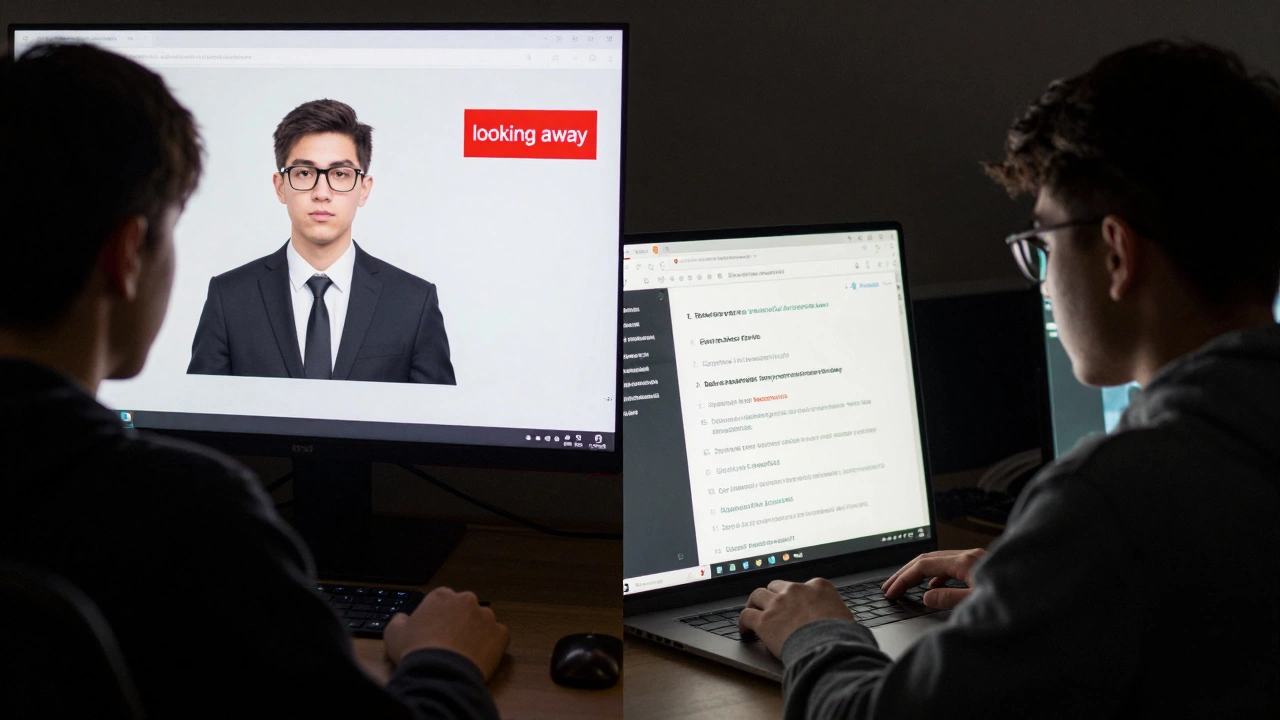
How do you know someone actually learned the material? In a traditional exam, you sit in a room with a proctor. Online? You can open three tabs, use AI to write your essay, or have a friend take your quiz. Proctoring software exists, but it’s invasive, glitchy, and often wrong. It flags people for blinking too much or looking away. Meanwhile, the real cheaters find loopholes. This undermines the value of the certificate. Employers know it. That’s why 61% of hiring managers in Australia said they still prefer candidates with in-person qualifications, even if the online version looks identical on paper.

It’s not flexible - it’s demanding
People think eLearning is flexible. But flexibility doesn’t mean easy. It means you have to create your own structure. You’re the teacher, the scheduler, the motivator, and the disciplinarian. For working parents, shift workers, or people with mental health challenges, that’s overwhelming. A 2025 survey of 2,000 Australian learners found that 54% felt more stressed managing their online course schedule than they did with a fixed timetable in school. The illusion of freedom becomes a burden. You’re not escaping structure - you’re building it from scratch, while juggling everything else in your life.
Feedback is slow - or nonexistent
When you submit an assignment in a physical class, you get feedback within days. In eLearning? It could take a week. Or two. Or never. Many platforms use automated grading for essays, multiple choice, or coding tasks. But automated feedback is shallow. It tells you “wrong” - not why. It can’t explain how to improve your argument, rewrite a confusing sentence, or fix a flawed logic chain. Without meaningful feedback, you repeat the same mistakes. And without a teacher who knows your name, you don’t feel seen. Learning becomes transactional, not transformational.
It doesn’t build networks
One of the biggest hidden benefits of traditional education? The people you meet. Classmates become coworkers. Professors become mentors. Study groups turn into lifelong support systems. Online? You might chat in a forum once. Maybe. But most learners disappear after the course ends. There’s no hallway conversation. No coffee after class. No spontaneous collaboration. The connections you make online rarely last. And in the real world - where jobs come through referrals, not resumes - that matters.
What’s the alternative?
eLearning isn’t going away. But it shouldn’t be the only option. The best approach? Blend it. Use online modules for theory. Use in-person sessions for practice, feedback, and connection. Many top universities now offer hybrid models - and they’re seeing better completion rates and higher job placement. If you’re choosing a course, ask: Can I get real feedback? Can I connect with others? Is there a live component? If the answer is no, you’re not getting an education - you’re getting a digital pamphlet.
Is eLearning bad for mental health?
Yes, for many people. The isolation, lack of structure, and constant self-motivation required can increase anxiety and burnout. A 2025 study found that 58% of full-time online learners reported higher stress levels than peers in traditional programs. It’s not the technology - it’s the lack of human support.
Can eLearning be as effective as in-person learning?
Only if it includes live interaction, personalized feedback, and opportunities for hands-on practice. Purely self-paced, video-only courses rarely lead to deep learning. The most effective online programs combine digital content with weekly video calls, group projects, and mentor check-ins.
Why do so many people quit online courses?
Because they’re designed to be easy to start, not easy to finish. Without deadlines, accountability, or social pressure, motivation fades fast. Most people don’t quit because they can’t learn - they quit because no one notices when they stop.
Are certificates from eLearning platforms worth anything?
Some are, but most aren’t. Certificates from well-known universities or accredited providers (like Coursera’s partner schools) carry weight. But generic certificates from unknown platforms are often ignored by employers. What matters more is what you can do - not what you clicked through.
Should I avoid eLearning completely?
No - but be smart about it. Use it for supplemental learning, skill refreshers, or theory. Don’t rely on it for hands-on fields or if you need structure. Always look for programs that include live sessions, real feedback, and peer interaction. If it feels like watching TV, it’s not education - it’s entertainment with a certificate.