
CBSE School Fit Finder
Answer these questions to see how well the Central Board of Secondary Education (CBSE) aligns with your family's needs.
Your CBSE Compatibility Score
0%Imagine you’re sitting in a living room in Delhi or Mumbai, trying to decide where to enroll your child. You hear terms like "CBSE," "ICSE," and "State Board" thrown around at every parent-teacher meet. It’s confusing, right? But here is the reality: CBSE (the Central Board of Secondary Education) isn't just another school label. It is the backbone of secondary education for millions of students across India and abroad. If you are looking for a standardized, nationally recognized system that balances academic rigor with flexibility, understanding what makes a school "CBSE" is the first step toward making the right choice for your family.
The Core Identity of a CBSE School
A CBSE school is an educational institution affiliated with the Central Board of Secondary Education, an Indian national-level board of education for public and private schools. Unlike state boards, which vary wildly from region to region (think of the difference between Tamil Nadu’s syllabus and Rajasthan’s), CBSE offers a uniform curriculum. This means if your job transfers you from Bangalore to Kolkata, your child’s math lessons remain largely consistent. The board was established in 1952 by the Government of India, originally to serve children of government employees and defense personnel who moved frequently. Today, it has evolved into the most popular board for private schools because of its structured approach to learning.
When you walk into a CBSE-affiliated school, you aren’t just buying a building; you are buying into a specific pedagogical framework. The core promise is standardization. Whether your child is studying Grade 5 science in Kerala or Grade 5 science in Punjab, the topics covered-photosynthesis, states of matter, basic electricity-are identical. This consistency is crucial for families with mobile lifestyles and for students aiming for national entrance exams later in life.
Curriculum Structure and NCERT Textbooks
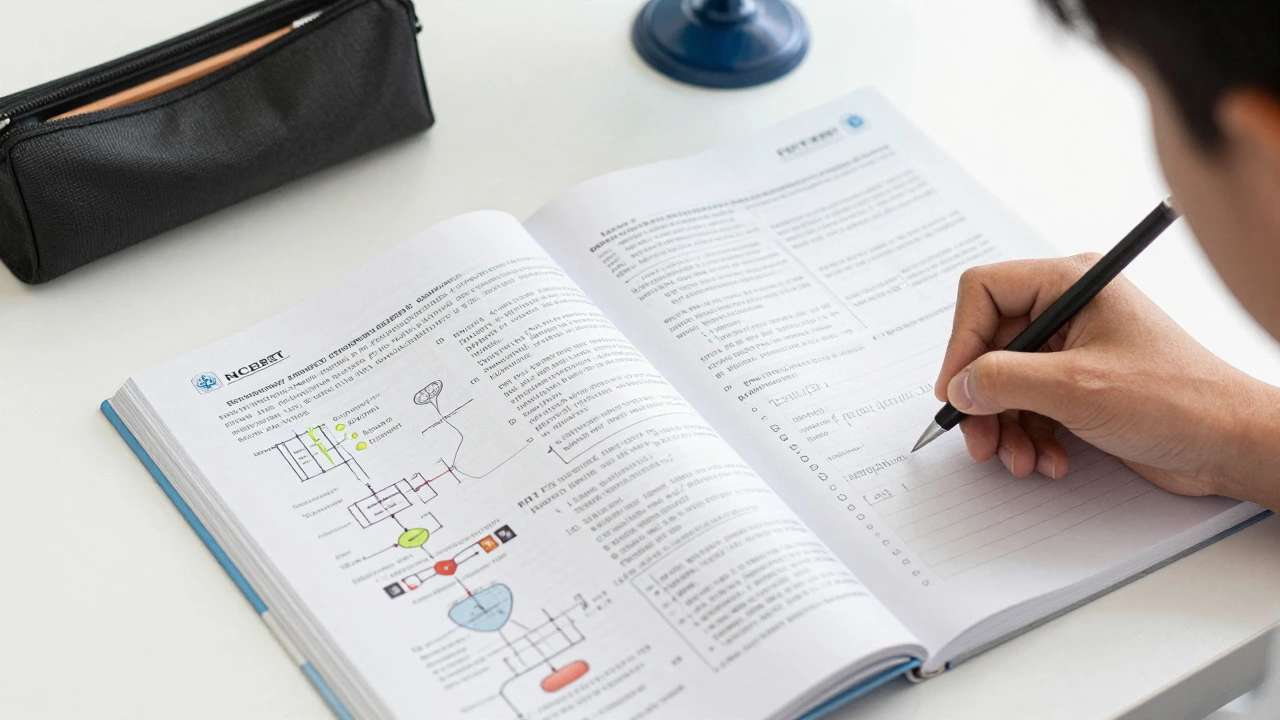
The heart of any CBSE school beats in sync with NCERT (National Council of Educational Research and Training) textbooks. These books are not optional extras; they are the bible of the curriculum. While private publishers offer supplementary guides, the CBSE board designs its question papers strictly based on NCERT content. Why does this matter? Because it levels the playing field. You don’t need expensive coaching classes to understand the core concepts if you master the NCERT text.
The curriculum follows the National Education Policy (NEP) 2020, which shifts focus from rote memorization to competency-based learning. In practice, this looks different than the old days. Instead of asking "Define photosynthesis," a CBSE exam might ask, "Explain how a plant uses sunlight to make food and why this process is vital for humans." This shift requires teachers to move away from dictating notes and toward facilitating discussions. For parents, this means checking homework isn’t just about spelling errors anymore; it’s about whether your child can explain the logic behind their answers.
| Component | Description | Impact on Students |
|---|---|---|
| NCERT Textbooks | Standardized texts issued by the National Council of Educational Research and Training. | Ensures uniformity in content delivery across all affiliated schools. |
| CCE (Continuous and Comprehensive Evaluation) | A system that assesses student performance throughout the year, not just at final exams. | Reduces exam stress by spreading assessment over two terms per year. |
| Skill Subjects | Optional subjects like AI, Fitness, and Design introduced under NEP guidelines. | Provides practical exposure alongside traditional academic subjects. |
Why Parents Choose CBSE Over Other Boards
Let’s be honest: choosing a board is often about future-proofing. The biggest advantage of a CBSE curriculum is its alignment with major Indian competitive examinations like JEE (Joint Entrance Examination) and NEET (National Eligibility cum Entrance Test). Since these engineering and medical entrance tests are designed with a CBSE-centric syllabus in mind, students studying in CBSE schools have a natural head start. They aren’t learning extra material to prepare for these exams; their regular schoolwork covers the foundational requirements.
Compare this to the ICSE (Indian Certificate of Secondary Education) board, which is known for its extensive English literature and detailed history curricula. ICSE students often find themselves needing to bridge gaps when preparing for science-heavy entrance exams. Conversely, State Board students might struggle with the language barrier or depth of scientific inquiry required for top-tier colleges outside their home state. CBSE sits comfortably in the middle. It is rigorous enough to challenge bright students but standardized enough to ensure no one is left behind due to regional disparities.
The Role of Affiliation and Quality Control
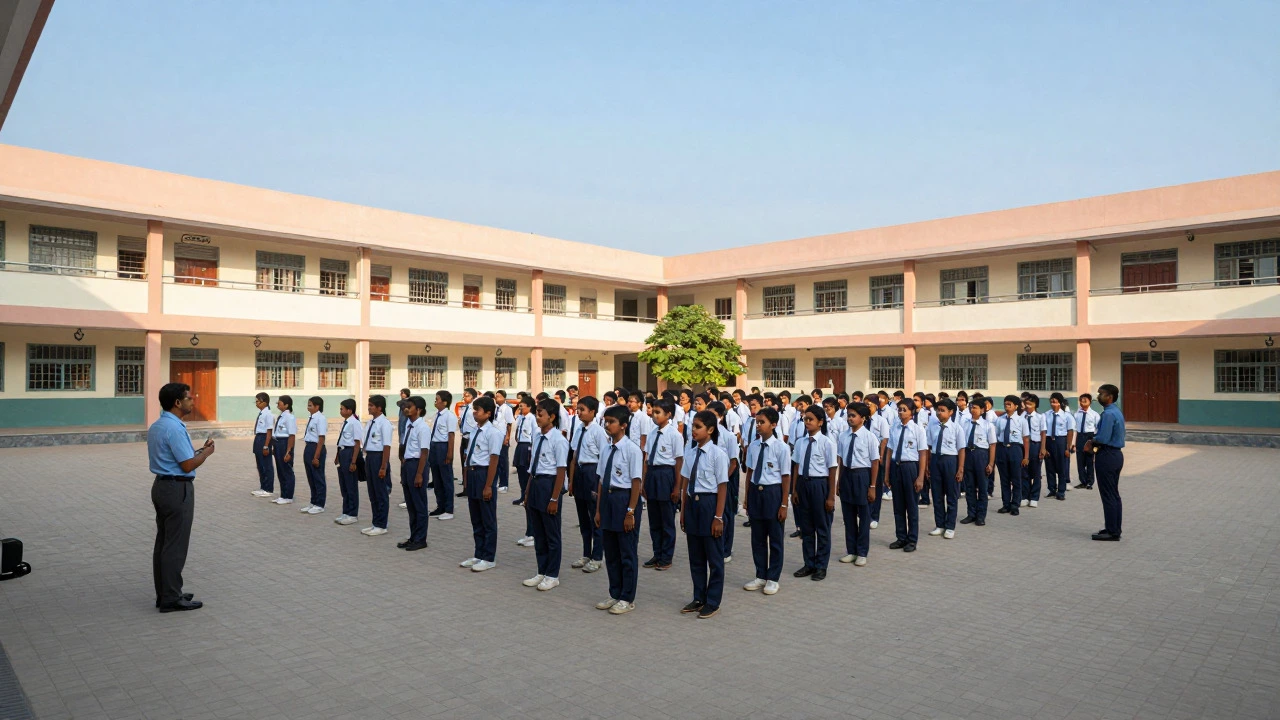
Not every school claiming to be "Central Board" is equal. To become a CBSE school, an institution must go through a rigorous affiliation process managed by the Central Board of Secondary Education headquarters in New Delhi. This involves meeting strict criteria regarding infrastructure, teacher qualifications, and student-teacher ratios. For instance, a school must have adequate library facilities, science laboratories, and computer labs to maintain affiliation.
However, affiliation doesn’t guarantee quality teaching. That’s where the KVS (Kendriya Vidyalaya Sangathan) and NVS (Navodaya Vidyalaya Samiti) come in. These are government-run networks of CBSE schools that set high benchmarks for discipline and academic excellence. Private CBSE schools range widely-from elite institutions in metro cities to budget-friendly options in tier-3 towns. When visiting a potential school, ask specifically about their pass percentages in the last three years and their success rate in producing top scorers in Class 10 and Class 12 board exams. These metrics reveal more about the school’s actual performance than its shiny new buildings.
Transitioning Between Boards: Is It Hard?
One common fear among parents is switching boards mid-way. If your child moves from a State Board school to a CBSE school in Grade 8, will they struggle? Generally, yes, initially. The methodology differs. State boards often emphasize descriptive answers, while CBSE encourages concise, point-wise responses and application-based questions. However, the gap narrows significantly by Grade 9 and 10 because both systems cover similar core scientific and mathematical concepts.
If you are considering a switch, look for schools that offer remedial support during the transition period. Many good CBSE schools run orientation sessions for new joiners to help them adapt to the evaluation style. Remember, the goal isn’t just to survive the change but to thrive in a system that prioritizes logical reasoning over memory recall.
Final Thoughts on Making the Right Choice
So, what exactly is a CBSE school? It’s an institution that provides a standardized, nationally recognized education framework aligned with NCERT guidelines. It’s a system designed to facilitate mobility, prepare students for national entrance exams, and foster a balanced approach to academics and co-curricular activities. For most Indian families, especially those with career-driven lives or ambitions in STEM fields, CBSE remains the safest and most strategic bet. But remember, the board is just the container; the quality of education depends entirely on the teachers inside the classroom. Visit, observe, and talk to current parents before signing that admission form.
Is CBSE better than ICSE for science students?
Yes, generally speaking. The CBSE syllabus for Science and Mathematics is closely aligned with the patterns of national entrance exams like JEE and NEET. ICSE tends to have a broader, more literary-focused curriculum which may require additional effort for science aspirants to align with entrance exam standards.
Do CBSE schools use NCERT books only?
While NCERT books are the primary reference and the basis for board exam questions, many CBSE schools also prescribe supplementary reference books for deeper understanding and practice problems. However, mastering NCERT is considered essential for scoring well in board exams.
Can I transfer my child from a State Board to a CBSE school?
Yes, transfers are possible. Most CBSE schools accept students from other boards up to Grade 9 or 10. However, the student may need to adjust to the different evaluation methods and potentially catch up on any minor syllabus differences. Early transition is usually smoother.
What is the role of CCE in CBSE schools?
Continuous and Comprehensive Evaluation (CCE) is a system that assesses students twice a year rather than once. It includes scholastic (academic) and co-scholastic (life skills, attitudes) assessments. This reduces the pressure of a single final exam and allows for continuous feedback.
Are CBSE schools recognized internationally?
Yes, CBSE is recognized globally. Many universities in the US, UK, Canada, and Australia accept CBSE results for admission. Additionally, there are several CBSE-affiliated schools operating in foreign countries to cater to Indian expatriate communities.