Math Skills and Coding: How Logic, Numbers, and Programming Connect
When you think about math skills, the ability to understand patterns, solve problems, and think logically using numbers and symbols. Also known as quantitative reasoning, it’s not just for accountants or engineers—it’s the silent engine behind everything from mobile apps to traffic lights. And when you start coding, the act of writing instructions computers follow to perform tasks. Also known as programming, it’s not magic—it’s just structured problem solving with syntax. The truth? People who get good at coding aren’t necessarily geniuses. They’re the ones who think like mathematicians: patient, precise, and persistent.
Good math skills don’t mean you need to solve calculus in your head. They mean you can break big problems into small steps, spot patterns, and test ideas without getting frustrated when things fail. That’s exactly what coding demands. Every loop, every condition, every function is a math problem dressed in code. The logical thinking you use to figure out why 3x + 5 = 20 is the same thinking you use to debug why your app crashes when someone types their name in all caps. And if you’ve ever stared at a math proof for hours until it clicked? That’s the same mental grind as waiting for your first program to run without errors.
It’s no accident that top performers in math competitions like the International Mathematical Olympiad, the world’s most prestigious high school math contest, testing deep creativity and logic often end up in tech. The same people who crush the USAMO, the toughest math exam in America, where only 500 students qualify each year are the ones who later build AI models or design algorithms. Why? Because both fields reward clarity over flash, depth over speed, and endurance over talent. You don’t need to be the smartest person in the room—you just need to keep showing up, keep testing, and keep asking: "What if I try this?"
And here’s the kicker: most people give up on coding because they think it’s about memorizing commands. It’s not. It’s about building mental models. Just like you learn to see how fractions relate to decimals, you learn to see how functions relate to variables. The best coders aren’t typing faster—they’re thinking clearer. And that clarity? It comes from practicing math—not just doing homework, but wrestling with problems until they make sense.
What you’ll find below isn’t a list of "best coding tools" or "top math apps." It’s real stories from people who’ve been there: the JEE topper who solved math problems for 10 hours straight before cracking code, the student who failed coding class twice until they started thinking like a mathematician, the teacher who discovered her students improved in both subjects when she stopped teaching them separately. These aren’t theories. These are lived experiences. You’ll see what actually works—no fluff, no hype, just what happens when math skills and coding stop being treated like separate subjects and start working together.
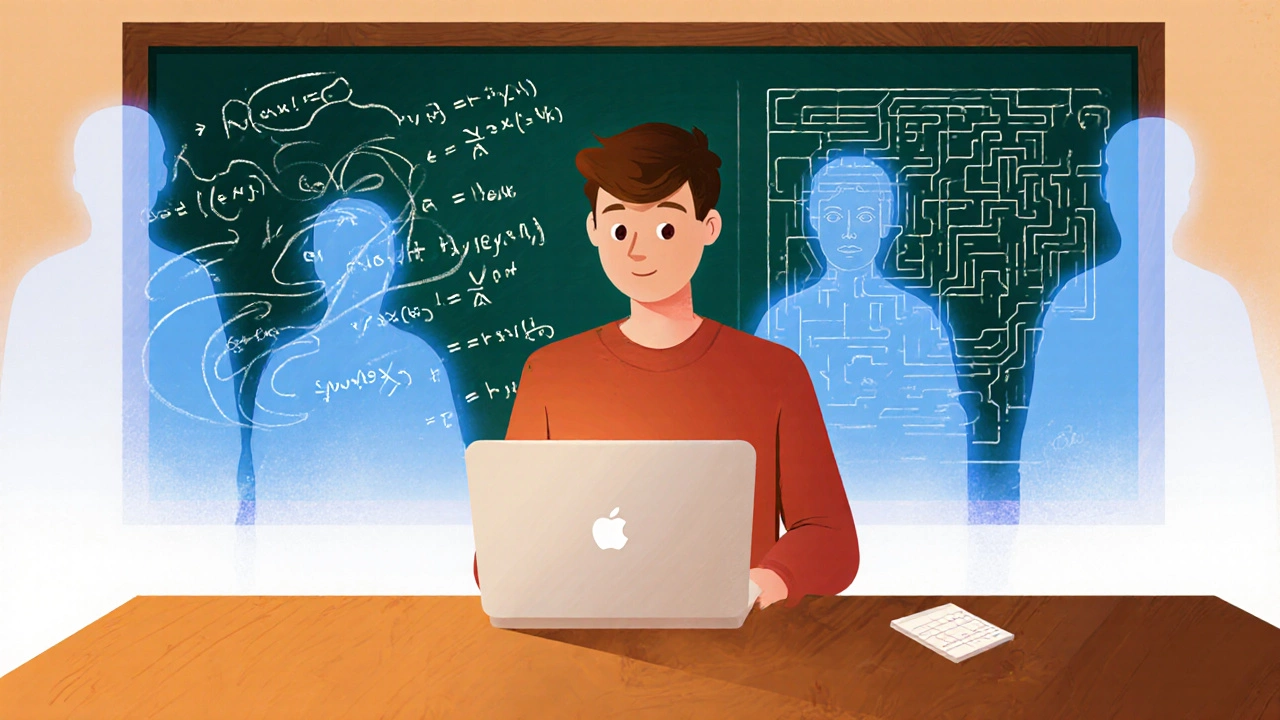
Can You Learn to Code Without Strong Math Skills?
Discover why strong math skills aren't required to start coding, learn essential non‑math abilities, and find the best learning paths for beginners.