
MBBS Salary Estimator India 2026
You spend five years grinding through NEET preparation, followed by five grueling years of MBBS (Bachelor of Medicine and Bachelor of Surgery). You survive the anatomy labs, the endless night shifts, and the pressure of clinical rotations. The big question on every medical student’s mind isn’t just about becoming a doctor; it’s about the financial return on that massive investment of time and stress. What is the actual salary of an MBBS doctor in India in 2026?
The short answer? It depends entirely on where you work, your experience level, and whether you’ve pursued postgraduate specialization. A fresh graduate starting as a house surgeon might earn significantly less than you expect, while a senior resident or a private practitioner can command a much higher paycheck. Let’s break down the real numbers for 2026, stripping away the myths to show you exactly what the earning landscape looks like for medical professionals across India.
Fresh MBBS Graduate Salaries: The Starting Point
When you first clear your final year exams and complete your internship, you enter the workforce as a "fresh graduate." At this stage, your earning potential varies wildly based on the sector you choose: government or private.
In the government sector, salaries are structured according to the 7th Pay Commission recommendations. Most states have adopted the pay matrix for medical officers. As of 2026, a Junior Resident or Medical Officer in a state-run hospital typically starts with a basic pay that translates to a gross monthly salary between ₹80,000 and ₹1,10,000. This includes Dearness Allowance (DA), House Rent Allowance (HRA), and other benefits. While the base number might look modest compared to tech jobs, the job security, pension benefits (in some states), and fixed working hours make it attractive for many.
In contrast, the private sector offers a different proposition. Private hospitals often hire fresh MBBS graduates as Junior Residents or Staff Doctors. Here, the monthly salary usually ranges from ₹40,000 to ₹70,000. However, this figure can be misleading. Many private hospitals offer lower base salaries but compensate with incentives, night duty allowances, and performance bonuses. If you’re willing to work longer hours and handle more patient load, your take-home pay can push towards the upper end of that range. Keep in mind that private sector roles often lack the long-term job security of government positions.
| Sector | Role | Monthly Salary Range (INR) | Key Benefits |
|---|---|---|---|
| Government | Medical Officer / Junior Resident | ₹80,000 - ₹1,10,000 | Pension, Job Security, Fixed Hours |
| Private Hospital | Staff Doctor / Junior Resident | ₹40,000 - ₹70,000 | Night Allowances, Incentives |
| Corporate Chains | Emergency Physician | ₹60,000 - ₹90,000 | Structured Career Path, Training |
The Internship Phase: Compulsory Rotating Internship (CRI)
Before you can call yourself a fully licensed doctor, you must complete one year of Compulsory Rotating Internship (CRI). This is not a salaried job in the traditional sense; it’s part of your degree. However, interns do receive a stipend.
In 2026, the stipend for MBBS interns varies by state and institution. Government medical colleges generally offer higher stipends, ranging from ₹30,000 to ₹50,000 per month. Some states like Maharashtra, Delhi, and Tamil Nadu have standardized these amounts to ensure fairness. Private medical colleges may offer lower stipends, sometimes as low as ₹15,000 to ₹25,000 per month. While this amount helps cover living expenses, it’s rarely enough to save significant money. Think of this year as paid training rather than a source of income.
Post-Graduation: How Specialization Changes Your Earnings
If you stop at MBBS, your career growth plateaus relatively quickly. To unlock higher earning brackets, most doctors pursue postgraduate degrees like MD (Doctor of Medicine) or MS (Master of Surgery). This requires clearing competitive exams like NEET-PG or INI-CET.
A Post-Graduate (PG) doctor, often serving as a Senior Resident, sees a substantial jump in income. In government hospitals, a Senior Resident earns between ₹1,00,000 and ₹1,50,000 per month. In the private sector, especially in high-demand specialties like Dermatology, Radiology, or Anesthesiology, consultants can earn ₹1,50,000 to ₹3,00,000+ per month depending on their patient volume and reputation.
Super-specialization (DM/MCh) takes this even further. A super-specialist in Cardiology, Neurosurgery, or Oncology can easily command fees that translate to annual incomes exceeding ₹50 lakhs to ₹1 crore once they establish their practice or join top-tier corporate hospitals.
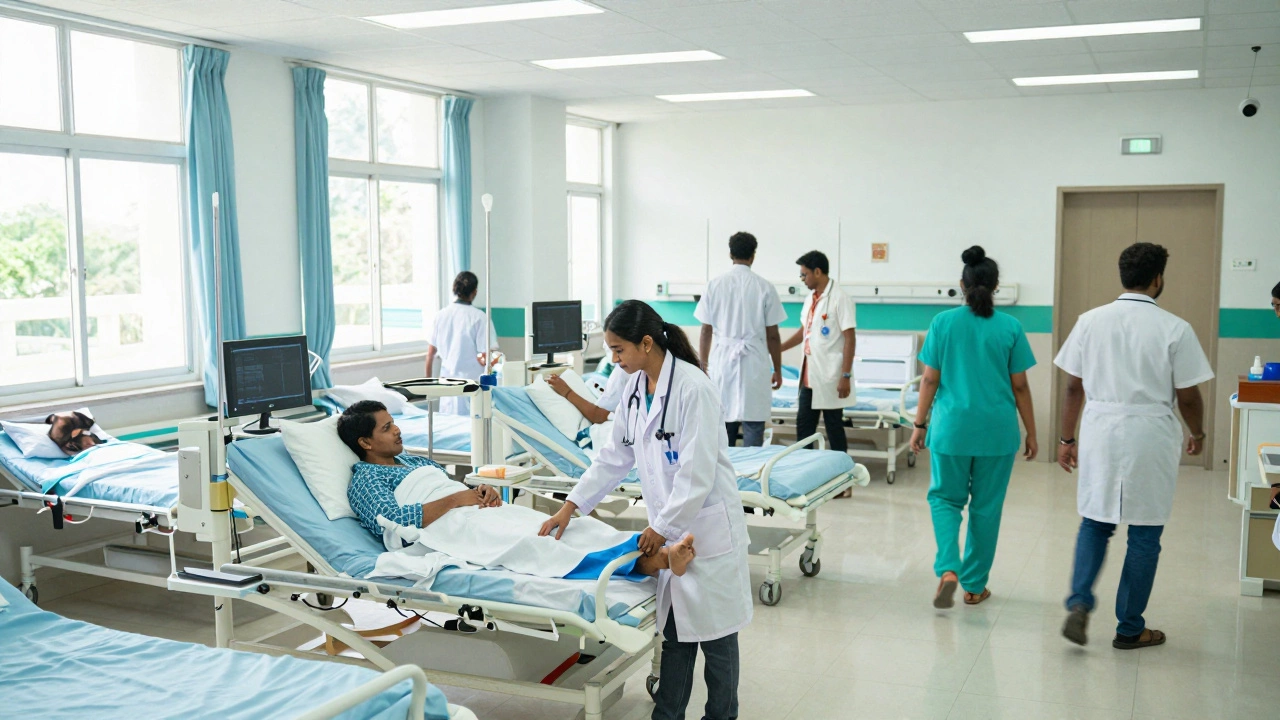
Private Practice vs. Corporate Hospitals
Your choice of workplace dramatically impacts your net income. Working in a corporate hospital chain like Apollo, Fortis, or Max provides stability and a regular paycheck, but your earnings are capped by the hospital’s fee structure. You might earn a steady ₹1 lakh to ₹2 lakhs monthly as a consultant, but you don’t keep all the revenue generated from your patients.
On the other hand, setting up a private clinic offers unlimited earning potential. Once you build a patient base, your income depends on your consultation fees, procedures performed, and referrals. A successful general physician in a tier-2 city can earn ₹1.5 lakhs to ₹3 lakhs monthly after covering operational costs. However, this path requires business acumen, initial capital for setup, and the ability to manage staff and administration. It’s high risk, high reward.
Geographical Variations: Metro vs. Tier-2/3 Cities
Location matters. Doctors in metropolitan cities like Mumbai, Delhi, and Bangalore face higher living costs but also have access to higher-paying corporate hospitals and affluent patient bases. A specialist in Mumbai might charge double the consultation fee of a counterpart in a smaller town.
However, tier-2 and tier-3 cities present unique opportunities. With fewer specialists available, demand outstrips supply. A dermatologist or pediatrician in a city like Indore, Jaipur, or Coimbatore can build a loyal patient base faster than in saturated metro markets. Additionally, the cost of setting up a clinic is lower, meaning your profit margins can be healthier despite slightly lower absolute fees.

Rural Health Initiatives and Government Schemes
The Indian government actively encourages doctors to serve in rural areas through schemes like the National Rural Health Mission (NRHM). Positions such as Community Health Officers or Rural Medical Officers come with attractive incentives. Beyond the standard salary, you might receive hardship allowances, free accommodation, and fast-track promotions. For those interested in public health and social impact, these roles offer financial stability along with the satisfaction of serving underserved communities.
Factors Influencing Salary Growth
- Experience: Like any profession, experience commands respect and higher fees. After 5-10 years, your professional network expands, leading to better referrals and opportunities.
- Specialization: Surgical branches and procedural specialties (like Radiology and Anesthesia) tend to earn more than non-procedural ones (like General Medicine or Psychiatry) in the early stages due to the technical nature of the work.
- Soft Skills: Communication skills, empathy, and patient management directly influence your reputation. Good word-of-mouth marketing is the most powerful tool for a private practitioner.
- Digital Presence: In 2026, having an online presence, offering teleconsultations, and maintaining a professional website can significantly boost your visibility and patient inflow.
Is an MBBS Degree Worth the Investment?
Considering the long duration of study and the initial modest salaries, many students wonder if the ROI is positive. The answer lies in the long term. While the first decade of your medical career might feel financially slow compared to IT or finance sectors, the earning curve steepens significantly post-PG. Moreover, the job security, social status, and the ability to work well into old age make medicine one of the most stable careers in India.
For those aiming for the highest echelons of income, combining clinical practice with academic roles, research grants, or healthcare entrepreneurship can diversify income streams. The key is to view MBBS not just as a job ticket, but as the foundation for a lifelong learning journey.
What is the average salary of a fresh MBBS doctor in India in 2026?
A fresh MBBS graduate in India typically earns between ₹40,000 and ₹70,000 per month in the private sector, while government sector roles offer ₹80,000 to ₹1,10,000 per month including allowances.
How much does an MBBS intern earn during their compulsory rotating internship?
Interns receive a stipend rather than a salary. In government colleges, this ranges from ₹30,000 to ₹50,000 per month, whereas private colleges may offer ₹15,000 to ₹25,000 per month.
Does doing an MD or MS increase a doctor's salary significantly?
Yes, postgraduate specialization leads to a substantial salary hike. Senior Residents in government hospitals earn ₹1,00,000 to ₹1,50,000 per month, while private consultants in specialized fields can earn over ₹2,00,000 per month.
Which branch of medicine pays the highest salary in India?
Surgical branches like Neurosurgery, Orthopedics, and Cardiology, as well as procedural specialties like Radiology and Anesthesiology, generally offer the highest earning potential due to the technical skills required and high demand.
Is it better to work in a government or private hospital for higher income?
Government hospitals offer higher base salaries and better job security, making them ideal for stability. Private hospitals and corporate chains may offer lower base pay but provide incentives and faster career progression for high performers.