
Business Math Calculator
Customer Lifetime Value Calculator
Net Present Value Calculator
Results
When people think about an MBA, they often picture boardrooms, networking events, and high-paying jobs. But lurking behind that glamour is a question that stops a lot of people before they even apply: Is an MBA math heavy? The short answer? It’s not about being a math genius-it’s about being comfortable with numbers. You don’t need to solve differential equations or prove theorems. But you do need to understand how to read a balance sheet, calculate ROI, and interpret data that drives business decisions.
What kind of math do MBA programs actually use?
MBA math isn’t like high school calculus or college-level statistics. It’s practical, applied, and focused on real business problems. Most programs assume you’ve had basic algebra and some exposure to statistics-nothing more. You’ll see things like:
- Percentages and ratios (profit margins, market share, growth rates)
- Basic statistics (mean, median, standard deviation, correlation)
- Financial formulas (NPV, IRR, break-even points)
- Simple algebra (solving for variables in revenue-cost-profit models)
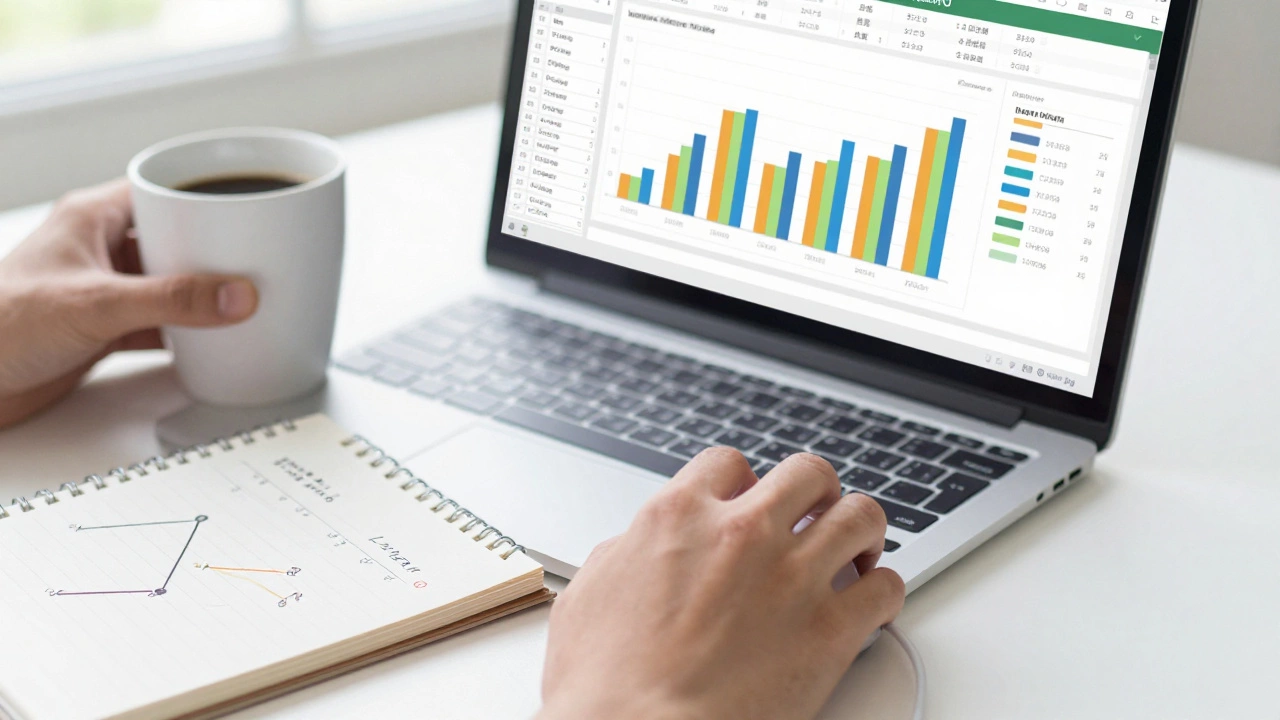
- Excel-based modeling (not coding, just formulas and charts)
For example, in a marketing class, you might calculate customer lifetime value using a simple formula: average purchase value × purchase frequency × customer lifespan. In finance, you’ll learn how to discount future cash flows to find a project’s net present value. These aren’t abstract concepts-they’re tools you’ll use on day one of your job.
Do you need to be good at math to get into an MBA?
Admissions committees don’t expect you to be a mathematician. They care more about your ability to think logically and handle quantitative data. Most top MBA programs require the GMAT or GRE, and both include a quantitative section. But here’s the thing: you don’t need a perfect score. A 45-49 out of 51 on the GMAT Quant is considered strong. Many admitted students score in the 40s.
What matters more is context. If your undergrad was in literature or history, a decent quant score shows you can handle the numbers side of business. If you’ve worked in sales or operations and already use data daily, your experience might matter more than your test score. Schools look at the whole picture-your background, work experience, essays, and recommendations.
What if you’re not confident with math?
You’re not alone. Around 40% of MBA students admit they were nervous about the math before starting. The good news? Schools know this. Most offer free prep courses before orientation-called quant boot camps or math for managers. These run for a week or two and cover everything from basic algebra to Excel modeling. They’re designed for people who haven’t done math in years.
Some programs, like Melbourne Business School or INSEAD, even let you take a pre-MBA math course online for free before you start. Others pair you with a peer tutor. You’ll find that once you start applying math to real cases-like pricing a new product or analyzing a company’s cash flow-it clicks faster than you think.
How much math will you use after graduation?
Once you land a job, you won’t be doing math by hand. You’ll use tools: Excel, Tableau, Power BI, or even AI-driven dashboards. But here’s the catch-you still need to know what the numbers mean. A marketing manager who can’t tell if a 12% increase in conversion is good or bad won’t last long. A finance analyst who doesn’t understand why a 15% IRR matters won’t make the right calls.
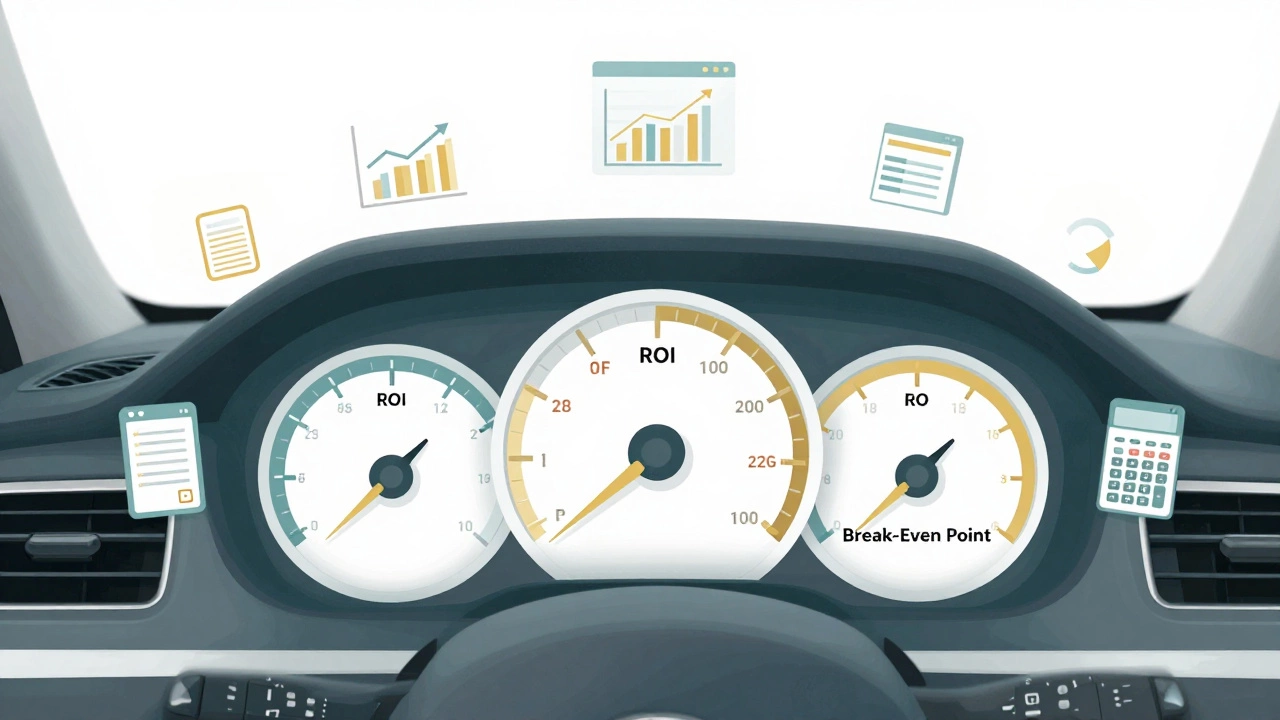
Think of it like driving a car. You don’t need to know how the engine works to drive it, but you do need to understand speed, fuel, and brakes. MBA math is the same. You’re not building the engine-you’re learning how to read the dashboard.
Which MBA specializations require more math?
Not all MBA tracks are equal when it comes to numbers. Some lean heavier on quantitative skills:
- Finance: Heavy on valuation models, risk analysis, and financial forecasting. You’ll use Excel daily.
- Analytics & Business Intelligence: Focuses on data interpretation, regression models, and predictive modeling.
- Operations & Supply Chain: Involves optimization, linear programming, and process efficiency metrics.
- Consulting: Requires quick mental math for case interviews and client presentations.
On the other end, specializations like Marketing, Human Resources, or Entrepreneurship use less math. You’ll still need to understand budgets, ROI, and customer metrics-but you won’t be building complex financial models. If you’re weak in math but want to go into branding or startups, you can still thrive. Just be ready to work with data-savvy teammates.
Real examples: What math do MBA students actually do?
Let’s say you’re in a supply chain class. Your case study is a coffee company trying to reduce shipping costs. You’re given data on: warehouse locations, shipping rates, monthly demand, and delivery times. Your job? Find the cheapest way to ship 10,000 bags of coffee per month across three regions.
You’ll use Excel to set up a simple model: multiply distance × rate × volume, then test different combinations. No advanced math. Just addition, multiplication, and logic.
Or imagine you’re evaluating a startup pitch. The founder claims their app will grow 200% year over year. You ask: What’s their current user base? What’s their churn rate? What’s the customer acquisition cost? You do a quick calculation: if they spend $50 to acquire a customer who pays $10/month, they need to keep that customer for at least 6 months to break even. That’s the kind of math that separates serious investors from dreamers.
Can you succeed in an MBA without strong math skills?
Yes. But you’ll need to be proactive. Here’s how:
- Take a free online prep course before starting (Khan Academy’s Business Math or Coursera’s Math for Business are great).
- Join study groups. Most MBA students help each other with tough topics.
- Use tools like Excel’s built-in functions instead of doing calculations manually.
- Ask for help early. Professors and teaching assistants expect students to struggle-they’ve all been there.
- Focus on understanding the why behind the numbers, not just the formula.
One student I know, a former English teacher from Brisbane, started her MBA terrified of math. She spent 30 minutes every night reviewing basic formulas. By the end of her first term, she was leading a group project on pricing strategy. She didn’t become a statistician-but she learned to speak the language of business.
Bottom line: Is an MBA math heavy?
No, it’s not math-heavy in the way engineering or physics is. But yes, you’ll need to be comfortable with numbers. The math isn’t hard-it’s just unfamiliar to many people. It’s not about being perfect. It’s about being willing to learn, ask questions, and use tools. If you can add, subtract, multiply, divide, and understand percentages, you already have 80% of what you need.
What makes the difference isn’t your math score-it’s your curiosity. The people who succeed in MBA programs aren’t the ones who got top marks in calculus. They’re the ones who ask, ‘What does this number tell me about the business?’ That’s the real skill you’re building.
Do you need a business background to do well in an MBA?
No. Around 60% of MBA students come from non-business backgrounds-engineering, arts, healthcare, tech, and more. Programs are designed for this. You’ll learn business fundamentals from scratch. Your previous experience often gives you a unique perspective that’s valuable in group projects and case discussions.
Can you skip the math-heavy courses in an MBA?
Not really. Core courses like Financial Accounting, Managerial Economics, and Business Statistics are required. But electives let you choose lighter options later. For example, you can pick a marketing strategy class instead of advanced corporate finance. Most schools allow you to tailor your path after the first year.
Is Excel enough for MBA math, or do you need to learn Python or R?
Excel is the baseline. Most MBA programs teach Excel modeling and data visualization. Python or R are optional and usually only needed if you’re going into analytics, consulting, or tech roles. Even then, you’ll learn the basics during the program. You don’t need to know them before you start.
How much time should you spend preparing for MBA math before starting?
If you’re unsure, spend 10-15 hours total before orientation. Focus on percentages, ratios, basic statistics, and Excel formulas like SUMIF, VLOOKUP, and pivot tables. Use Khan Academy or free YouTube tutorials. Don’t stress about calculus. You won’t need it.
Do MBA programs help students who struggle with math?
Yes. Most schools offer free tutoring, peer mentoring, and math workshops. Some even have dedicated academic support staff for quantitative subjects. If you’re falling behind, speak up early. Schools want you to succeed-they invest a lot in your education.
What to do next if you're considering an MBA
If you’re thinking about applying but worried about the math, start by taking a free 1-hour intro course. Try Business Math Essentials on edX or Quantitative Methods for Business on Coursera. Do a few practice GMAT quant questions. See how you feel. If you can understand the explanations, you’re already on the right track.
Remember: MBA programs don’t want perfect mathematicians. They want leaders who can make smart decisions with data. You don’t need to love math. You just need to respect it-and be willing to learn.