
JEE Preparation Readiness Quiz
Loading question...
Quiz Complete!
Here is your performance summary.
Keep studying!
Key Takeaways from this Quiz:
- Exam Structure: JEE Main is speed-oriented; JEE Advanced tests conceptual depth. Prepare for Advanced to dominate Main.
- Foundation: NCERT is non-negotiable, especially for Chemistry.
- Strategy: Consistency beats intensity. 6-8 hours of focused study is better than erratic 14-hour days.
- Analysis: Analyzing mock tests (70%) is more important than just taking them (30%).
You’ve heard the horror stories. You’ve seen your seniors studying until 2 AM. You know that IIT JEE is one of the toughest exams in India, with a success rate hovering around 1-2% for the Advanced level. But here’s the truth nobody tells you upfront: it’s not just about how much you study; it’s about how smartly you start. If you’re sitting there wondering where on earth to begin, take a breath. You don’t need to solve every problem in HC Verma by tomorrow. You need a system.
Starting early gives you the luxury of time, but starting wrong wastes it. Whether you are in Class 11 or preparing for a drop year, the first six months define your trajectory. This guide breaks down exactly how to kickstart your journey without burning out before the real race begins.
Know Your Enemy: The Structure of the Exam
Before you open a single book, you need to understand what you’re fighting. The Joint Entrance Examination (JEE) isn’t one test; it’s two. Confusing them is a rookie mistake that costs ranks.
| Feature | JEE Main | JEE Advanced |
|---|---|---|
| Conducting Body | National Testing Agency (NTA) | One of the IITs (rotating annually) |
| Purpose | Admission to NITs, IIITs, GFTIs & Qualifier for Advanced | Admission to IITs only |
| Difficulty Level | Moderate to High (Speed-oriented) | Very High (Conceptual depth) |
| Question Type | MCQs + Numerical Value Questions | Multiple Correct MCQs, Integer Type, Matrix Match |
| Frequency | Two sessions per year | Once per year |
Your primary target right now should be mastering the concepts required for both. Why? Because if you prepare for JEE Advanced, JEE Main becomes easy. If you only prepare for Main, Advanced will crush you. Keep this hierarchy in mind as you build your foundation.
The Foundation Phase: NCERT is Non-Negotiable
Many students make the fatal error of jumping straight into heavy reference books like Cengage or Arihant series while their school basics are shaky. Stop. Go back to NCERT textbooks. For Chemistry, especially Inorganic and Organic, NCERT is the bible. The questions in JEE Main often come directly from NCERT lines. For Physics and Math, NCERT ensures you understand the fundamental definitions before you try to twist them into complex problems.
- Physics: Read the theory chapters carefully. Understand the derivations. Don’t just memorize formulas; know where they come from.
- Chemistry: Memorize the periodic table trends. Learn the reactions in Organic Chemistry step-by-step. Do not skip the 'In-text' questions.
- Mathematics: Solve every example problem. Math is cumulative; if you miss a basic concept in Algebra, Calculus will feel impossible later.
Choosing Your Path: Coaching vs. Self-Study
This is the biggest decision you’ll face. Should you join a big-name coaching institute in Kota or Delhi, or can you handle it alone with online resources?
Coaching provides structure. You get a fixed timetable, regular tests, and peers who push you. It removes the burden of planning. However, it can also create a false sense of security. Just because you attended a class doesn’t mean you learned anything. Many students spend hours commuting or waiting for classes, losing valuable self-study time.
Self-study requires immense discipline. You need to curate your own syllabus, find good video lectures (YouTube has plenty of quality content), and schedule your own mock tests. It’s cheaper and more flexible, but if you lack self-control, you might drift. A hybrid model-online coaching with rigorous self-practice-is becoming increasingly popular among top rankers.

Building a Study Routine That Actually Works
A 14-hour study day sounds impressive until you realize you spent 4 hours looking at one page. Quality beats quantity. Aim for 6-8 hours of focused study initially, gradually increasing as you get comfortable.
Use the Pomodoro technique or similar time-blocking methods. Study for 50 minutes, break for 10. During breaks, actually rest. Don’t scroll through Instagram reels; that keeps your brain in high-dopamine mode, making it hard to refocus on dry textbook pages.
Here’s a simple rule of thumb: Never study three subjects in one day. Pick two. One heavy, one light. Consistency matters more than intensity. Studying 5 hours every day for a year is far better than studying 15 hours for a week and then quitting for a month.
The Power of Mock Tests and Analysis
Knowledge without application is useless in JEE. You must start taking mock tests early, even if you haven’t finished the syllabus. Test yourself on what you’ve covered so far.
But here’s the catch: Taking the test is only 30% of the work. Analyzing it is the other 70%. When you get a question wrong, ask yourself why:
- Did I not know the concept?
- Did I make a silly calculation error?
- Did I misread the question?
- Did I run out of time?
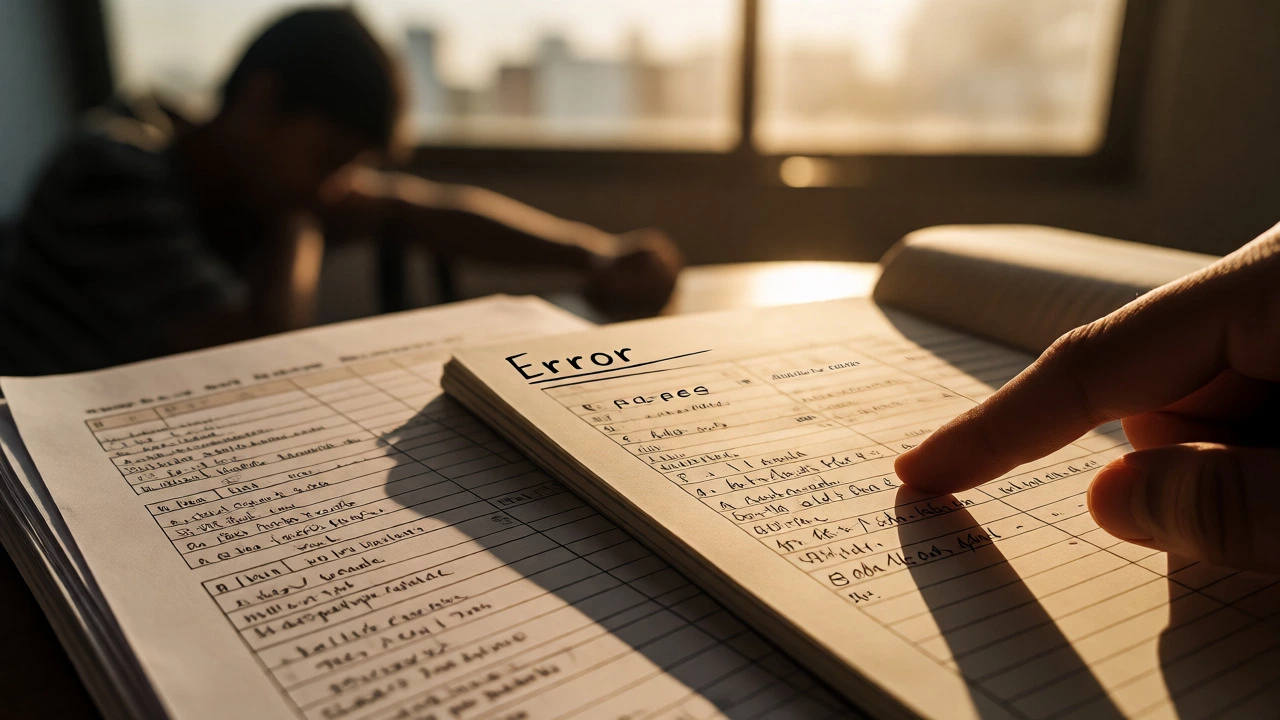
Keep an "Error Notebook." Write down every mistake. Review this notebook weekly. Over time, you’ll notice patterns. Maybe you always mess up vector algebra signs. Now you know exactly what to fix.
Managing Mental Health and Burnout
JEE preparation is a marathon, not a sprint. Burnout is real. It hits when you feel overwhelmed by the vastness of the syllabus. To combat this, maintain a hobby outside of studies. Play cricket, draw, listen to music, or sleep. Yes, sleep. Your brain consolidates memory during deep sleep. Cutting sleep to save time usually results in lower retention, meaning you have to relearn things again.
Stay connected with friends and family. Isolation leads to anxiety. Talk to mentors or seniors who have cracked the exam. Their perspective can calm your nerves when you feel like giving up.
Essential Resources for Beginners
Don’t hoard books. Buy fewer, master them completely. Here is a starter pack recommendation:
- Physics: NCERT, H.C. Verma (Concepts of Physics Vol 1 & 2). Once done, move to D.C. Pandey or I.E. Irodov (selective problems).
- Chemistry: NCERT (Mandatory), O.P. Tandon for Physical/Organic, M.S. Chauhan for Organic practice.
- Mathematics: NCERT, R.D. Sharma (Objective), Arihant Skills in Mathematics series.
Remember, solving 100 problems thoroughly is better than skimming 500.
When is the best time to start IIT JEE preparation?
Ideally, start in Class 11. This gives you two full years to cover the syllabus deeply. Starting in Class 12 is possible but requires intense dedication and likely some prior foundational knowledge. Drop-year aspirants should treat the entire year as a revision and advanced problem-solving phase.
Is coaching necessary for clearing IIT JEE?
No, coaching is not strictly necessary. Many top rankers have cleared via self-study using online resources and standard books. However, coaching helps with discipline, doubt resolution, and peer competition. Choose based on your self-discipline levels and financial situation.
How many hours should I study daily for JEE?
Quality matters more than quantity. Start with 4-5 hours of focused study if you are in school, aiming to increase to 6-8 hours during holidays or drop years. Consistent daily effort is key. Avoid extreme 14-hour days initially as they lead to quick burnout.
Should I focus on JEE Main or JEE Advanced first?
Focus on building strong concepts which serve both. In the final months, shift focus to JEE Main speed and pattern recognition. Since JEE Main is a qualifier for Advanced, you must clear it first. Prepare for Advanced-level difficulty throughout the year to ensure you are over-prepared for Main.
What is the role of NCERT books in JEE preparation?
NCERT is crucial, especially for Chemistry. Direct questions appear from NCERT text in JEE Main. For Physics and Math, NCERT builds the fundamental understanding required to tackle higher-level problems. Never ignore NCERT in favor of only reference books.
How do I handle difficult topics in Mathematics?
Break them down. If you are stuck on Integration, go back to Differentiation basics. Use multiple sources if one explanation doesn't click. Practice easier problems first to build confidence, then gradually increase difficulty. Do not skip topics entirely unless absolutely necessary near the exam date.