Personalized English Learning Routine Builder
Configure Your Plan
Your Daily Study Plan
Select your preferences to generate a personalized study schedule.
Imagine walking into a coffee shop in Sydney, trying to order a flat white, but the words just won't come out. You know what you want, but your brain goes blank. This happens to millions of people every day. The good news? You don't need expensive tutors or fancy textbooks to fix this. You can learn basic English for free using tools that are already in your pocket.
The internet has changed language learning forever. Ten years ago, you needed a classroom. Today, you have access to the same materials used by universities, all for zero dollars. The key isn't finding one magic app; it's building a routine that uses different types of free resources together.
The Best Free Apps for Daily Practice
If you only have ten minutes a day, start here. Mobile apps are designed to keep you hooked with small, manageable lessons. They use spaced repetition, a scientific method that helps you remember words longer by showing them at just the right time.
| App Name | Best For | Key Feature | Limitation |
|---|---|---|---|
| Duolingo | Vocabulary & Basics | Game-like interface keeps you motivated | Limited grammar explanations |
| Babbel | Conversational Phrases | Real-life dialogues and cultural tips | Free version is very limited |
| HelloTalk | Speaking with Natives | Chat directly with English speakers | Requires social confidence |
| AnkiDroid | Memory Retention | Customizable flashcards with algorithms | Steep learning curve to set up |
Duolingo is the most popular language learning app globally, known for its gamified approach to vocabulary acquisition. It’s great for beginners because it feels like playing a game. You earn points, unlock levels, and build streaks. But don’t stop there. Duolingo teaches you words, but it doesn’t always teach you how to string them together in a sentence. That’s where other tools come in.
For actual conversation, try HelloTalk is a language exchange platform that connects users with native speakers for text, voice, and video chats. You help someone learn your language, and they help you learn English. It’s free, authentic, and scary at first. But that fear is exactly why it works. You’re forced to speak, not just read.
Mastering Grammar Without a Textbook
Grammar rules can feel like a wall. Why do we say "I have been going" instead of "I go"? You don’t need to memorize every rule. You need to understand the logic. Fortunately, some websites explain grammar better than any teacher could.
BBC Learning English is a comprehensive online resource offering free courses, videos, and articles on English grammar, vocabulary, and pronunciation. Their "6 Minute English" series is perfect for busy people. Each episode covers a topic, introduces new words, and explains why certain phrases are used. It’s short, engaging, and available on YouTube too.
Another hidden gem is British Council LearnEnglish is an official educational portal providing structured lessons, games, and tests for English learners of all levels. They offer specific sections for business English, young learners, and exam preparation. If you want to check if you’ve learned something correctly, their quizzes are excellent.
Don’t ignore Grammarly is an AI-powered writing assistant that checks spelling, grammar, punctuation, and style in real-time. While the premium version costs money, the free version catches 90% of common mistakes. Write an email, paste it into Grammarly, and see what it changes. Over time, you’ll start noticing patterns in your own errors.
Listening Skills: Training Your Ear
You might know the words, but can you hear them when spoken quickly? Native speakers swallow sounds. "What are you doing?" becomes "Whatcha doin'?" If you haven’t trained your ear, you’ll miss half the conversation.
Podcasts are your best friend here. Start with slow, clear speech. VOA Learning English is a US-based news service that produces stories and reports at a slower speed for English learners. They speak about 30% slower than normal news broadcasts. Listen to the same episode three times. First time: just listen. Second time: read the transcript while listening. Third time: listen again without reading. You’ll be shocked at how much more you catch the third time.
YouTube channels like English with Lucy is a popular YouTube channel focused on British English pronunciation, vocabulary, and culture. or Penguingrammar is an educational YouTube channel featuring animated lessons on English grammar and usage. provide visual cues that help your brain connect sound to meaning. Turn on subtitles, but don’t rely on them. Try to guess the word before you look.
Speaking Out Loud: Breaking the Silence
This is the hardest part. Most people avoid speaking because they’re afraid of making mistakes. But mistakes are data. Every error tells you what you need to work on next.
Start by talking to yourself. It sounds silly, but it works. Describe what you’re doing. "I am making coffee. The water is hot. I need a spoon." Say it out loud. Record yourself on your phone. Listen back. Do you sound like you understand yourself? If not, try again.
Join free online communities. Reddit has subreddits like r/language_exchange where you can find partners. Discord servers dedicated to English learning are active 24/7. You can jump into voice channels and just listen at first. Then, say hello. Then, answer a question. Small steps build confidence.
Use shadowing technique. Find a short audio clip of a native speaker. Play a sentence, pause, and repeat it exactly as they said it. Copy their speed, their emotion, their pauses. This trains your mouth muscles to move in new ways.
Reading for Fun, Not Just Study
Textbooks are boring. Real life isn’t. To learn basic English for free, you need to read things you actually enjoy. Comics, blogs, news headlines, product reviews-anything works.
News in Levels is a website that presents current news stories rewritten at three different difficulty levels for English learners. Read the Level 1 story. Then read Level 2. Notice how the complex ideas are simplified. This shows you how to rephrase difficult thoughts into simple English.
Children’s books are underrated. Project Gutenberg is a library of over 60,000 free eBooks, including classic literature and public domain texts. offers thousands of free classics. Start with Dr. Seuss or Roald Dahl. The sentences are short, the vocabulary is controlled, and the stories are fun. You’ll learn grammar naturally through context, not rules.
Building a Sustainable Routine
Consistency beats intensity. Studying for five hours once a week does nothing. Studying for fifteen minutes every day changes your brain. Here’s a simple plan:
- Morning (5 mins): Open Duolingo or Anki. Review yesterday’s words.
- Commute (10 mins): Listen to VOA Learning English or a podcast.
- Lunch (5 mins): Read one article on BBC Learning English.
- Evening (10 mins): Speak aloud. Shadow a YouTube video or chat on HelloTalk.
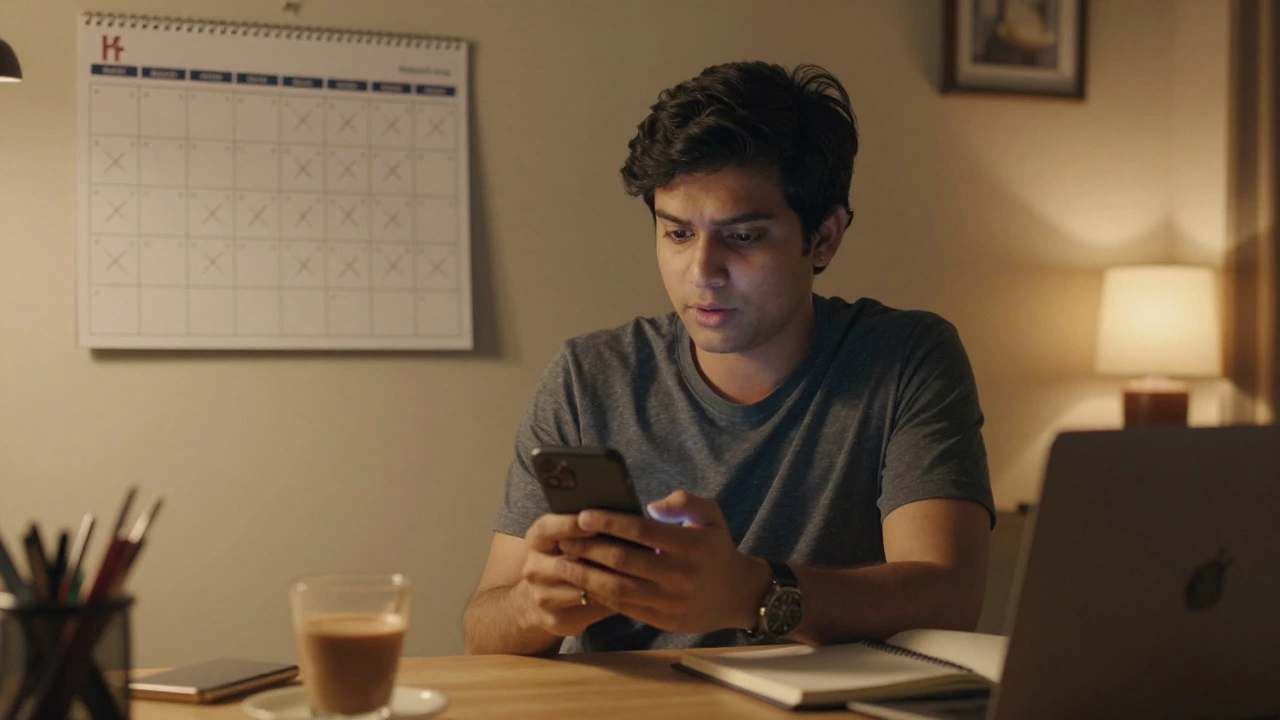
Track your progress. Use a habit tracker app or a simple calendar. Put an X on each day you study. Don’t break the chain. After thirty days, you’ll see a difference. After six months, you’ll be surprised by how much you can handle.
Common Pitfalls to Avoid
Many learners get stuck because they make the same mistakes. Don’t let these be yours.
Perfectionism: Waiting until you’re "ready" to speak means you’ll never speak. Accept that you will sound awkward. Everyone did. Even native speakers made mistakes when they were kids.
Passive Learning: Watching Netflix with subtitles isn’t enough. You must interact. Pause, repeat, write down new words. Passive input needs active output to stick.
Ignoring Pronunciation: If you can’t say it clearly, people won’t understand you. Spend time on sounds that don’t exist in your native language. The "th" sound, the "r" vs "l" distinction-these matter.
Can I really learn English completely for free?
Yes. While paid courses offer structure, free resources like Duolingo, BBC Learning English, and YouTube channels cover all essential skills. You just need discipline to combine them effectively.
How long does it take to learn basic English?
With consistent daily practice of 30-60 minutes, most adults reach a basic conversational level (A2) in 3-6 months. Fluency takes longer, but basics come quickly if you focus on high-frequency words.
Is Duolingo enough to learn English?
Duolingo is great for vocabulary and motivation, but it lacks deep grammar explanation and real conversation practice. Combine it with speaking apps like HelloTalk and listening resources like podcasts for balanced learning.
What is the best way to improve pronunciation for free?
Use the shadowing technique with YouTube videos. Record yourself and compare. Also, use free tools like YouGlish to hear how specific words are pronounced in real contexts by native speakers.
Do I need to learn grammar rules first?
No. Focus on communication first. Learn grammar as you encounter problems. Understanding why a sentence works is more valuable than memorizing abstract rules early on.