Cracking IIT JEE in your first attempt isn’t about luck. It’s about strategy, consistency, and knowing exactly what to focus on. Every year, over 1.5 million students appear for JEE Main, and only about 25,000 make it into the IITs. That’s less than 2%. But among those who succeed, the majority cleared it on their first try-not because they’re geniuses, but because they followed a clear, disciplined path.
Understand the Exam Structure Inside Out
JEE Main and JEE Advanced are not the same exam. Many students treat them as one, and that’s their first mistake. JEE Main tests your grasp of the Class 11 and 12 NCERT syllabus with 75 multiple-choice questions across Physics, Chemistry, and Mathematics. JEE Advanced, on the other hand, is harder-it’s more conceptual, has subjective-type questions, and includes tricky multi-correct options. You need to prepare for both, but differently.
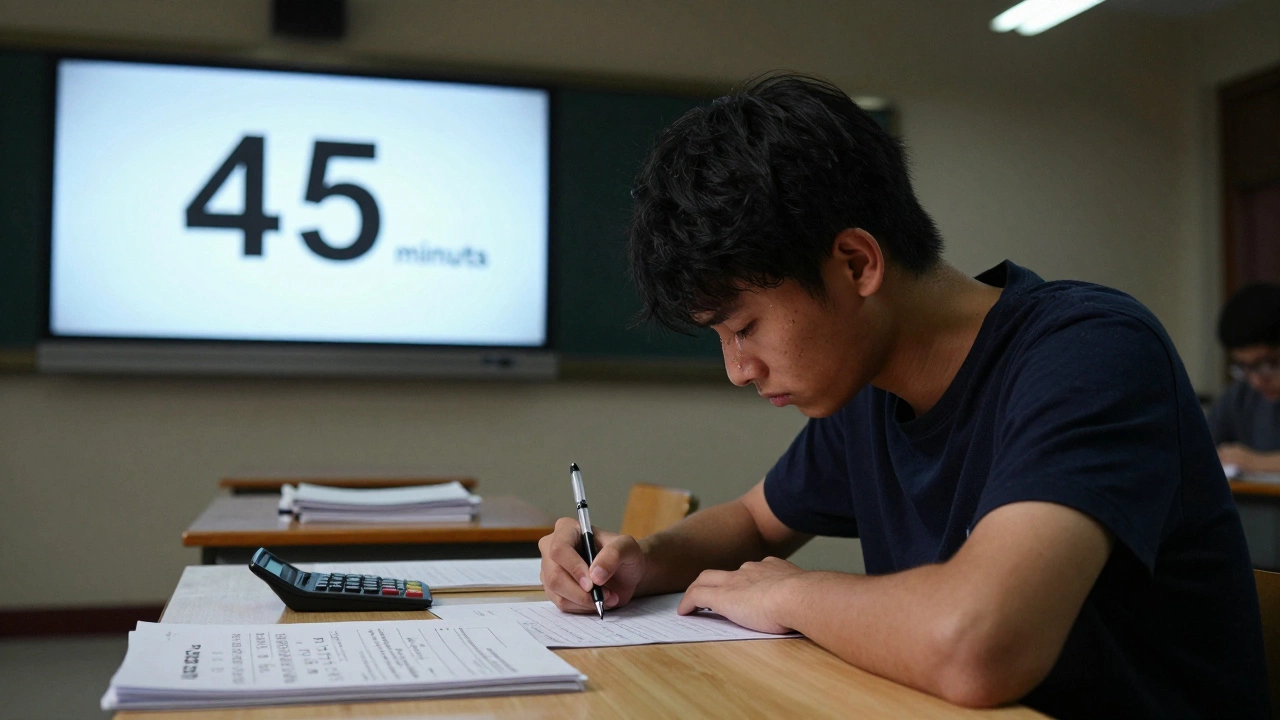
For JEE Main, speed and accuracy matter more. You get 3 minutes per question. For JEE Advanced, depth matters. One question can take 10 minutes. If you’re aiming for an IIT, you must clear JEE Main first (top 2.5 lakh rankers qualify), then crack JEE Advanced (only top 20,000 get into IITs).
Start with NCERT-Don’t Skip It
Most coaching institutes push advanced books from day one. That’s a trap. NCERT books for Physics, Chemistry, and Math are the foundation. In 2024, over 60% of JEE Main questions came directly or with minor changes from NCERT. In Chemistry, 38 out of 90 questions were NCERT-based. In Physics, concepts like kinematics, thermodynamics, and electrostatics were tested exactly as explained in NCERT.
Don’t just read NCERT. Annotate it. Solve every example. Do every exercise. If you can’t solve a problem from NCERT, you’re not ready for advanced material. Build your confidence here first. Only after mastering NCERT should you move to books like H.C. Verma for Physics, O.P. Tandon for Chemistry, or R.D. Sharma for Math.
Create a Realistic Study Schedule
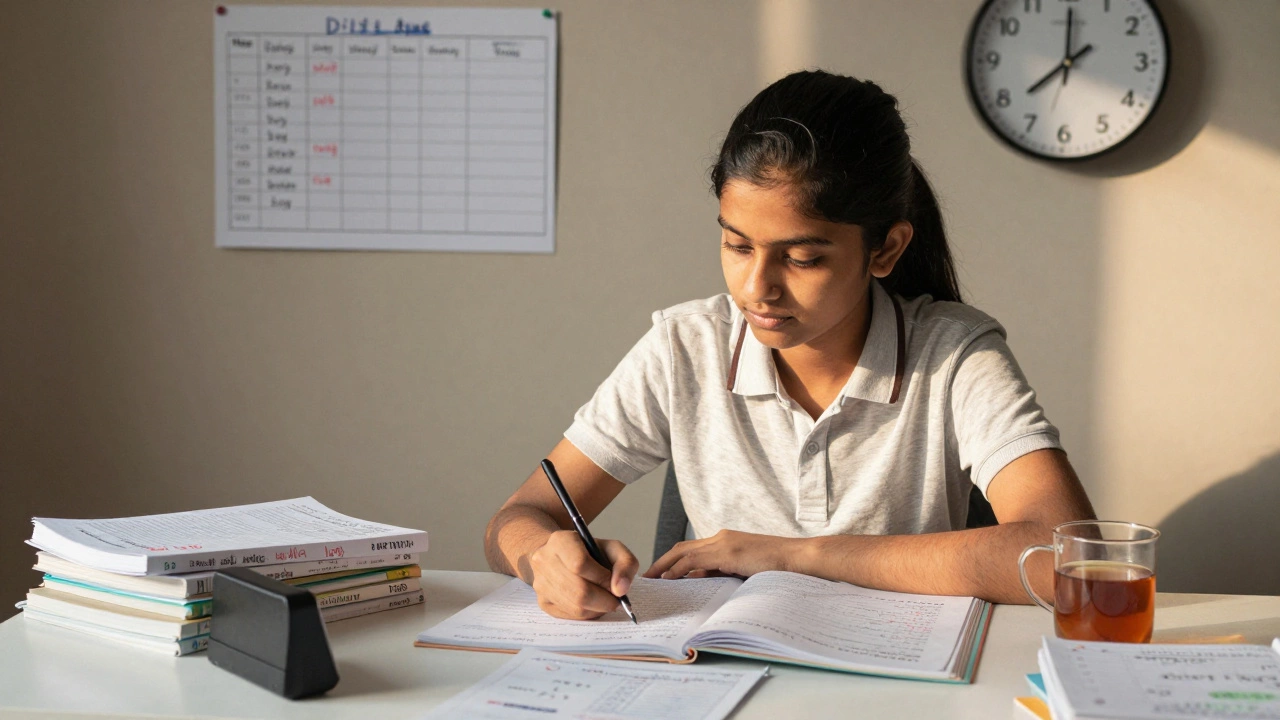
Studying 12 hours a day sounds impressive, but it’s unsustainable. Most toppers study 6-8 focused hours daily, with breaks. The key isn’t duration-it’s consistency. Here’s a sample daily plan that works:
- 6:30 AM - 7:30 AM: Revise formulas and weak topics (Physics or Math)
- 8:00 AM - 12:00 PM: New topic (e.g., Organic Chemistry or Calculus)
- 12:00 PM - 1:00 PM: Lunch + break
- 1:00 PM - 4:00 PM: Practice problems (topic-specific)
- 4:00 PM - 5:00 PM: Short test (10-15 questions)
- 5:30 PM - 7:00 PM: Review mistakes and note down errors
- 8:00 PM - 9:00 PM: Light revision or flashcards
Weekends? Use them for full-length mock tests. No new topics. Just analysis. Track your accuracy, time per question, and which topics drain your energy.
Master the Art of Mock Tests
Mock tests aren’t practice-they’re diagnostics. Take one every weekend starting 6 months before JEE Main. Use official NTA papers or reliable coaching materials like Allen, Resonance, or FIITJEE. After each test, do a 2-hour post-mortem:
- Which questions did you get wrong? Why? (Concept gap? Silly mistake? Time pressure?)
- Which topics took too long? Flag them for revision.
- Did you skip questions you could’ve solved? That’s a mindset issue.
Top performers don’t aim for 100% accuracy. They aim for 90% accuracy in easy and medium questions. That’s enough to score 200+ in JEE Main. The hard questions? Leave them for the end-if you have time.
Focus on High-Weightage Topics
You can’t master everything. Prioritize. Here’s what to focus on based on past 5 years of papers:
| Subject | Top 3 Topics | Approx. Weightage |
|---|---|---|
| Physics | Electrodynamics, Mechanics, Modern Physics | 45% |
| Chemistry | Organic Chemistry, Chemical Bonding, Coordination Compounds | 50% |
| Mathematics | Calculus, Coordinate Geometry, Algebra | 55% |
These topics make up 70% of the paper. Master them first. Then move to lower-weightage areas like Semiconductors or Environmental Chemistry. Don’t waste time on obscure topics unless you’ve already nailed the core.
Eliminate Common Mistakes
Here are the top 5 mistakes first-time aspirants make:
- Changing books every month. Stick to 2-3 trusted sources.
- Ignoring previous year papers. They show patterns. Solve at least 10 years.
- Not practicing handwritten calculations. You can’t use a calculator in JEE.
- Studying without timing. Speed is a skill-train it.
- Comparing progress with others. Your journey is yours alone.
One student I know cleared JEE Advanced with a rank under 500. He didn’t study 14 hours a day. He solved 300 problems every week-no more, no less-and reviewed every mistake. That’s the secret: quality over quantity.
Stay Mentally Strong
Pressure kills more candidates than lack of knowledge. If you’re stressed, your memory fails. Your focus slips. Your confidence cracks.
Do this: Write down your top 3 fears about JEE. Now write down one action for each. Fear: "I’ll fail." Action: "I’ll take one mock test every week and improve by 5% each time." Fear: "My parents expect too much." Action: "I’ll have one honest talk with them every month about my progress, not my rank."
Get 7 hours of sleep. Eat well. Walk for 20 minutes daily. Don’t skip family time. Your mental health isn’t a luxury-it’s part of your preparation.
Final Month Strategy
In the last 30 days, stop learning new topics. Stop solving 50-question sets. Do this:
- Revise your error notebook daily.
- Take 2 full mocks under exam conditions (same time, no phone, strict timing).
- Focus on formula sheets-Physics, Math, Organic reactions.
- Practice writing answers neatly. In JEE Advanced, presentation matters.
On the night before the exam, don’t study. Watch a funny video. Talk to your family. Sleep early. You’ve done the work. Now trust it.
What Happens After JEE Main?
If you clear JEE Main, don’t relax. JEE Advanced is a different beast. It’s not just harder-it’s designed to filter out those who memorize. You need to think. Practice previous JEE Advanced papers (2015-2025). Focus on multi-concept problems. For example, a single question might combine kinematics, friction, and energy conservation.
Many students think they’ve cracked it after JEE Main. They don’t. The real test begins now.
Can I crack IIT JEE in first attempt without coaching?
Yes, many students clear JEE without coaching. The key is discipline and access to quality resources. Use free YouTube channels like Mohit Tyagi or Unacademy JEE, NCERT textbooks, and previous year papers. Build a strict schedule and stick to it. Coaching helps with structure, but it doesn’t replace your effort.
How many hours should I study daily for JEE?
Focus on quality, not quantity. 6-8 focused hours with no distractions is better than 12 hours of half-hearted studying. Include revision, practice, and error analysis in your daily routine. Consistency over months matters more than marathon sessions.
Is it too late to start JEE preparation in Class 12?
No. Many toppers started seriously in Class 12. The trick is to prioritize. Cover NCERT thoroughly, focus on high-weightage topics, and take mocks every week. You’ll need to work harder, but it’s absolutely possible. Use the 8-month window smartly.
Which books are best for JEE Advanced preparation?
For Physics: H.C. Verma + I.E. Irodov (for advanced). For Chemistry: O.P. Tandon (organic), J.D. Lee (inorganic), P. Bahadur (physical). For Math: R.D. Sharma (basics), Cengage series (advanced), and Arihant’s previous year papers. Don’t collect books-master 2-3.
How important is time management in JEE?
Critical. In JEE Main, you have 180 minutes for 90 questions. That’s 2 minutes per question. In JEE Advanced, you have 3 hours for 54 questions-still tight. Practice timed tests. Learn to skip questions quickly. If a problem takes more than 4 minutes, move on. Come back later if you have time.
Next Steps After JEE
If you clear JEE Advanced, you’ll get to choose from 23 IITs. Rank determines your branch and campus. Top ranks get Computer Science at IIT Bombay or Delhi. Mid-range ranks get Electrical or Mechanical at newer IITs. Lower ranks get Civil or Chemical-but even those are excellent degrees.
Don’t fixate on one IIT or branch. Look at placement stats, faculty strength, and campus culture. Many students regret choosing a "prestigious" branch they hate. Pick something you’re curious about.
And if you don’t clear it this time? That’s not failure. It’s feedback. Thousands of students crack IITs on their second or third attempt. The system rewards persistence, not just brilliance.