
English Speaking Confidence Tracker
Daily Practice Checklist
Select the activities you completed today to measure your progress.
Start checking off tasks to see your daily confidence score!
Do you freeze when someone asks you a question in English? You know the answer, but your mind goes blank. Your heart races, and suddenly, all those grammar rules you studied vanish. This is not just a language problem; it is a confidence problem. Many learners spend years mastering vocabulary lists and syntax charts, yet they still struggle to hold a simple conversation. The gap between knowing English and speaking it confidently is often filled with fear of judgment.
Building confidence in speaking English is less about perfection and more about persistence. It requires shifting your mindset from "I must be correct" to "I must be understood." In this guide, we will break down practical, actionable steps to help you speak with ease, reduce anxiety, and connect with others effectively.
The Psychology of Language Anxiety
Before you can fix your speech, you need to understand why you hesitate. Language anxiety is a specific type of performance anxiety that occurs when communicating in a second language. It triggers the same fight-or-flight response as physical danger. When you are afraid of making mistakes, your brain prioritizes self-protection over communication. This causes mental blocks, stuttering, or complete silence.
To overcome this, you must reframe what a "mistake" means. In social interactions, small grammatical errors rarely matter. If you say, "I go to the store yesterday" instead of "I went," most native speakers will understand you perfectly. They might even notice the error, but they will not judge your intelligence based on it. Accepting that imperfection is part of the learning process is the first step toward confidence.
- Shift the goal: Aim for clarity, not correctness.
- Accept discomfort: Feeling awkward is normal when learning new skills.
- Focus on connection: People care more about what you say than how you say it.
Shadowing: Mimicry for Natural Flow
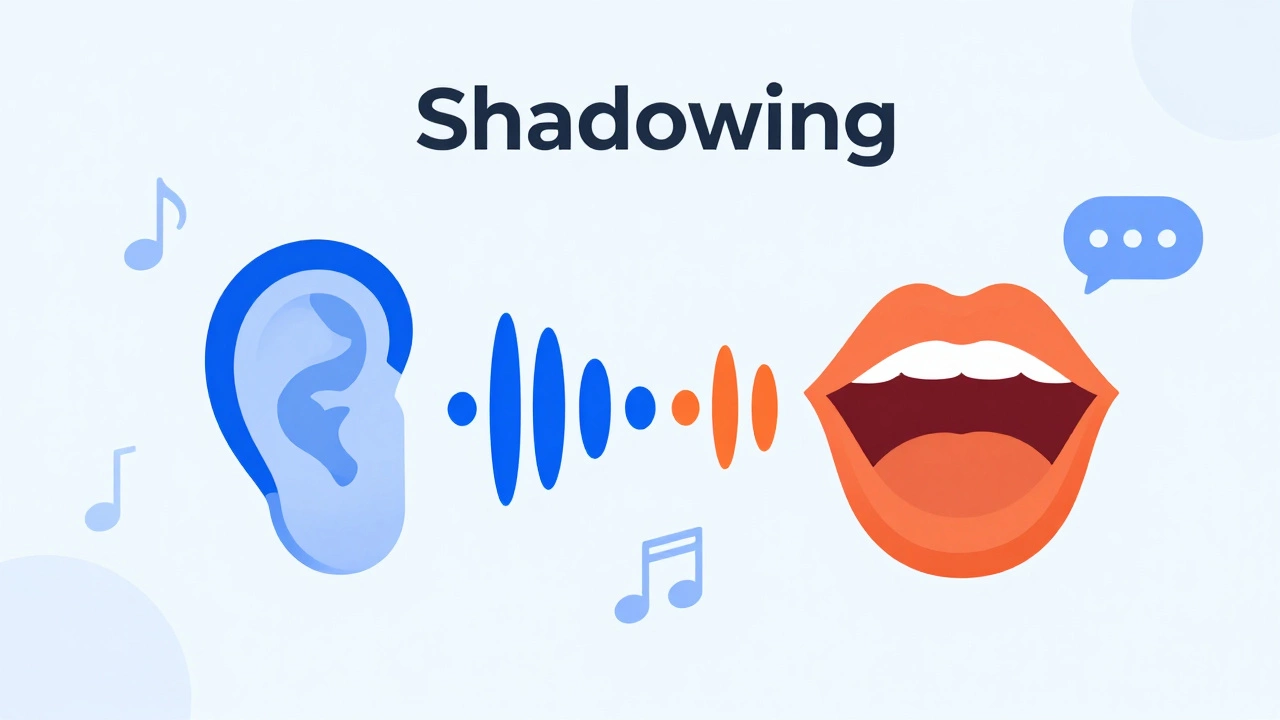
One of the most effective techniques for boosting confidence is Shadowing, which is a listening technique where you repeat spoken words immediately after hearing them. This method helps train your mouth muscles to move correctly without the cognitive load of translating thoughts into words. It bridges the gap between passive understanding and active production.
Here is how to practice shadowing effectively:
- Choose the right material: Select a short audio clip (1-2 minutes) from a podcast, YouTube video, or movie scene. Ensure the speaker speaks at a moderate pace and uses clear articulation.
- Listen first: Listen to the clip several times without speaking. Focus on the rhythm, intonation, and stress patterns. Notice where the speaker pauses and emphasizes certain words.
- Repeat aloud: Play the audio again and repeat the words almost simultaneously. Try to match the speaker's speed and emotion exactly. Do not worry about meaning initially; focus on sound.
- Record yourself: Use your phone to record your shadowing session. Compare it to the original audio. Identify areas where your pronunciation or rhythm differs.
Regular shadowing builds muscle memory. Over time, common phrases become automatic, reducing the mental effort required during conversations. This automation frees up your brain to focus on content rather than form, significantly boosting your confidence.
Create Low-Stakes Practice Environments
You cannot build confidence in high-pressure situations if you have not practiced in low-stakes ones. Jumping straight into business meetings or job interviews is like trying to run a marathon without training. Start small and gradually increase the difficulty.
| Stage | Activity | Risk Level | Goal |
|---|---|---|---|
| 1. Solo Practice | Talk to yourself, narrate daily actions | Zero | Overcome initial hesitation |
| 2. AI Interaction | Chat with voice assistants or language apps | Low | Practice without judgment |
| 3. Safe Partners | Speak with friends or supportive tutors | Medium | Receive gentle feedback |
| 4. Public Forums | Join online discussion groups or clubs | High | Real-world application |
Narrating your day is a powerful solo exercise. As you make coffee, say out loud, "I am pouring hot water into the cup." While driving, describe what you see: "There is a red car turning left." This habit keeps your vocal cords active and reduces the shock of speaking spontaneously. It also helps you identify vocabulary gaps in real-time.
Leverage Technology for Feedback
In 2026, technology offers unprecedented tools for language learning. AI-powered language tutors are software applications that provide instant feedback on pronunciation, grammar, and fluency. Unlike human tutors, AI does not judge you. It provides objective data on your performance, allowing you to improve without embarrassment.
Apps like Duolingo, ELSA Speak, or Babbel offer features specifically designed for speaking practice. They analyze your voice waveforms and compare them to native speaker models. This immediate feedback loop accelerates learning because you can correct errors instantly. However, remember that AI is a tool, not a replacement for human interaction. Use it to polish your skills, but always aim to apply them in real conversations.
Voice recording is another underrated tool. Record yourself answering a simple question like, "What did you do today?" Listen back critically but kindly. Note any filler words (um, ah, like) or pauses. Then, try again. Repeat until you feel satisfied. This self-correction process builds metacognitive awareness, helping you monitor your own speech in real-time.
Expand Vocabulary Through Context
A large vocabulary does not automatically mean confident speaking. In fact, memorizing isolated word lists can hinder fluency because retrieving random words takes mental energy. Instead, learn vocabulary in chunks and contexts. Collocations are groups of words that naturally go together, such as "make a decision" or "heavy rain." Learning these phrases as single units allows you to speak more fluidly because you do not have to construct sentences word by word.
Focus on high-frequency words first. The top 1,000 words in English cover approximately 85% of everyday conversation. Mastering these core words gives you the foundation to express most ideas. Once you are comfortable with basic vocabulary, expand into topic-specific terms relevant to your interests or profession.
Reading aloud is an excellent way to integrate vocabulary and pronunciation. Choose articles, blogs, or books that interest you. Reading forces you to engage with complex sentence structures while practicing articulation. It also exposes you to natural phrasing and idiomatic expressions that textbooks often miss.

Embrace Silence and Pauses
Many learners fear silence in conversation. They fill every gap with filler words to avoid appearing slow. However, strategic pauses demonstrate confidence. Native speakers pause frequently to think, emphasize points, or transition between topics. Using silence shows that you are thoughtful and in control of the conversation.
If you forget a word, do not panic. Use paraphrasing strategies. For example, if you forget the word "umbrella," you can say, "the thing we use to stay dry in the rain." This workaround keeps the conversation flowing and often impresses listeners with your creativity. It also reduces the pressure to recall exact terminology instantly.
Practice pausing intentionally. During your next conversation, take a breath before answering questions. Count to two silently if needed. This brief delay gives your brain time to formulate a coherent response and prevents rushed, error-prone speech.
Join Communities for Consistent Practice
Consistency is key to language acquisition. Sporadic study sessions yield minimal results compared to daily exposure. Joining a community provides accountability and regular opportunities to speak. Language exchange meetups are social gatherings where people practice different languages with each other. These events create a supportive environment where everyone is focused on learning, reducing the fear of judgment.
Online platforms like Tandem or HelloTalk connect you with native speakers worldwide. You can send voice messages, join group chats, or schedule video calls. Engaging with diverse accents and dialects prepares you for real-world interactions and broadens your cultural understanding.
Consider joining a Toastmasters club or similar public speaking organization. These groups focus on communication skills regardless of language proficiency. Practicing structured speeches builds confidence in organizing thoughts and delivering them clearly. The supportive feedback from peers helps you refine your delivery over time.
Maintain a Growth Mindset
Finally, cultivate a growth mindset. Believe that your ability to speak English can improve with effort. Avoid fixed-mindset statements like "I am bad at languages" or "I will never be fluent." Replace them with affirmations such as "I am getting better every day" or "Mistakes help me learn."
Celebrate small victories. Did you order food in English without switching to your native language? Did you ask a colleague a question during a meeting? Acknowledge these achievements. They prove that progress is happening, even if it feels slow.
Remember that confidence is a skill, not a trait. It is built through repeated exposure and successful experiences. By implementing these strategies consistently, you will transform your relationship with English. You will move from fearing mistakes to embracing them as stepping stones toward fluency.
How long does it take to boost confidence in speaking English?
Confidence varies by individual, but consistent practice for 30 minutes daily can yield noticeable improvements in 4-6 weeks. Key factors include frequency of practice, willingness to make mistakes, and exposure to real conversations.
Is it better to study grammar or practice speaking?
For confidence, prioritize speaking. Grammar studies support accuracy, but excessive focus on rules can hinder fluency. Balance both by applying grammar knowledge in conversations rather than memorizing charts.
What should I do if I forget a word during a conversation?
Use paraphrasing or descriptive language. Explain the concept using simpler words. For example, instead of "stapler," say "the office tool that binds papers." This keeps the conversation flowing and demonstrates communication skills.
Can watching movies help improve speaking confidence?
Yes, especially with shadowing. Watching movies exposes you to natural speech patterns, slang, and cultural context. Pause scenes to mimic dialogue, focusing on intonation and emotion rather than just words.
How do I deal with accent-related insecurity?
Accents are natural and add character to speech. Focus on clarity and intelligibility rather than eliminating your accent entirely. Most listeners appreciate effort over perfect pronunciation. Practice clear articulation of vowel sounds to enhance understanding.