
Study Abroad Cost Calculator
Your Study Abroad Details
Cost Insights
This calculator provides a rough estimate based on 2026 cost data. Actual costs may vary.
For accurate planning, add at least $2,000-$3,000 for emergency funds.
Estimated Annual Cost
Studying abroad sounds like a dream-new cities, different cultures, a degree that opens doors. But the real question no one talks about enough: how much does it actually cost to study abroad? It’s not just tuition. It’s rent, food, insurance, flights, visas, and surprise fees that show up when you least expect them. If you’re thinking about going overseas, you need to know the real numbers-not the brochures.
Tuition fees vary wildly by country and program
Tuition is the biggest chunk, but it’s not the same everywhere. In the U.S., public universities charge international students between $25,000 and $45,000 per year. Private schools like Stanford or NYU can hit $60,000. In the U.K., undergraduate degrees for international students average £22,000 to £38,000 ($28,000-$48,000). Canada is slightly cheaper, with most programs between CAD $20,000 and $35,000 per year.
But here’s where it gets surprising: some countries offer near-free education. Germany, Norway, and Finland don’t charge tuition for international undergraduates at public universities. You still pay around €800-€1,200 per semester for administrative fees and student services. In France, public universities charge EU students €170 per year-but non-EU students pay €2,770 for bachelor’s degrees. That’s still less than a single semester in the U.S.
Medical and engineering degrees cost more everywhere. A medical degree in Australia can run $300,000+ over six years. An MBA at a top school in the U.S. or U.K. often exceeds $100,000. Always check the exact program page-not the university homepage. Fees change yearly, and some courses have hidden lab or clinical fees.
Living expenses: rent, food, and transport add up fast
Tuition isn’t the only bill. Living costs can be higher than tuition in some places. In cities like London, Sydney, or New York, rent alone can eat up $1,200-$2,000 per month. A one-bedroom apartment near campus in Sydney costs around AUD $2,800/month. In contrast, a similar apartment in Lisbon or Kraków runs $600-$900.
Food is another surprise. Eating out every day in Tokyo or Zurich will drain your account. Cooking at home cuts costs dramatically. A weekly grocery run for one person in Canada averages CAD $80-$120. In the Philippines or Vietnam, you can eat well for $150 a month. Don’t forget utilities-internet, electricity, water-usually $50-$150 extra per month.
Transportation matters too. A monthly transit pass in Berlin is €80. In Tokyo, it’s ¥10,000 ($65). In smaller towns, you might need a bike or car. Insurance is mandatory in most countries. Student health insurance in Australia costs around AUD $600/year. In the U.S., it can be $2,000+ unless covered by your school.
Hidden costs you won’t find on the website
There’s a long list of fees that don’t show up in the ‘estimated cost of attendance’ calculator. Visa application fees alone can cost $500-$1,000. The U.S. SEVIS fee is $350. The UK visa surcharge is £776 per year. Australia’s student visa is AUD $800. These are one-time, non-refundable, and often due before you even get your offer letter.
Then there’s airfare. Round-trip flights from India to the U.S. or Australia cost $1,200-$2,000. From Nigeria to the U.K.? $1,500-$2,500. You’ll likely fly home once or twice a year. That’s $2,500-$5,000 just for tickets.
Textbooks? In the U.S., students spend $1,200 per year on books and supplies. Many schools now use digital materials, but you still need a reliable laptop. A decent one costs $800-$1,200. You’ll also need to pay for printing, lab fees, field trips, and sometimes mandatory orientation programs.
And don’t forget currency exchange fees. Every time you transfer money from your home country, you lose 3-5% to banks and services like Western Union. Using Wise or Revolut can cut that to under 1%.
How to make it affordable: real strategies that work
Most people think studying abroad is only for the rich. That’s not true. Here’s what actually works:
- Apply for scholarships early-many are not advertised. The Erasmus+ program in Europe gives €10,000/year to non-EU students. Australia offers Australia Awards Scholarships covering full tuition and living costs.
- Work part-time-in Canada, you can work 20 hours/week during term. In Germany, you can earn up to €450/month tax-free. In the U.K., you’re allowed 20 hours. That’s $5,000-$8,000 a year extra.
- Choose lower-cost countries-Portugal, Poland, Malaysia, and Thailand offer quality education at 1/3 the cost of the U.S. or U.K.
- Live off-campus-university dorms are convenient but expensive. Renting with roommates cuts costs by 40-60%.
- Use student discounts-everything from train tickets to museum entry is cheaper with a valid student ID. Always ask.
Some students fund their degrees by freelancing online-writing, tutoring, graphic design. Platforms like Upwork and Fiverr let you earn in USD or EUR while living in a low-cost country. One student from Nigeria paid for her entire second year in Poland by tutoring high school math online.
What you can’t skip: emergency funds and budgeting
Even with a full scholarship, you need a buffer. Unexpected medical bills, lost cards, flight changes-these happen. Experts recommend keeping at least $2,000-$3,000 in a separate account for emergencies. That’s not optional. It’s insurance.
Track your spending. Use free apps like Mint, YNAB, or even Google Sheets. Record every coffee, every bus ride, every online purchase. Most students underestimate daily spending. A $5 latte every day is $150/month. That’s $1,800 a year-enough to cover a round-trip ticket to visit home.
Set up automatic transfers from your home account to your foreign account. Don’t wait until your balance hits zero. Many banks charge high fees for low balances or overdrafts abroad.

Real numbers: what a typical year costs in 2026
Let’s break down one year in three countries:
| Country | Tuition | Living Costs | Visa & Insurance | Flights | Total |
|---|---|---|---|---|---|
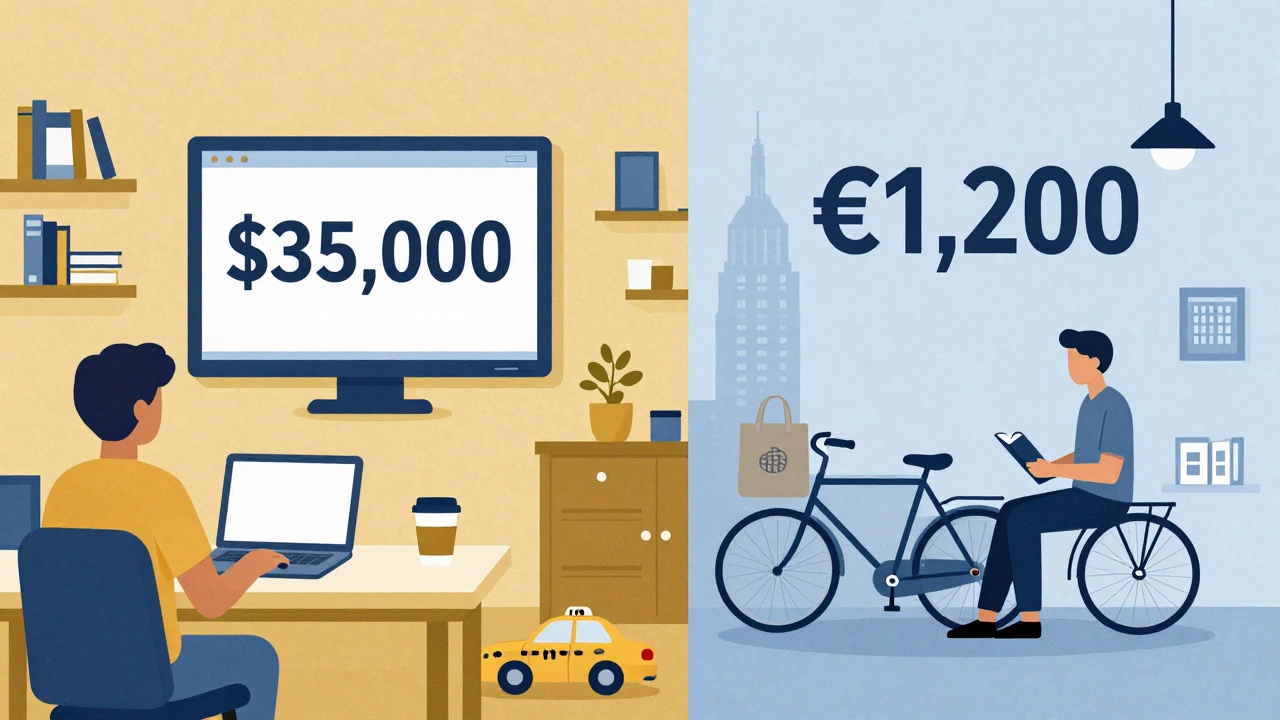
| United States | $35,000 | $18,000 | $1,500 | $1,500 | $56,000 |
| Germany | $0 (admin fee: $1,200) | $12,000 | $800 | $1,500 | $15,500 |
| Australia | $32,000 | $20,000 | $1,000 | $2,000 | $55,000 |
Germany stands out-not because it’s cheap, but because tuition is nearly zero. That’s why over 120,000 international students chose Germany in 2025. The U.S. and Australia are expensive, but they offer more scholarships and part-time work options.
Is it worth it? The ROI question
Yes, if you plan it right. Graduates from top international programs earn 20-40% more over their lifetime, according to OECD data. But that’s not automatic. You need to build skills, network, and gain experience while you’re there.
Many students who studied in Canada or Germany stayed after graduation and got work visas. Canada’s Post-Graduation Work Permit lets you work for up to three years. Germany offers an 18-month job-seeking visa. These aren’t just perks-they’re pathways to lower-cost living and higher income later.
Don’t go abroad just because it’s trendy. Go because you’ve done the math. If you can’t afford it without massive debt, wait. Save. Apply for scholarships. Choose a country where your skills are in demand. The right education abroad can change your life. But only if you’re prepared for the real cost.
Can I study abroad with no money?
You can’t study abroad with zero money, but you can study with very little if you plan carefully. Countries like Germany, Norway, and Taiwan offer low or no tuition. Scholarships like the DAAD (Germany), Erasmus+, or Australia Awards cover full costs. Working part-time legally and living frugally can cover living expenses. It’s hard, but it’s possible.
What’s the cheapest country to study abroad in 2026?
Germany is the cheapest for most students-no tuition at public universities, low rent outside major cities, and strong part-time work rights. Poland, Malaysia, and Portugal are also very affordable. In Malaysia, you can get a full degree for under $10,000 per year, including living costs. Always check visa rules and post-study work options before choosing.
Do scholarships cover everything?
Some do, but most don’t. Full scholarships (like the Fulbright or Chevening) cover tuition, living costs, flights, and insurance. Partial scholarships usually cover only tuition. You’ll still need to fund housing, food, and visas. Always read the fine print. Ask the university’s financial aid office exactly what’s included.
How much should I save before leaving?
Save at least one full year’s estimated costs before you leave. That includes tuition (if you need to pay upfront), flights, visa fees, insurance, and three months of living expenses. Many universities require proof of funds before issuing your student visa. Don’t wait until the last minute-processing delays happen.
Can I work while studying abroad?
Yes, in most countries, but rules vary. Canada allows 20 hours/week during term, full-time in breaks. The U.K. allows 20 hours/week for degree students. Australia allows 48 hours/fortnight. Germany allows 120 full days or 240 half-days per year. Always check your visa conditions. Working illegally can get you deported.
What if I run out of money halfway through?
Don’t panic, but act fast. Contact your university’s international student office-they often have emergency grants or payment plans. You can also apply for additional scholarships mid-year. Some countries allow you to increase your part-time work hours under hardship. Never stop paying rent or insurance. Falling behind can lead to visa cancellation.
Next steps: what to do now
If you’re serious about studying abroad, start with this:
- Decide on your field of study. Some degrees have more scholarships than others.
- Make a list of 5 countries with low tuition and good work rights.
- Search for scholarships-don’t wait until your last year of school.
- Calculate your total cost: tuition + rent + food + flights + insurance + visa.
- Open a separate savings account and set up automatic deposits.
- Start learning the local language-even basic phrases help you save money and find jobs.
The dream of studying abroad is real. But the reality is a budget, a plan, and patience. Get the numbers right, and you won’t just survive-you’ll thrive.