Interactive IIT Explorer (2026)
Filter & Search
Showing: 23.
States covered: 0.
Average Year: --.
You’ve likely heard the name "IIT" thrown around in every conversation about engineering in India. It’s the gold standard. But if you ask someone how many IITs actually exist, you’ll get a confusing mix of answers. Some say seven. Others say twenty. The truth is, the number has changed significantly over the last decade.
As of 2026, there are exactly 23 IITs in India. These institutions hold Institute of National Importance status, granted by an Act of Parliament. This distinction matters because it gives them autonomy in admissions, curriculum, and funding, separate from regular universities. If you are preparing for the JEE Advanced exam, knowing which institutes exist-and where they are located-is your first step toward strategic planning.
The Evolution: From Seven to Twenty-Three
To understand the current landscape, you have to look back at where things started. The journey began with the establishment of the first institute in Kharagpur in 1951. For decades, the group was small, exclusive, and intensely competitive. The original seven IITs-Kharagpur, Bombay, Madras, Kanpur, Delhi, Guwahati, and Roorkee-were the only options for top-tier engineering education.
The expansion didn’t happen overnight. In the early 2000s, the government recognized the need for more high-quality technical education across different regions. New institutes were upgraded or established, starting with Bhubaneswar and Patna. By 2008, the count had risen to twelve. Then came a major wave of approvals between 2009 and 2016, adding institutes in cities like Hyderabad, Gandhinagar, and Indore. The final additions included newer centers in Goa, Palakkad, Tirupati, Dhanbad, Jammu, Mandi, and Bhilai, bringing the total to the current twenty-three.
This expansion wasn’t just about quantity; it was about geographic diversity. Previously, most top institutes were clustered in North and West India. Now, states like Kerala, Tamil Nadu, and Himachal Pradesh have their own premier technical universities. This means students from these regions no longer have to relocate thousands of kilometers away to access world-class education.
The Original Seven: Legacy and Prestige
While all 23 IITs are excellent, the original seven carry a specific weight due to their history, alumni networks, and research output. When people talk about "the IITs" in a general sense, they often refer to this core group. Let’s break them down by location and specialty reputation.
- IIT Kharagpur: Located in West Bengal, this is the oldest IIT. It is known for its large campus and diverse academic offerings, including humanities and management alongside engineering.
- IIT Bombay: Situated in Maharashtra, it is consistently ranked among the top globally. Its proximity to Mumbai’s financial hub makes it a hotspot for finance and consulting placements.
- IIT Madras: Based in Tamil Nadu, it is renowned for its research culture and incubation center (IIMC), which has spawned numerous tech startups.
- IIT Kanpur: Located in Uttar Pradesh, it is famous for its rigorous academic standards and strong emphasis on theoretical computer science and mathematics.
- IIT Delhi: As the capital city’s flagship institute, it benefits from strong industry connections and a vibrant urban environment.
- IIT Guwahati: Nestled in Assam, it offers a unique blend of natural beauty and cutting-edge research, particularly in civil and environmental engineering.
- IIT Roorkee: Originally the Thomason College of Civil Engineering, it has deep roots in infrastructure and civil engineering disciplines.
The Expanded Network: Regional Powerhouses
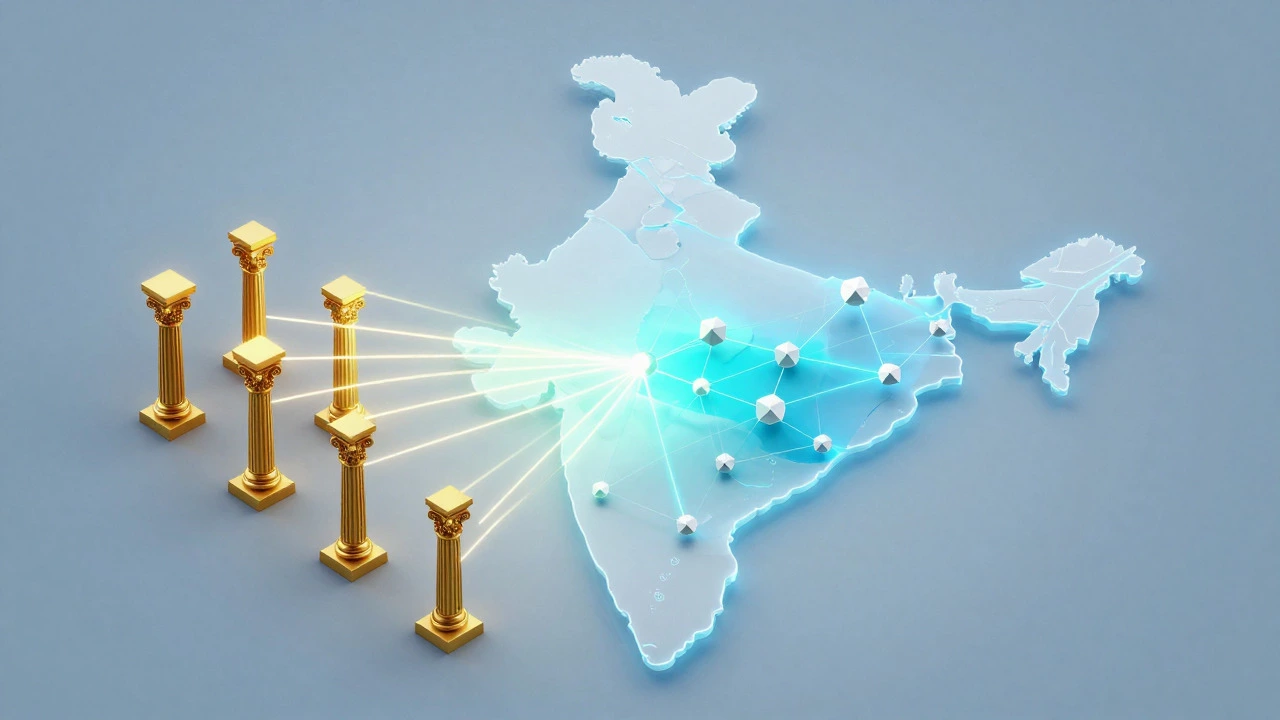
The remaining sixteen IITs are not second-rate; they are rapidly growing into regional powerhouses. Many of them now rank higher than older national-level engineering colleges. Here is how they are distributed across the country:
| Institute Name | Location (City, State) | Year Established/Upgraded |
|---|---|---|
| IIT Bhubaneswar | Bhubaneswar, Odisha | 2008 |
| IIT Patna | Patna, Bihar | 2008 |
| IIT Gandhinagar | Gandhinagar, Gujarat | 2008 |
| IIT Hyderabad | Sangareddy, Telangana | 2008 |
| IIT Ropar | Rupnagar, Punjab | 2008 |
| IIT (BHU) Varanasi | Varanasi, Uttar Pradesh | 2012 |
| IIT Mandi | Mandi, Himachal Pradesh | 2009 |
| IIT Jodhpur | Jodhpur, Rajasthan | 2008 |
| IIT Indore | Indore, Madhya Pradesh | 2009 |
| IIT (ISM) Dhanbad | Dhanbad, Jharkhand | 2016 |
| IIT Jammu | Jammu, Jammu & Kashmir | 2016 |
| IIT Palakkad | Palakkad, Kerala | 2015 |
| IIT Tirupati | Tirupati, Andhra Pradesh | 2015 |
| IIT Goa | Goa | 2019 |
| IIT Bhilai | Bhilai, Chhattisgarh | 2020 |
| IIT Dharwad | Dharwad, Karnataka | 2021 |
| IIT Nagpur | Nagpur, Maharashtra | 2021 |
| IIT Pune | Pune, Maharashtra | 2021 |
Note that some of these, like IIT (BHU) Varanasi and IIT (ISM) Dhanbad, were formed by upgrading existing prestigious institutions. This means they already had decades of faculty and infrastructure before receiving the IIT tag. Newer ones like IIT Bhilai and IIT Dharwad are still building their campuses but are attracting top faculty from day one.
Why the Number Matters for JEE Aspirants
If you are a student preparing for the Joint Entrance Examination (JEE), the number 23 changes your strategy. In the past, getting into any IIT meant you were in the top 0.1% of candidates. Today, while the competition remains fierce, the pool of seats has expanded.
Here is the reality: admission is centralized through JEE Advanced. You don’t apply to individual IITs directly. Instead, you take JEE Main, qualify for JEE Advanced, and then participate in a counseling process where you rank your preferences. The system uses a points-based algorithm to allocate seats based on your rank, category, and home state quota.
Understanding the distribution helps you make smarter choices during counseling. For example, if you are from South India, you might prefer IIT Madras or IIT Palakkad for cultural familiarity and lower living costs. If you are interested in AI and Machine Learning, institutes like IIT Hyderabad and IIT Gandhinagar have invested heavily in these departments recently. Knowing that there are 23 options allows you to cast a wider net rather than fixating on just the top five.

Common Misconceptions About IITs
There is a lot of noise online about what constitutes an IIT. Let’s clear up three common myths.
Myth 1: All engineering colleges in India are IITs. False. Only these 23 specific institutions hold the title. Other great colleges like NITs (National Institutes of Technology) or IIITs (Indian Institutes of Information Technology) are separate entities with their own entrance exams and prestige levels.
Myth 2: Newer IITs are inferior. Not necessarily. While legacy institutes have stronger alumni networks, newer IITs often have better facilities, smaller batch sizes, and more personalized attention. IIT Palakkad and IIT Tirupati, for instance, have achieved impressive placement records in their first few years.
Myth 3: You can enter without JEE. Generally, no. Undergraduate admissions are strictly through JEE Advanced. However, postgraduate programs may have different criteria, and some institutes offer direct PhD admissions based on GATE scores or interviews.
Future Expansion: Will There Be More?
The government has discussed adding more IITs, particularly in underrepresented states like Manipur, Mizoram, and Sikkim. As of mid-2026, no new institutes have been officially notified by Parliament. However, the trend suggests that the focus is shifting from creating new IITs to strengthening existing NITs and state universities. The goal is to spread quality education rather than concentrate it further.
For now, stick to the confirmed list of 23. Keep an eye on official notifications from the Ministry of Education for any future updates. Until then, your preparation should focus on mastering the syllabus for JEE Advanced, regardless of which specific institute you aim for.
How many IITs are there in India in 2026?
There are currently 23 Indian Institutes of Technology (IITs) in India as of 2026. These include the original seven legacy institutes and sixteen newer ones established or upgraded between 2008 and 2021.
What is the difference between old and new IITs?
The main differences lie in history, alumni network size, and brand recognition. Old IITs (like Bombay, Delhi, and Madras) have decades of research output and global alumni. New IITs often have newer infrastructure, smaller student batches, and are rapidly improving their placement records. Academically, the standards are similar across all 23.
Which exam is required to get into any IIT?
To secure admission to any undergraduate program at an IIT, you must qualify for JEE Advanced. First, you need to pass JEE Main to be eligible for JEE Advanced. Admission is then granted through a centralized counseling process based on your JEE Advanced rank.
Are there any IITs in South India?
Yes, there are several. IIT Madras is in Tamil Nadu. IIT Palakkad and IIT Tirupati are also in Kerala and Andhra Pradesh respectively. Additionally, IIT Goa serves the southern coastal region. IIT Dharwad and IIT Nagpur serve parts of Karnataka and Maharashtra.
Is IIT BHU considered an IIT?
Yes, Banaras Hindu University's Institute of Technology was renamed IIT (BHU) Varanasi in 2012 after being granted Institute of National Importance status. It functions fully as an IIT for admissions and governance purposes.