Coding Education Path Estimator
Not sure which path fits your schedule? Enter your details below to see a personalized estimate of how long it will take to reach junior developer proficiency.
Ready to Estimate?
Select your path and input your availability to see your projected timeline.
You’re staring at a job listing that says "Bachelor’s in Computer Science required," and you’re wondering if spending four years getting that degree is worth it. Or maybe you’ve seen ads for coding bootcamps promising a job in twelve weeks, and you’re skeptical about how much you can actually learn in three months. The truth is, there is no single answer to "how long is coding school." It depends entirely on what kind of education you choose, your prior experience, and how fast you can absorb complex logic.
Let’s cut through the noise. If you want to be a professional developer ready to pass technical interviews, here are the realistic timelines: self-study takes 6-12 months, bootcamps take 3-9 months, and computer science degrees take 4 years. But those numbers hide a lot of nuance. A bootcamp isn’t just a class; it’s an immersion program. A degree isn’t just coding; it’s theory. And self-study requires a level of discipline most people underestimate. This guide breaks down exactly what happens during each phase so you can pick the path that fits your life and goals.
The Short Answer: Realistic Timelines by Education Type
Before we dive into the details, look at this comparison. These estimates assume you are starting from zero knowledge and aiming for a junior-level position where you can contribute to real projects.
| Educational Path | Typical Duration | Weekly Commitment | Best For | Key Outcome |
|---|---|---|---|---|
| Coding Bootcamp | 12-24 Weeks | 40+ hours (Full-time) | Career changers needing speed | Job-ready portfolio & practical skills |
| Computer Science Degree | 4 Years | 15-20 hours (Part-time study) | Deep theoretical foundation | Broad understanding & credential power |
| Self-Paced Online Courses | 6-18 Months | 10-20 hours (Variable) | Hobbyists or upskillers | Specific skill acquisition |
| Community College Certificate | 6-12 Months | 15-20 hours | Affordable structured learning | Basic competency & transfer credits |
Coding Bootcamps: The Fast Track
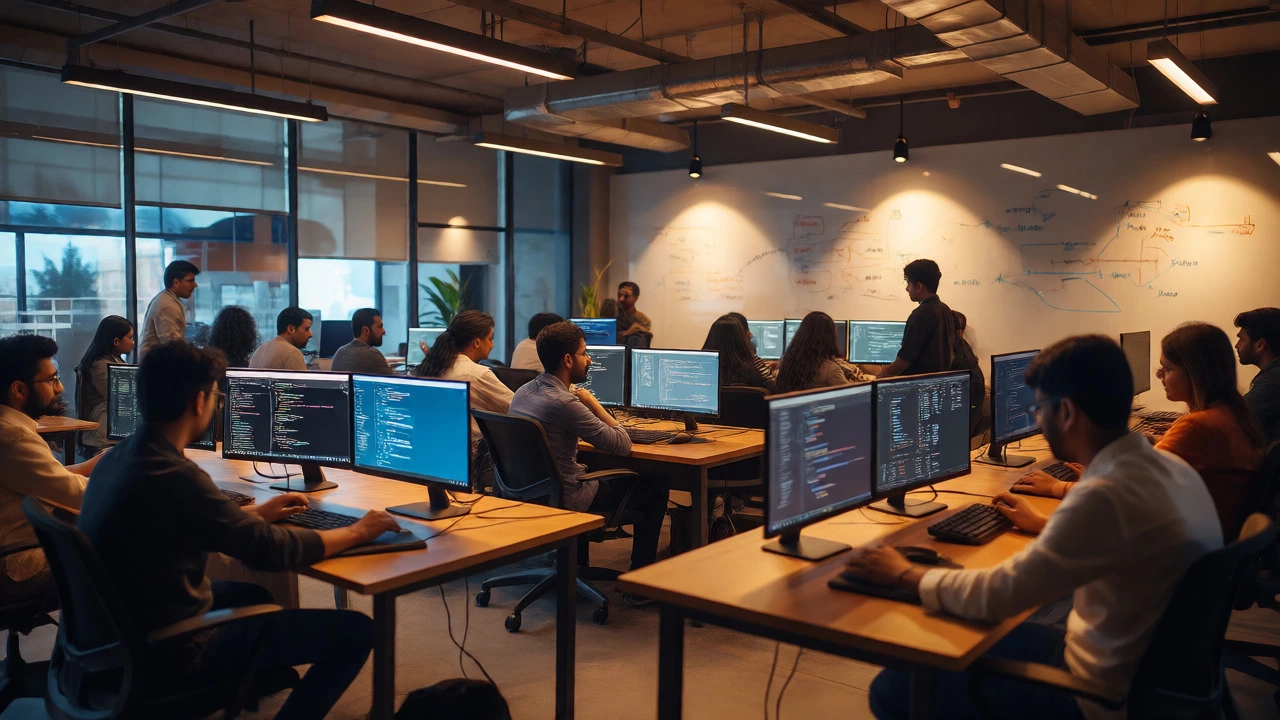
If you ask anyone in the tech industry about the fastest way to switch careers, they’ll likely mention a coding bootcamp. These intensive programs compress years of computer science concepts into a few months. The standard full-time bootcamp lasts between 12 and 16 weeks. Some prestigious programs like General Assembly or App Academy extend to 24 weeks to cover more ground, particularly if they include a dedicated career services phase.
Why so short? Because bootcamps skip the theory. You won’t spend weeks proving why a linked list works mathematically. Instead, you’ll build one after another until you understand how to use them in a web application. The curriculum usually follows a strict pattern:
- Weeks 1-4: Fundamentals. HTML, CSS, JavaScript basics. You learn how the browser renders content.
- Weeks 5-8: Frontend Frameworks. React or Angular. Building interactive user interfaces.
- Weeks 9-12: Backend & Databases. Node.js, Express, SQL. Handling data and server logic.
- Weeks 13-16: Capstone Project & Job Prep. Building a full-stack app from scratch and practicing whiteboard interviews.
Part-time bootcamps exist for those who can’t quit their jobs. These stretch the same material over 24 to 40 weeks. Expect to study evenings and weekends. The trade-off is clear: full-time gets you hired faster but costs more in lost wages; part-time preserves income but delays your career shift.
Computer Science Degrees: The Deep Dive
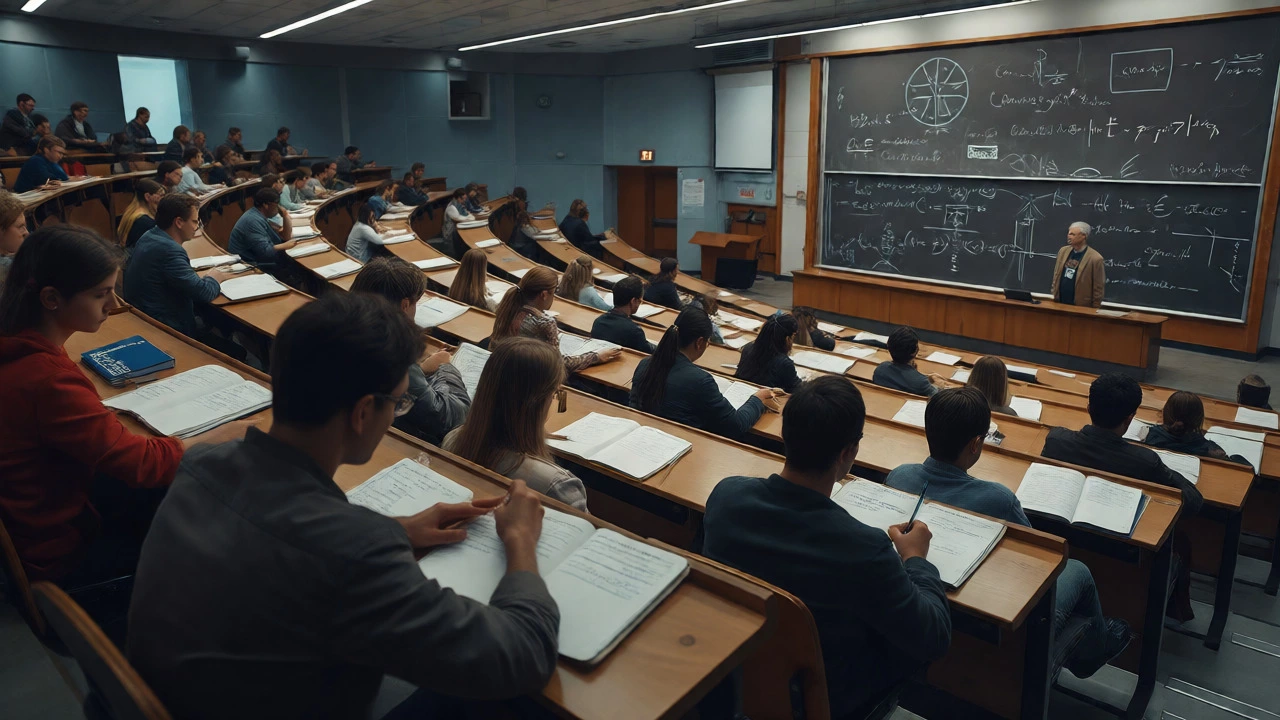
A four-year Bachelor of Science in Computer Science remains the gold standard for big tech companies and research roles. Why does it take four years when a bootcamp takes three months? Because university teaches you how computers think, not just how to write code.
In the first two years, you might barely touch modern frameworks like React. Instead, you’ll study discrete mathematics, linear algebra, and algorithms. You’ll learn about memory management, operating systems, and compiler design. This foundational knowledge allows you to solve problems that haven’t been invented yet. If a new programming language becomes popular tomorrow, a CS graduate can pick it up in a week because they understand the underlying principles.
The last two years focus on specialization. You might choose tracks in artificial intelligence, cybersecurity, or software engineering. Many students also complete internships during summers, which often lead to full-time offers before graduation. If you aim for companies like Google, Microsoft, or Amazon, the degree signals rigorous training. However, if you just want to build websites or mobile apps, the extra two years of theory might feel unnecessary compared to a bootcamp.
Self-Study: The Wild Card
Can you teach yourself to code? Absolutely. Thousands of developers do it every year. But "self-study" doesn’t mean watching YouTube videos while eating dinner. To get hired, you need a structured plan. Most successful self-taught developers spend 6 to 12 months studying consistently.
The biggest hurdle isn’t difficulty; it’s consistency. Without a teacher forcing deadlines, many people stall after learning basic syntax. They know how to write a function but don’t know how to structure a large project. To succeed, treat it like a job. Dedicate 15-20 hours per week. Use resources like freeCodeCamp, The Odin Project, or Coursera.
Here’s a realistic self-study roadmap:
- Months 1-2: Learn HTML/CSS and basic JavaScript. Build simple static sites.
- Months 3-4: Dive deep into JavaScript. Understand closures, async/await, and DOM manipulation.
- Months 5-6: Pick a framework (React is safest) and a backend technology (Node.js). Connect them.
- Months 7-9: Build three serious projects. Deploy them online. Learn Git version control properly.
- Months 10-12: Polish your resume, practice LeetCode problems, and start applying.
If you only have 5 hours a week, double these timelines. Self-study rewards patience and persistence more than raw intelligence.
Factors That Change Your Timeline
Your background matters more than you think. If you already work as a QA tester or graphic designer, you likely understand digital workflows and logical problem-solving. You might shave off 20% of the estimated time. Conversely, if you’ve never written a line of code and struggle with abstract math, expect the process to take longer.
Another factor is the specific tech stack. Learning Python for data analysis is different from learning C++ for game development. Web development (JavaScript ecosystem) has a lower barrier to entry and visible results quickly, which keeps motivation high. Systems programming languages require deeper conceptual understanding upfront, slowing down early progress.
Finally, consider your goal. Do you want a job immediately, or do you want to master the craft? A bootcamp prepares you for a junior role. A degree prepares you for a long-term career growth. Self-study lets you pivot quickly but may leave gaps in fundamental knowledge that surface later in senior roles.
Which Path Should You Choose?
Pick based on your constraints, not just curiosity.
Choose a Bootcamp if: You need a job within 6 months, you have savings to support yourself during full-time study, and you thrive under pressure. It’s expensive ($10k-$20k) but efficient.
Choose a Degree if: You are fresh out of high school, you want to keep doors open for non-coding tech roles (like product management), or you aim for top-tier tech firms that filter by credentials. It’s slower but provides depth.
Choose Self-Study if: You are on a tight budget, you already have a flexible schedule, and you are highly disciplined. It’s cheap but risky without accountability.
Remember, the clock starts ticking when you write your first line of code. Whether it takes three months or four years, the destination-a career in tech-is achievable. The key is matching the method to your lifestyle. Don’t let the fear of a long timeline stop you from starting today.
Is a coding bootcamp really enough to get hired?
Yes, many hiring managers value practical portfolios over degrees. However, you must demonstrate strong problem-solving skills and communication abilities. Bootcamps help with the technical side, but networking and interview prep are crucial for landing the offer.
Can I learn coding in 3 months?
You can learn the basics and build simple applications in 3 months if you study full-time. However, becoming job-ready usually takes closer to 6 months to allow time for debugging complex issues, learning deployment tools, and preparing for technical interviews.
Do employers prefer degrees over bootcamps?
It varies by company. Large corporations and legacy banks often still prefer degrees. Startups and tech-focused companies increasingly prioritize skills and portfolios. Many now accept bootcamp graduates if they pass rigorous technical assessments.
How many hours a day should I study?
For bootcamps, expect 8-10 hours daily. For self-study, 2-4 hours daily is sustainable for most people working other jobs. Quality matters more than quantity; focused, active coding beats passive video watching.
Is math required for coding school?
For web development, basic arithmetic and logic are sufficient. Advanced math like calculus is rarely used in day-to-day coding unless you go into data science, machine learning, or graphics programming. Computer science degrees, however, will require significant mathematical coursework.