
Want to become a teacher but don’t want to spend years in school? You’re not alone. Many people are looking for a way to switch careers or start teaching without a five-year degree. The good news? In 2026, there are faster paths than ever - especially if you’re in Australia, the U.S., the U.K., or Canada. The fastest program to become a teacher can take as little as 6 months, depending on where you live and what type of teaching you want to do.
What’s the quickest route to teaching? It depends on your location
In Australia, the fastest path is through a Graduate Diploma in Education (GradDipEd). If you already have a bachelor’s degree in any subject - say, biology, history, or even engineering - you can complete this program in 12 to 18 months full-time. But some universities, like the University of Southern Queensland and Monash University, offer intensive 12-month versions with full-time placement. That’s faster than a traditional four-year Bachelor of Education.
In the U.S., alternative certification programs (ACPs) are the go-to for career changers. States like Texas, Florida, and California have streamlined these programs. For example, Teach For America and Relay Graduate School of Education let you start teaching in a classroom within 6 to 10 weeks after passing basic skills tests and completing a short training module. You’ll earn your full teaching license while working, usually within 1 to 2 years.
In the U.K., the School-Centred Initial Teacher Training (SCITT) and Teach First programs offer fast-track routes. Teach First, for instance, places you in a classroom in September after a 6-week summer training. You’re paid as a teacher from day one and earn Qualified Teacher Status (QTS) in one year.
What you need before you start
None of these fast programs work if you don’t have the basics. Here’s what most require:
- A bachelor’s degree (any field, no need for education)
- Background check (police clearance)
- Basic literacy and numeracy test (like the LANTITE in Australia or Praxis Core in the U.S.)
- Proof of English proficiency (if you’re an international applicant)
You don’t need teaching experience. You don’t need to have worked with kids. But you do need to be ready to jump into a classroom with real students - often with little warning.
How fast can you really start teaching?
Let’s break it down by timeline:
- Weeks 1-6: Apply, pass tests, complete orientation. Some programs like Teach First or Texas ACPs have summer intakes - you start training in June and begin teaching in August.
- Weeks 7-20: Classroom placement begins. You’re co-teaching with a mentor. You’re getting paid. You’re learning on the job.
- Months 6-12: Complete online coursework, submit lesson plans, pass final assessments. In Australia, you’ll finish your GradDipEd. In the U.S., you’ll pass your state’s licensing exam.
- Month 12-18: Full certification. You’re now a licensed teacher with full rights to teach.
That’s 12 to 18 months from zero to certified teacher. Some people finish even faster - especially if they’ve already completed prerequisite exams or have prior experience working with youth in camps, tutoring, or volunteering.
What kind of teaching can you do right away?
Fast-track programs don’t give you a license to teach any subject anywhere. They’re usually tied to high-need areas:
- Math and science teachers (especially in secondary schools)
- Special education support staff
- English as a Second Language (ESL) roles
- Regional or rural schools (where staffing is short)
Don’t expect to walk into a private school or teach early childhood right away. Those roles usually require traditional degrees. But if you’re okay with teaching Year 7-12 math in a public school in a regional town - you’ve got options.
Real stories: Who’s doing this?
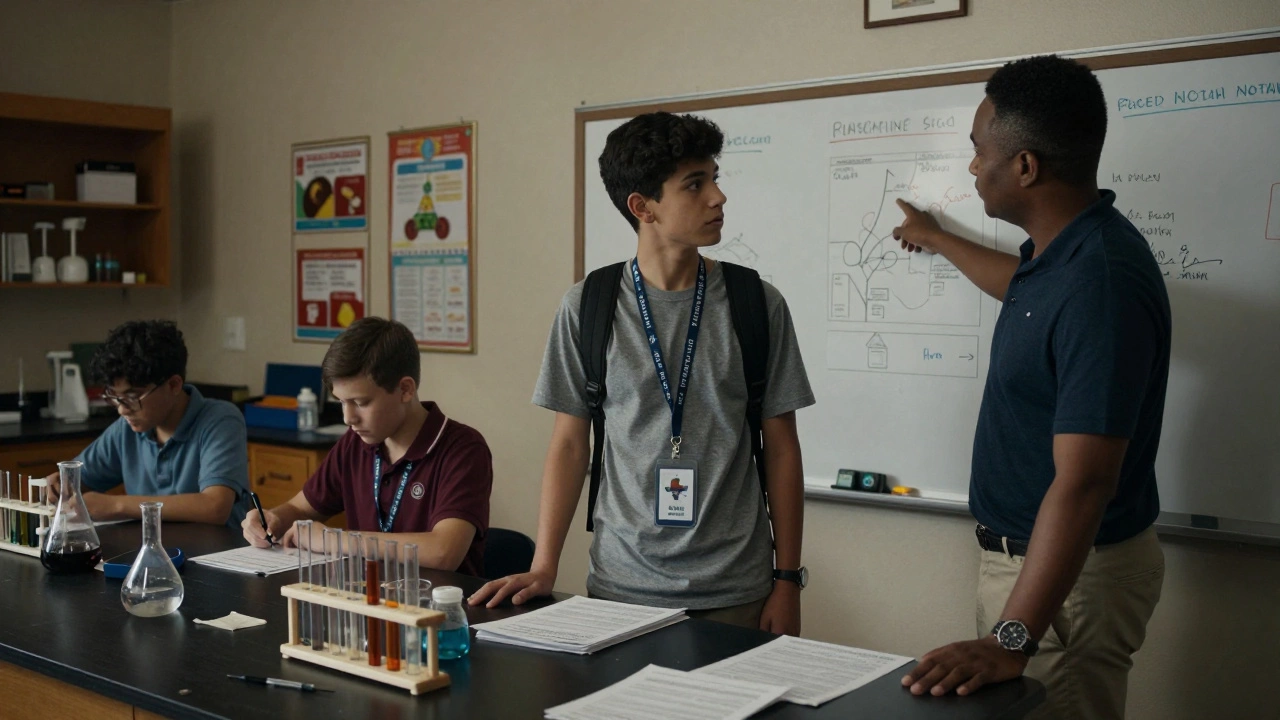
Emma, 32, was a graphic designer in Melbourne. She loved working with teens at her nephew’s school. In January 2025, she applied to the University of Melbourne’s accelerated GradDipEd. She passed her LANTITE in March, started teaching Year 9 math in April, and graduated with full certification in December 2025. She’s now a permanent teacher at a public high school.
James, 28, was a warehouse supervisor in Texas. He took the Texas Education Agency’s Alternative Certification Program in June 2025. He completed 30 hours of online training, passed the TExES exam by August, and started teaching 8th grade science in September. He’s earning $52,000 a year and finishing his degree online.
What’s the catch?
These programs are fast - but they’re intense. You’re not just studying. You’re working full-time in a classroom, often with 30+ students, while also completing assignments, grading, and attending evening workshops. Burnout is real. Many people drop out in the first 3 months because they didn’t expect the workload.
You also won’t get the same depth of pedagogy as a traditional education degree. You’ll learn how to manage a classroom and deliver lessons, but you might not dive deep into child psychology, curriculum design, or inclusive education unless you seek it out.
And while you’re earning a salary, you’re not always earning benefits right away. Some programs are contract-based for the first year. Check if your program offers health insurance, superannuation (in Australia), or pension contributions.
How to pick the right fast-track program
Not all fast programs are equal. Here’s how to choose:
- Look for state or government-approved programs. Avoid private for-profit schools that promise certification but don’t lead to licensing.
- Check if the program leads to full certification, not just a temporary permit.
- Ask: “Do graduates get hired?” Contact alumni on LinkedIn. Ask about job placement rates.
- Make sure you can do it while working. Some programs require full-time attendance. Others let you study evenings and weekends.
- Confirm funding options. Some programs offer scholarships, stipends, or loan forgiveness for teaching in underserved areas.
In Australia, visit the Australian Curriculum, Assessment and Reporting Authority website for approved programs. In the U.S., go to your state’s Department of Education site. In the U.K., check the Department for Education’s Teach First and SCITT listings.

What comes after certification?
Once you’re certified, you’re not done learning. The first 3 years of teaching are the hardest. Most teachers who stick it out say they didn’t feel confident until year three. But now you’ve got your foot in the door.
After certification, you can:
- Apply for permanent positions in public schools
- Pursue a Master of Teaching (if you want to move into leadership or curriculum roles)
- Specialize in areas like special education, gifted programs, or vocational training
- Teach online or in adult education centers
Many fast-track teachers end up staying in the profession longer than traditional grads - because they chose teaching as a second career, not a default path.
Is this right for you?
Ask yourself:
- Do I love working with teenagers or young kids - even when they’re difficult?
- Can I handle stress, long hours, and emotional fatigue?
- Am I okay with starting at the bottom, even if I’ve had a successful career before?
- Do I want to teach in a school that’s under-resourced? (That’s where most fast-track teachers are placed.)
If you answered yes to most of these, then yes - this path is for you.
What if I don’t have a bachelor’s degree?
Then you need to start with a degree first. There’s no shortcut around that. But you can do it fast: in Australia, you can complete a 3-year bachelor’s degree in education or your chosen subject, then move straight into a 1-year GradDipEd. Total time: 4 years. Still faster than the old 5-year route.
Or, look into diploma-to-degree pathways. Some TAFEs in Australia offer Certificates IV in Education Support that can stack into a bachelor’s. It’s not the fastest, but it’s a stepping stone.
Final thoughts
The fastest way to become a teacher isn’t about cutting corners. It’s about cutting out the unnecessary parts. You don’t need to spend four years studying pedagogy before you ever step into a classroom. You need to learn by doing - with support.
By 2026, the world needs more teachers - not more theory. If you’re ready to jump in, there’s a path waiting. Just make sure it’s the right one for your location, your goals, and your resilience.
Can I become a teacher in 6 months?
Yes - but only in some countries and under specific programs. In the U.S., you can start teaching in 6 weeks with an alternative certification program, but full licensing takes 1-2 years. In Australia, you need at least a bachelor’s degree first, so the fastest route is 12-18 months. No program gives you full certification in 6 months without prior qualifications.
Do I need a degree to become a teacher?
Yes, in nearly all countries. You must have a bachelor’s degree in any subject before entering a teacher certification program. The exception is some early childhood or teaching assistant roles, but those aren’t full teaching positions with classroom leadership.
Are fast-track teachers paid the same as traditional teachers?
In public schools, yes - once you’re certified, you’re on the same pay scale. In the U.S., alternative certification teachers are paid the same as other public school teachers from day one. In Australia, GradDipEd students are often paid as graduate teachers during placements. Private schools may pay differently, but public systems follow standardized pay bands.
Can I teach in another country with a fast-track certification?
It’s possible, but not automatic. Each country has its own recognition rules. For example, an Australian GradDipEd is not automatically valid in the U.K. You’ll need to apply for credential evaluation through the local education authority. Some countries, like New Zealand and Singapore, have mutual recognition agreements with Australia and the U.S., which helps.
What’s the failure rate in fast-track programs?
About 20-30% of participants leave before finishing, especially in the first 3 months. The main reasons are workload, lack of support, and underestimating the emotional demands. Programs with strong mentorship and part-time options have higher completion rates - look for those.
Is teaching through a fast-track program respected?
Yes, especially in public schools. Most school systems now see alternative certification as a vital way to fill staffing gaps. Many principals prefer candidates with real-world experience (like former engineers or nurses) over traditional grads who’ve never worked outside school. Your background can be an asset, not a drawback.
Next steps: Check your state or country’s Department of Education website for approved fast-track programs. Apply before the next intake - most have deadlines 3-6 months in advance. Don’t wait for the perfect moment. The classroom needs you now.