
Coding Path Math Estimator
Not sure if your math skills are "enough"? Select the career path you are interested in to see the actual math requirements and key concepts you'll need.
Path Details
Basic
The Big Myth About Coding and Calculus
You've probably heard the horror stories. Someone tells you that if you want to write a single line of code, you need to be a human calculator or have a PhD in advanced trigonometry. This fear keeps thousands of talented people away from math for coding, assuming they aren't "smart enough" because they struggled with algebra in high school. Here is the truth: for about 90% of programming jobs, you don't need to be a math genius. You just need to be able to think logically.
Think about the apps you use every day. Does a social media feed require solving differential equations to display a post? Does a food delivery app need complex calculus to show you where your driver is? Not really. Most of the time, coding is more about organizing data and following a set of instructions than it is about crunching numbers. If you can add, subtract, multiply, and divide, you already have the baseline tools for a huge chunk of the software world.
Quick Takeaways
- Most developers use basic arithmetic (addition, subtraction, etc.) daily.
- Logical thinking and problem-solving are more important than memorizing formulas.
- Specific fields like Game Dev or AI do require heavy math, but most web and app dev does not.
- You can learn the necessary math as you go; you don't need to master it first.
Where Logic Beats Algebra
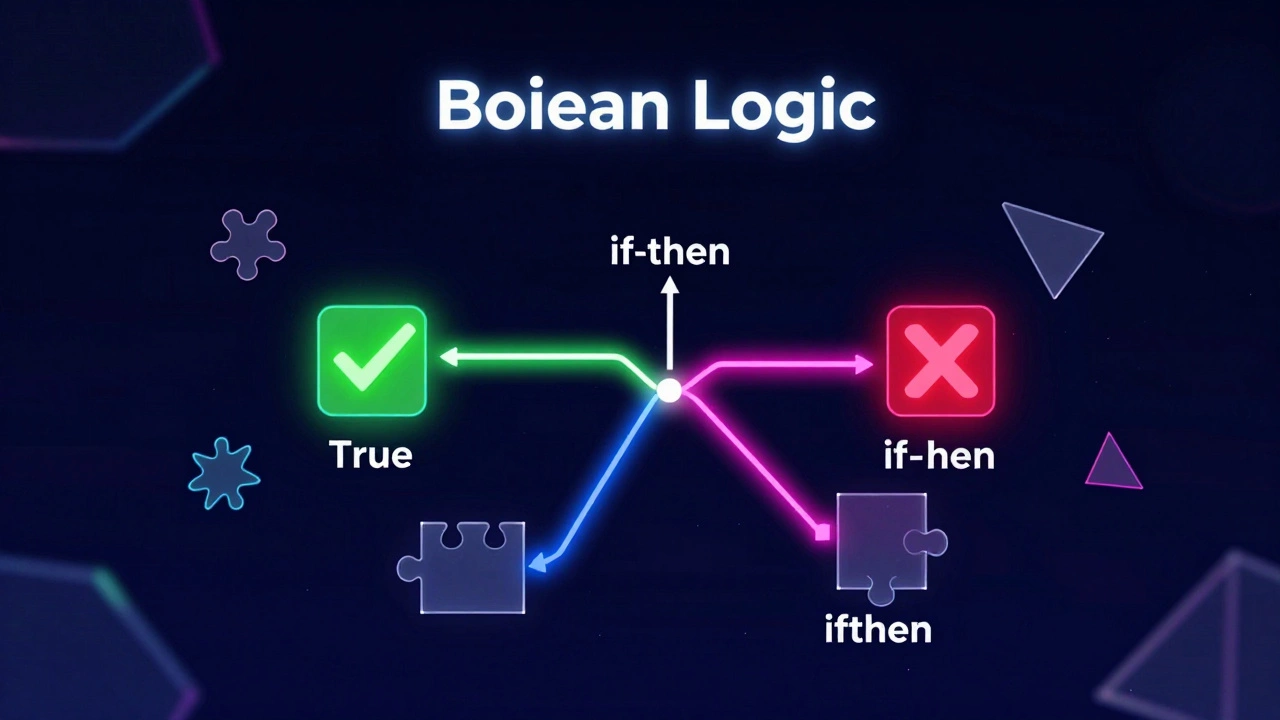
In the world of software, we talk a lot about Logic is the formal principles of reasoning that determine if a statement is true or false. This is the real "math" of coding. Instead of solving for X in a textbook, you're solving for "What happens if the user forgets to enter their email address?"
Most coding involves creating "if-then" scenarios. For example, if the user is logged in, then show them their dashboard; else, send them to the login page. This is Boolean logic, and it's far more intuitive than the stuff you did in 11th-grade geometry. You aren't calculating the area of a trapezoid; you're mapping out a flow of events. If you enjoy puzzles or strategy games, you already have the brain wiring needed for this.
Different Paths, Different Math Needs
Not all coding is created equal. Depending on what you want to build, your relationship with numbers will change. It's helpful to see where you fit in the landscape of Software Engineering is the systematic application of engineering principles to the development of software.
| Field | Math Level | Key Concepts Used |
|---|---|---|
| Web Development (Frontend) | Basic | Percentages, basic geometry for layout |
| Web Development (Backend) | Low-Medium | Logic, basic statistics for data |
| Mobile App Dev | Low-Medium | Basic algebra, coordinate systems |
| Game Development | High | Vector math, Trigonometry, Physics |
| Data Science / AI | Very High | Linear Algebra, Calculus, Probability |
When You Actually Need the Hard Stuff
Let's be honest about the "hard" parts. If you want to build a physics engine for a 3D game, you can't escape Trigonometry is the branch of mathematics dealing with the relations of sides and angles of triangles. You'll need to know how to calculate angles so a character jumps in a realistic arc. Without it, your character would just move in stiff, robotic straight lines.
Similarly, if you're diving into Machine Learning is a type of artificial intelligence that allows software applications to become more accurate in predicting outcomes without being explicitly programmed, you'll encounter Linear Algebra and Calculus. These are used to optimize how a model "learns" from data. But here's the secret: many people use libraries like TensorFlow is an open-source library for machine learning developed by Google or PyTorch. These tools do the heavy lifting for you. You don't always need to derive the formula by hand; you just need to understand what the formula is doing to the data.
The "Learn as You Go" Strategy
The biggest mistake beginners make is trying to "finish" math before they start coding. They spend six months studying algebra books and then burn out before they ever write a line of Python is a high-level, interpreted programming language known for its readability and versatility. This is a waste of time.
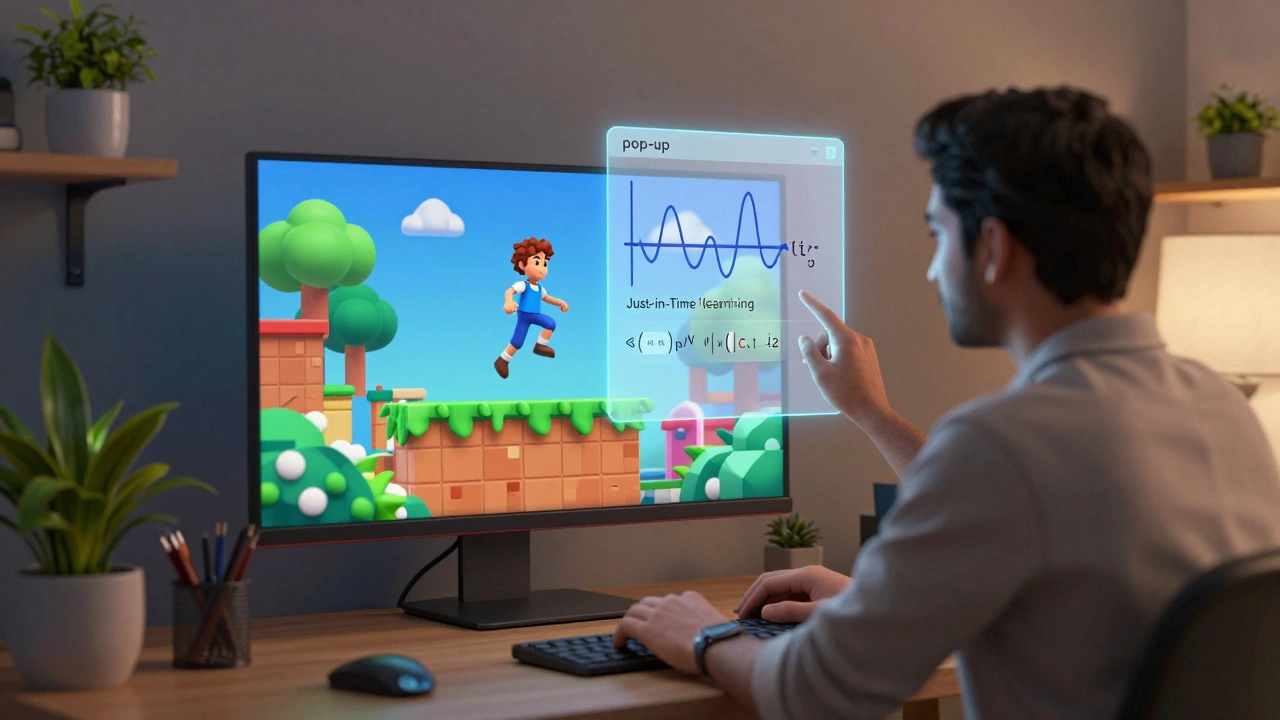
The better approach is "Just-in-Time' learning. Start building a project. Maybe you're making a simple calculator or a weather app. Eventually, you'll hit a wall where you realize, "I actually need to know how to calculate a percentage here." At that moment, go watch a 10-minute YouTube video on percentages, apply it to your code, and keep moving. Math makes way more sense when it's solving a real problem in front of you rather than an abstract problem in a textbook.
Developing Your Problem-Solving Muscle
Coding is less about math and more about Algorithms is a finite set of unambiguous instructions that produce an output from a set of inputs. An algorithm is just a recipe. If you can explain how to make a peanut butter and jelly sandwich in step-by-step detail, you're already thinking algorithmically.
To get better at this, stop worrying about formulas and start practicing decomposition. This means taking a big, scary problem and breaking it into tiny, manageable pieces. If you want to build a search bar, don't think about the "math of searching." Think about: 1. How do I get the text from the user? 2. How do I look through my list of items? 3. How do I show only the items that match the text? This process is the core of every single coding job on the planet.
Do I need to know Calculus to learn Java or Python?
Absolutely not. You can become a professional developer in Java or Python without ever touching a derivative or integral. Calculus is only necessary if you are building complex simulations, advanced graphics, or deep-level AI algorithms.
Which math topic is most useful for beginners?
Discrete Mathematics is the most relevant. It covers things like set theory, graph theory, and logic, which map directly to how databases work and how programs are structured. However, even this isn't a prerequisite-you can pick it up as you progress.
What if I actually hate math? Can I still code?
Yes. Many great developers hated math in school because it felt useless and abstract. Coding is concrete. Seeing your code actually do something on the screen often makes the mathematical side of it much more appealing and easier to understand.
Will I be limited in my career if I'm not good at math?
Only if you want to work in very specific niches like quantitative finance, high-end game engine architecture, or PhD-level research. For the vast majority of web, mobile, and enterprise software roles, your ability to write clean, maintainable code is far more valuable than your ability to do mental math.
Is there a specific course I should take to prepare?
Instead of a math course, take a basic "Introduction to Programming" course. You'll find that the "math" you need emerges naturally. If you really want a head start, look for a course on "Logic for Computer Science," as that will give you the best mental framework for coding.
Next Steps for the Math-Haters
If you're still nervous, start with something highly visual. Try HTML and CSS. There is almost zero math involved in making a webpage look pretty. Once you feel comfortable with the structure of the web, move into JavaScript. You'll start using basic math for things like calculating the width of a sidebar or timing an animation. By the time you get to the "scary" stuff, you'll have so much confidence in your coding ability that the math won't seem like such a barrier anymore.