CBSE Student Population Estimator
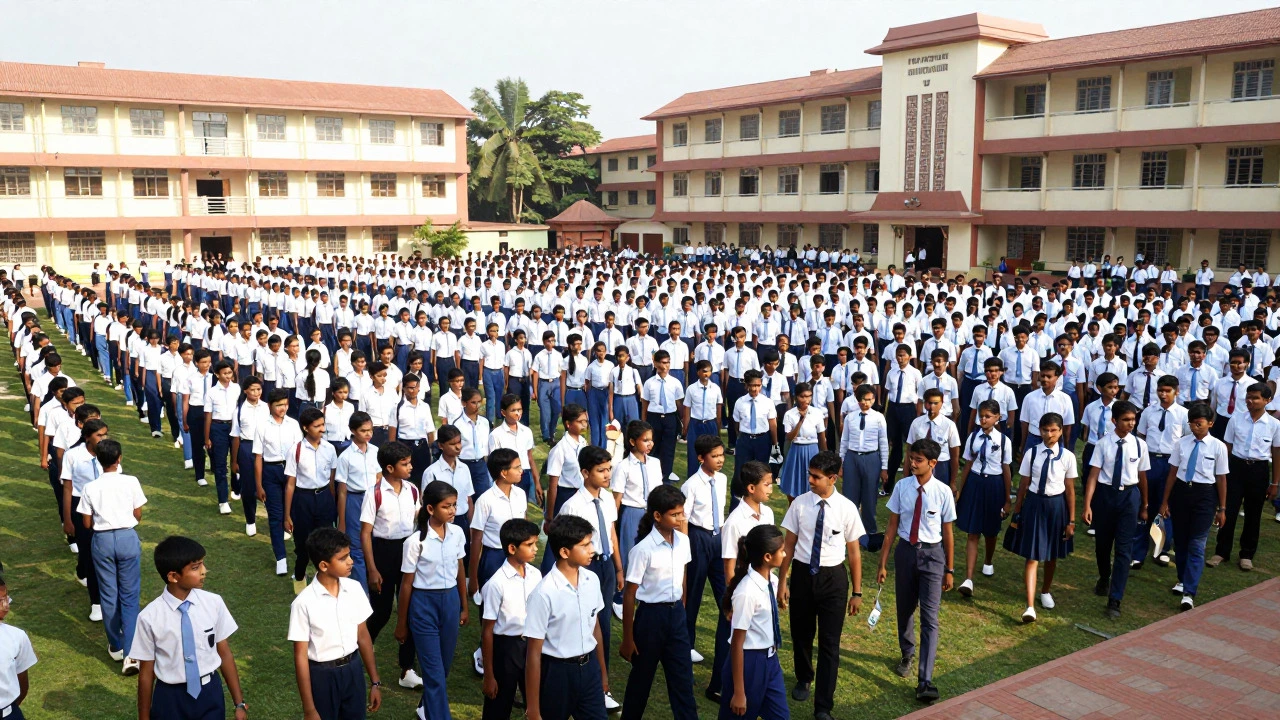
When you hear about the Central Board of Secondary Education (CBSE), the first thing that comes to mind is likely the intense pressure of Class 10 and Class 12 exams. But behind those exam halls lies a massive educational ecosystem. So, how many students are actually registered under this board? The short answer is roughly 3.8 million students as of the 2025-2026 academic cycle. However, the real story isn't just a single number; it's about where these students are, why the numbers fluctuate, and what this means for the future of schooling in India.
If you are a parent trying to gauge competition, an educator analyzing trends, or a policy maker looking at infrastructure needs, understanding the scale of the CBSE is crucial. Let’s break down the actual figures, the regional spread, and the shifts happening right now in 2026.
The Big Picture: Total Enrollment Figures
To get a clear picture, we need to look at the latest data released by the National Institute of Educational Planning and Administration (NIEPA) and the CBSE annual reports. For the academic year 2024-2025, which serves as the baseline for current 2026 projections, the total enrollment stood at approximately 3.75 to 3.8 million students across all affiliated schools.
This number includes students from nursery up to Class 12. It is important to note that "enrollment" can sometimes be inflated due to multiple registrations or administrative lags, so the active student body might be slightly lower, around 3.6 million. Here is how the distribution typically looks:
- Primary Stage (Classes 1-5): Approximately 1.2 million students.
- Middle School (Classes 6-8): Approximately 1.1 million students.
- Secondary Stage (Classes 9-10): Approximately 0.8 million students.
- Senior Secondary (Classes 11-12): Approximately 0.7 million students.
You will notice a natural drop-off as students move up the grades. This is normal in any large educational system due to migration, dropping out, or switching boards. By the time students reach Class 12, the cohort is significantly smaller than in primary school.
Where Are These Schools Located?
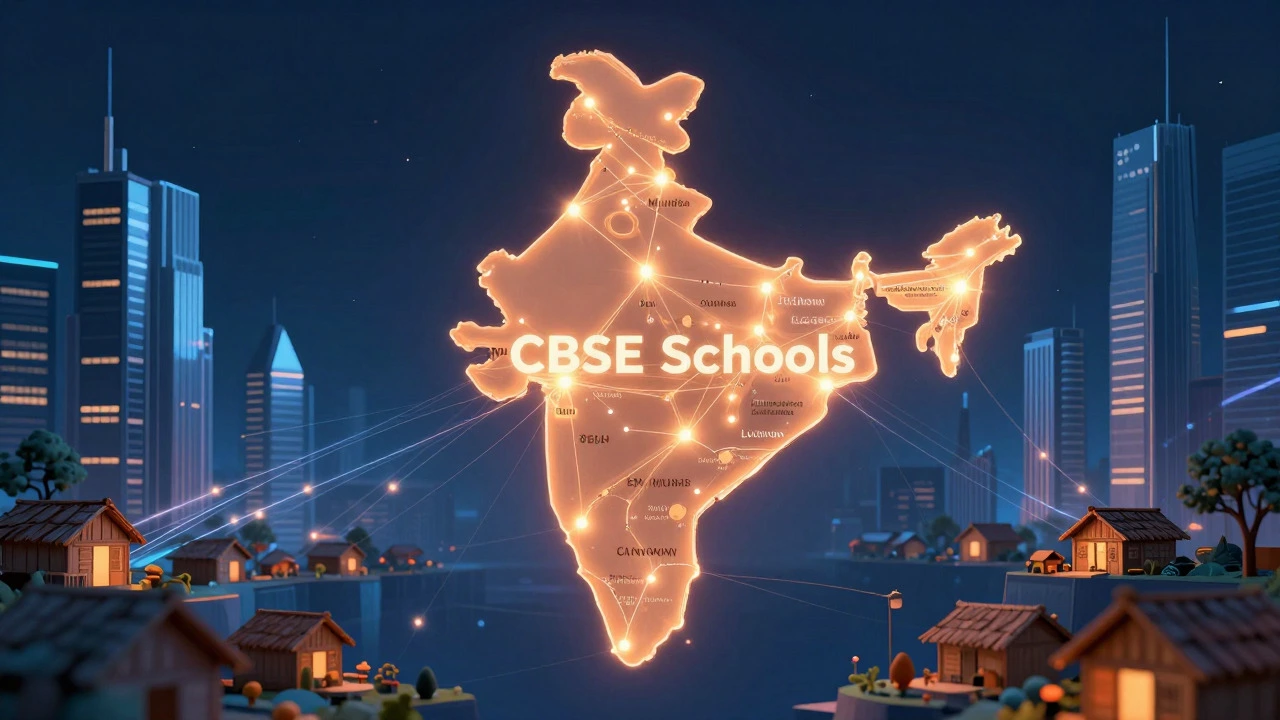
A common misconception is that CBSE is only for elite private schools in big cities. While it does have a strong presence there, the board has aggressively expanded into rural and semi-urban areas over the last decade. As of 2026, there are over 28,000 schools affiliated with the CBSE across India and abroad.
| State/Region | Affiliated Schools | Estimated Student Share |
|---|---|---|
| Delhi NCR | ~2,500 | High density, ~15% of total |
| Tamil Nadu | ~1,800 | Growing rapidly, ~12% |
| Uttar Pradesh | ~1,500 | Largest population base, ~10% |
| Maharashtra | ~1,400 | Steady growth, ~9% |
| Karnataka | ~1,200 | Tech hub influence, ~8% |
Delhi remains the heartland of the CBSE, but states like Tamil Nadu and Uttar Pradesh have seen a surge in affiliations. Why? Because parents in these regions increasingly view the CBSE curriculum as a gateway to national competitive exams like JEE and NEET. The uniformity of the syllabus makes coaching easier, regardless of where the student lives.
Public vs. Private: Who Is Enrolling?
This is where the data gets interesting. If you look at the type of schools, the split is not even. A significant majority of CBSE-affiliated schools are private institutions. Government schools, while numerous, often follow state boards or the newly integrated National Curriculum Framework (NCF) guidelines under the National Education Policy (NEP) 2020.
However, the government is pushing hard for more public schools to align with CBSE standards to ensure quality parity. In 2026, you will see a hybrid model emerging. Many Kendriya Vidyalayas (KVs) and Jawahar Navodaya Vidyalayas (JNVs) are already part of the CBSE fold, contributing hundreds of thousands of students. These schools serve middle-income and rural families, proving that CBSE is not just for the wealthy.
Private schools, on the other hand, dominate the urban landscape. They offer additional amenities and often integrate international curricula elements alongside the core CBSE syllabus. This dual-track system means that while the exam paper is the same, the learning experience can vary wildly depending on the school's resources.
Why Do Numbers Fluctuate Year to Year?
If you compare the student count from 2020 to 2026, you won't see a straight line upward. There are dips and spikes. What causes this?
- The Rise of State Boards: Some states, particularly West Bengal and Kerala, have strengthened their own state boards. Parents who value local language instruction or specific state-level college entrance advantages may opt out of CBSE.
- International Alternatives: With the rise of IB (International Baccalaureate) and ICSE (Indian Certificate of Secondary Education) variants, some affluent families choose alternatives. However, CBSE retains its dominance because it is perceived as more rigorous for engineering and medical entrances.
- Digital Disruption: Post-pandemic, some traditional brick-and-mortar schools struggled to retain students. Newer digital-first schools or hybrid models began appearing, though they still largely affiliate with CBSE to ensure their certificates are recognized.
- Policy Shifts: The implementation of NEP 2020 introduced flexibility in subject choices. This attracted students who wanted multidisciplinary paths, boosting CBSE's appeal over rigid state boards.
The Impact on Competitive Exams
One cannot talk about CBSE student numbers without mentioning the downstream effect on higher education admissions. Since the CBSE syllabus closely mirrors the pattern of JEE Main, NEET, and CUET (Common University Entrance Test), a large percentage of aspirants come from this board.
In 2026, out of the millions appearing for JEE Main, a disproportionate number are CBSE students. This creates a unique dynamic: the board is both a standardizer and a competitor. Schools train students specifically for these exams, sometimes at the expense of holistic development. This is a growing concern among educators who argue that the sheer volume of CBSE students puts immense pressure on limited seats in top institutes like IITs and AIIMS.
Future Trends: What Will Happen Next?
Looking ahead to 2027 and beyond, several trends will shape the CBSE student population:
- Consolidation: Smaller, poorly managed private schools may close or merge, leading to a slight dip in raw school counts but potentially higher average student numbers per remaining school.
- Rural Penetration: Government initiatives to digitize education will bring more rural schools into the CBSE fold, increasing the total headcount in tier-2 and tier-3 cities.
- Vocational Integration: With NEP's emphasis on vocational training, CBSE is introducing skill-based courses in Classes 6-12. This could attract students who previously avoided the board due to its academic-heavy reputation.
The number of students is likely to stabilize around the 4 million mark in the coming years. Growth will no longer be explosive but steady, driven by demographic trends and policy alignment rather than new school openings alone.
Understanding the Data Sources
Where do these numbers come from? The primary source is the Annual Status of Education Report (ASER) combined with official CBSE affiliation lists. However, there is always a lag. The data you see today reflects enrollments from the previous academic year. Real-time tracking is difficult because schools submit data annually during the affiliation renewal process.
Additionally, "ghost students"-those registered but not actively attending-can skew numbers. The CBSE has been cracking down on this with stricter verification processes, including biometric attendance pilots in some regions. This cleanup effort might cause temporary drops in reported numbers, which is actually a sign of healthier data integrity.
Conclusion: More Than Just a Number
So, when you ask "how many students are in CBSE," you are really asking about the backbone of India's secondary education. With nearly 4 million students, the CBSE is not just a board; it is a cultural phenomenon that shapes career trajectories for millions. Whether you are preparing for exams, choosing a school, or analyzing market trends, knowing the scale helps you navigate the system better. The board continues to evolve, balancing tradition with modern demands, ensuring it remains the most sought-after affiliation for Indian families.
Is the number of CBSE students increasing or decreasing?
The number of CBSE students has been steadily increasing over the past decade, currently hovering around 3.8 million. While growth has slowed compared to the early 2010s, it remains positive due to expansion in rural areas and the preference for CBSE among aspirants of competitive exams like JEE and NEET.
How many schools are affiliated with CBSE in India?
As of 2026, there are over 28,000 schools affiliated with the CBSE across India and in various countries abroad. This includes a mix of private, government, and central government-run schools like Kendriya Vidyalayas.
Which state has the highest number of CBSE students?
Delhi NCR has the highest density of CBSE schools and students. However, in terms of absolute numbers, states like Uttar Pradesh, Tamil Nadu, and Maharashtra also contribute significantly due to their large populations and high demand for CBSE-affiliated education.
Does CBSE include international students?
Yes, CBSE has a growing number of affiliated schools outside India, particularly in the Middle East, Africa, and Southeast Asia. These schools cater to expatriate Indian families and local students seeking an Indian curriculum. They are included in the overall global affiliation count but form a small percentage of the total student body.
Why do parents prefer CBSE over state boards?
Parents often prefer CBSE because its syllabus is aligned with national competitive exams like JEE, NEET, and CUET. Additionally, the uniform curriculum allows students to transfer between schools easily across different states, which is beneficial for families who relocate frequently for work.
How does the National Education Policy (NEP) 2020 affect CBSE enrollment?
The NEP 2020 encourages flexibility and multidisciplinary learning, which the CBSE has adopted. This has made the board more attractive to students interested in vocational skills and non-traditional subjects, potentially stabilizing or increasing enrollment as it becomes more inclusive.