Self-Study Fluency Timeline Estimator
Configure Your Learning Plan
Click to select multiple tools you plan to use regularly.
Estimated Results
Configure your settings and click calculate to see your estimated path to fluency.
Imagine sitting in a coffee shop in Sydney, ordering your latte without hesitation, or watching a complex sci-fi movie without reaching for the subtitles. For millions of learners worldwide, this is the dream. But here is the hard question that keeps many up at night: Can you actually reach true fluency in English entirely on your own, without paying for expensive tutors or enrolling in structured classes?
The short answer is yes. The long answer involves strategy, discipline, and a shift in how you view "learning." Fluency isn't just about knowing grammar rules; it’s about being able to think, react, and express yourself naturally. While traditional classrooms provide structure, self-directed learning offers something else: immersion tailored specifically to your interests and pace.
Defining True Fluency vs. Textbook Knowledge
Before you start, you need to know what you are aiming for. Many people confuse Textbook Proficiency with knowing vocabulary and grammar rules but struggling to speak spontaneously with actual fluency. If you can pass a written exam but freeze when someone asks you a casual question, you aren't fluent yet.
True fluency means three things:
- Comprehension: You understand native speakers, including slang, idioms, and different accents (like Australian, British, or American).
- Production: You can form sentences quickly without translating from your native language in your head.
- Nuance: You grasp tone, humor, and cultural context, not just literal meanings.
Self-study works best when you target these specific outcomes rather than just "studying English" generally. You aren't trying to memorize a dictionary; you are training your brain to process information in a new way.
The Immersion Strategy: Creating an English Bubble
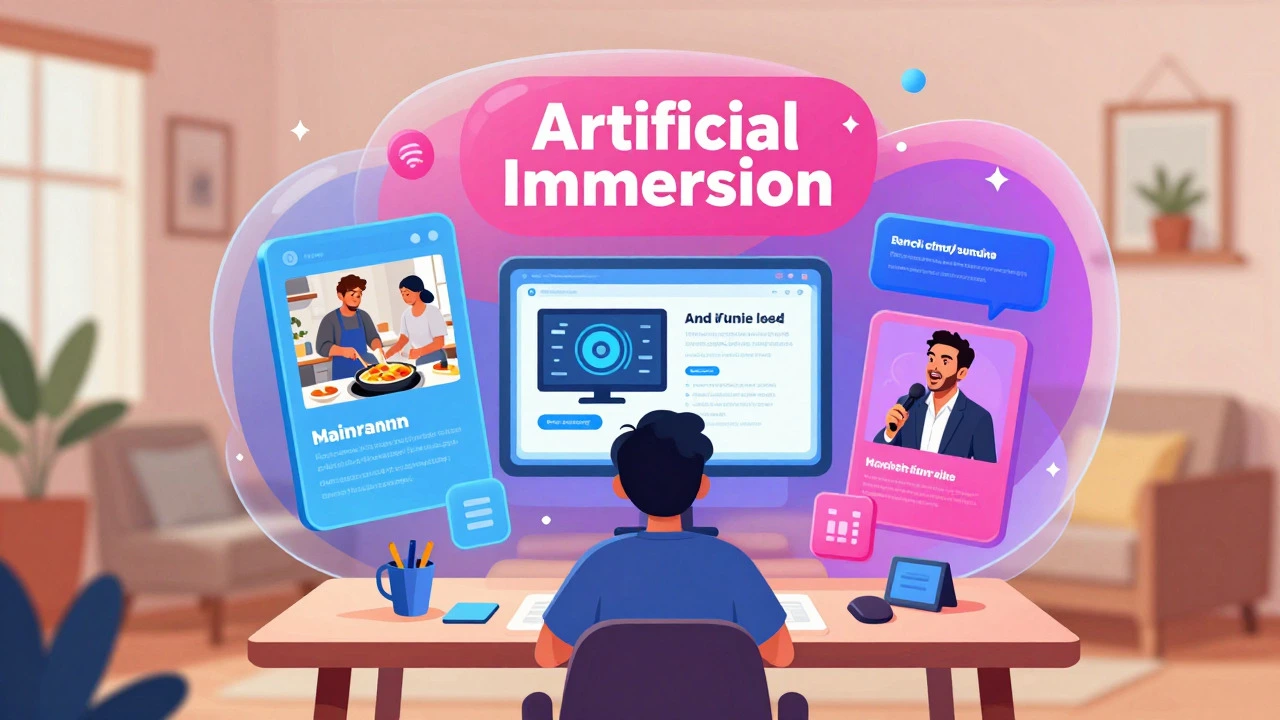
If you don't live in an English-speaking country, you have to build your own environment. This is called Artificial Immersion, which is the practice of surrounding yourself with the target language through media, technology, and daily habits. It sounds simple, but most people do it wrong. They listen to English while doing chores but don't actively engage with it. That’s passive listening, not learning.
To make immersion work, you need active engagement. Here is how to set up your daily routine:
- Change Your Digital Environment: Switch your phone, computer, and social media settings to English. This forces you to learn functional vocabulary like "settings," "privacy," and "notifications" in context.
- Curate Content You Love: Don't watch boring educational videos if they bore you. Watch cooking channels, tech reviews, or comedy sketches in English. When you enjoy the content, your brain retains the language better because it associates English with pleasure, not stress.
- The Shadowing Technique: This is a powerful tool for solo learners. Listen to a short audio clip of a native speaker, pause it, and repeat exactly what they said, mimicking their speed, intonation, and emotion. Do this for 10 minutes a day. It trains your mouth muscles to move correctly.
Consistency beats intensity. Thirty minutes of focused shadowing every day is far more effective than five hours of cramming once a week.
Input Hypothesis: Reading and Listening for Growth
Linguist Stephen Krashen proposed the "Input Hypothesis," which suggests we acquire language best when we understand messages that are slightly above our current level. He called this "i+1," where "i" is your current ability and "+1" is the next step up. If the material is too easy, you learn nothing. If it's too hard, you get frustrated and quit.
For self-learners, finding this sweet spot is crucial. Start with graded readers-books written specifically for language learners-or news sites designed for non-native speakers. As you improve, transition to native-level content. Read articles on topics you already know well. If you love gardening, read gardening blogs in English. Since you already understand the concepts, your brain focuses on the language structure instead of trying to decode both the topic and the words simultaneously.
Listening is equally important. Podcasts are excellent for this because they often cover specific topics in depth. Try listening to the same episode multiple times. First, listen for general ideas. Second, listen for specific words you missed. Third, try to summarize what you heard out loud. This multi-layered approach builds deep comprehension.
Output: How to Practice Speaking Alone
This is the biggest hurdle for solo learners. How do you practice speaking if no one is there to talk to? The secret is to create opportunities for output, even if it feels awkward at first. Speaking is a physical skill, like playing guitar. You have to practice the movements.
Here are three effective ways to practice speaking alone:
- Talk to Yourself: Narrate your day as you go about it. "I am making coffee now. I need to find a mug. Oh, the milk is empty." It sounds silly, but it connects your thoughts directly to English words, bypassing translation.
- Record Yourself: Use your phone to record a one-minute monologue on a random topic. Listen to it. You will notice errors in pronunciation or grammar that you didn't catch while speaking. Compare your recording to a native speaker saying similar things. This feedback loop is invaluable.
- Write and Speak: Write down what you want to say, then read it aloud. Over time, try to skip the writing step and speak directly. This bridges the gap between your internal knowledge and external expression.
Don't worry about perfection. Worry about communication. If you can convey your message clearly, you are succeeding. Grammar mistakes are normal, even for native speakers.
Using Technology as Your Tutor
You don't need a human tutor to get feedback. Modern technology has made self-correction easier than ever. Apps and AI tools can act as your personal language coach, available 24/7.
| Tool Type | Best For | Limitations |
|---|---|---|
| Language Apps (e.g., Duolingo) | Building basic vocabulary and habit formation | Lacks deep conversation practice; gamification can distract from real learning |
| AI Chatbots | Practicing written dialogue and getting instant grammar corrections | No auditory feedback; may sound robotic or unnatural |
| Pronunciation Apps | Improving accent and clarity using speech recognition | May not detect subtle intonation errors |
| Online Forums (Reddit, Discord) | Real-world interaction with native speakers and other learners | Requires confidence to initiate conversation; quality varies |
Integrate these tools into your routine. Use an app during your commute. Chat with an AI bot when you have ten free minutes. Join a Discord server related to your hobbies where English is the primary language. The key is variety. Different tools address different aspects of fluency.

The Role of Mindset and Consistency
Perhaps the most important factor in becoming fluent by yourself is your mindset. Learning a language is a marathon, not a sprint. There will be days when you feel like you're regressing. That's normal. Plateaus are part of the process.
Avoid the trap of comparing yourself to others. Someone who studied abroad for a year might seem more fluent than you, but their path was different. Focus on your own progress. Keep a journal of new words or phrases you learned each week. Look back after a month to see how much you've grown. Visible progress fuels motivation.
Also, embrace mistakes. In self-study, you control the environment. Make mistakes in private before you make them in public. Every error is data. Analyze why you made it, correct it, and move on. Shame kills language learning. Curiosity accelerates it.
When to Seek External Help
While you *can* become fluent by yourself, there are points where external help accelerates the process. If you hit a plateau where you can't seem to improve your speaking confidence, consider joining a language exchange group. These are communities where learners teach each other their native languages. It’s free and provides real human interaction.
Alternatively, if you need professional certification or business-level precision, a few sessions with a tutor can fine-tune your skills. Think of self-study as building the foundation and walls of your house. Tutors can help with the interior design and finishing touches. You don't need them for everything, but they can add value at specific stages.
How long does it take to become fluent in English by myself?
There is no fixed timeline, as it depends on your starting level, daily practice time, and learning methods. However, with consistent daily effort of 1-2 hours, many learners achieve conversational fluency within 6 to 12 months. Reaching advanced proficiency may take 2-3 years. The key is consistency over intensity.
Is it possible to learn English grammar without a teacher?
Yes, absolutely. Many online resources, books, and apps explain grammar clearly. Focus on understanding the logic behind the rules rather than memorizing them. Apply grammar rules in writing and speaking exercises to reinforce your knowledge. Contextual learning is more effective than isolated rule memorization.
What are the best free resources for self-taught English learners?
Free resources include YouTube channels dedicated to English learning, podcasts like "BBC Learning English" or "Luke’s English Podcast," and websites like News in Levels. Libraries also offer free access to e-books and audiobooks. Social media platforms like Reddit have active communities where native speakers help learners.
How can I improve my English pronunciation alone?
Use the shadowing technique with native audio clips. Record yourself and compare your pronunciation to the original. Pay attention to stress patterns and intonation, not just individual sounds. Online dictionaries often provide audio pronunciations for words, which you can use to check difficult terms.
Will self-study lead to a bad accent?
Not necessarily. While self-study requires more conscious effort to mimic native sounds, many self-taught learners achieve clear and understandable accents. Focus on clarity and intelligibility rather than eliminating all traces of your native accent. An accent is not a barrier to communication; lack of clarity is.