
Self-Taught Developer Roadmap & Timeline Calculator
Your Study Plan
Estimated Timeline
Daily Goal
Set your weekly hours to see your daily target.
Your Learning Path
Click steps to mark them as completed and track your progress.
You sit down at your laptop, open a blank text editor, and stare at the cursor blinking back at you. You want to build something-maybe a website, an app, or just a script to automate a boring task-but you don't know where to start. The internet is flooded with advice: some say you need a degree, others swear by expensive bootcamps, and a third group insists that if you can’t teach yourself Python in a weekend, you aren’t cut out for tech. So, the question remains: can you really code on your own?
The short answer is yes. But the long answer is complicated. Learning to code without a teacher is like learning to play guitar by watching YouTube videos. It’s possible, but it requires discipline, the right resources, and a strategy to avoid the common pitfalls that make most beginners quit within three months.
Why Most People Fail at Self-Study
If you’ve ever tried to learn a new skill alone, you know the struggle. In self-directed learning, the biggest enemy isn’t lack of talent; it’s lack of structure. When you enroll in coding classes, someone else has already designed the curriculum. They tell you what to learn next, when to take a break, and how to test your knowledge. On your own, you are both the student and the professor.
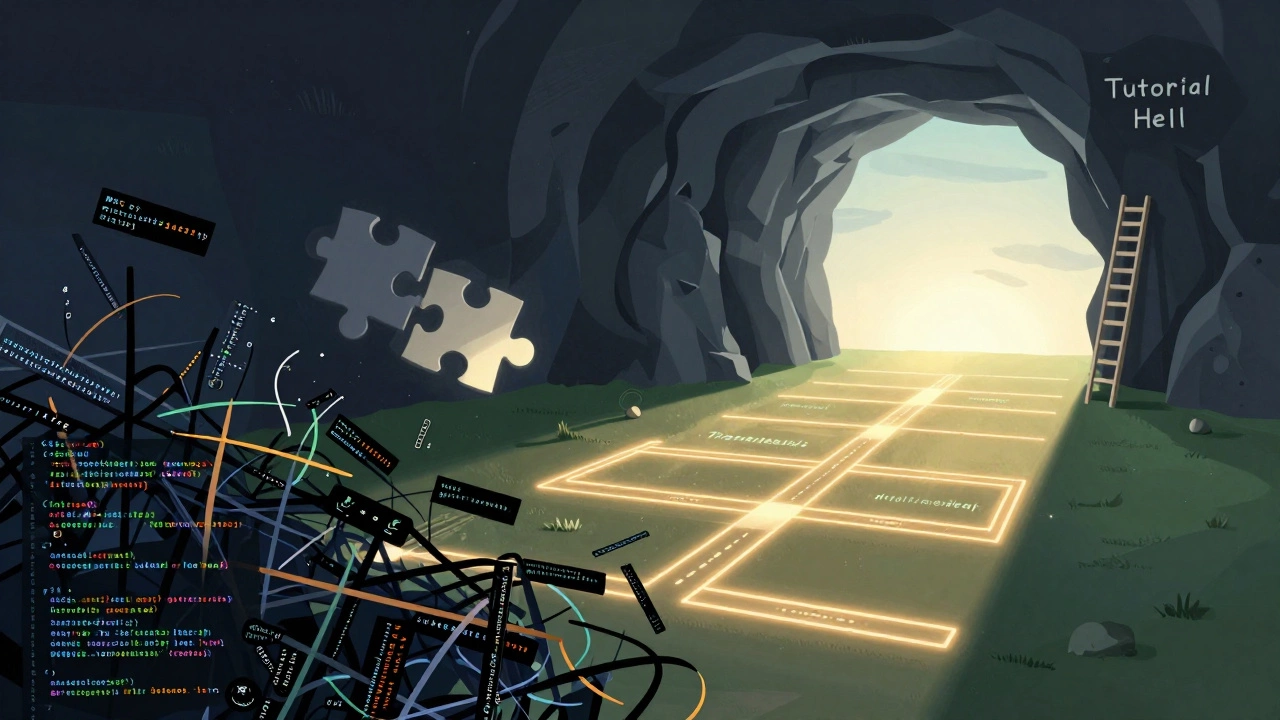
This leads to "tutorial hell." This is a state where you watch video after video, copying code line by line, feeling productive but unable to write anything from scratch. You understand the examples, but when faced with a blank page, your mind goes blank. Without a mentor to push you past comfort zones, it’s easy to stay stuck in passive consumption rather than active creation.
Another major hurdle is isolation. Coding is frustrating. You will spend hours debugging a missing semicolon or a misconfigured server. In a classroom or cohort-based program, you can ask a peer, "Hey, why isn’t this working?" When studying alone, you might give up because you don’t have immediate feedback. The loneliness of debugging can be surprisingly heavy.
The Advantages of Teaching Yourself
Despite the challenges, many successful developers are self-taught. Why? Because self-study offers flexibility and speed that traditional education often lacks. You can learn at 2 AM if that’s when you’re most focused. You can skip topics you find boring (like advanced calculus if you’re aiming for web development) and dive deep into areas that excite you.
Self-taught learners also develop strong problem-solving skills early on. Since you don’t have a teacher to hand you the solution, you learn to read documentation, search forums like Stack Overflow, and analyze error messages. These are actually the daily tasks of a professional software engineer. Employers value developers who can figure things out independently more than those who wait for instructions.
Cost is another factor. While free resources abound, even paid courses are significantly cheaper than university degrees or intensive bootcamps. With platforms like freeCodeCamp or The Odin Project, you can get a comprehensive education for zero dollars.
Building a Roadmap: What to Learn First
To succeed on your own, you need a map. Don’t jump between languages. Pick one path and stick to it for at least six months. Here is a realistic roadmap for a beginner:
- HTML & CSS: Start here if you want visual results. HTML structures content, and CSS styles it. You’ll see changes immediately, which keeps motivation high.
- JavaScript: This adds interactivity. It’s the language of the web. Learn variables, functions, loops, and DOM manipulation.
- A Framework: Once you grasp vanilla JavaScript, pick a framework like React or Vue. This helps you build larger applications.
- Version Control: Learn Git and GitHub. You cannot work in a team or manage your projects without it.
- Backend Basics: Eventually, you’ll need to store data. Learn Node.js or Python to handle server-side logic.
Notice that this list doesn’t include "learn everything." It focuses on employable skills. Avoid the temptation to learn C++ or Rust unless you have a specific reason. For most beginners, web development is the fastest route to building tangible projects.
Tools and Resources That Actually Work
The internet is noisy. To save time, stick to these proven resources:
- Documentation: MDN Web Docs is the gold standard for web technologies. Read it instead of relying solely on tutorials.
- Interactive Platforms: Codecademy or freeCodeCamp offer hands-on practice. They force you to type code, not just watch it.
- Project-Based Courses: The Odin Project is entirely project-based. It forces you to set up your local environment and build real apps.
- Community Forums: Join Discord servers or Reddit communities like r/learnprogramming. Asking questions publicly helps you learn faster.
When choosing tools, remember that the tool matters less than the habit. Using VS Code is fine, but using it every day is what counts.
Creating Your Own Accountability System
Since no one is grading your homework, you must create external pressure. Here are three strategies:
| Strategy | How It Works | Best For |
|---|---|---|
| Public Commitment | Post your daily progress on Twitter or LinkedIn. | People motivated by social recognition |
| Build in Public | Share your code on GitHub and explain your thought process. | Developing a portfolio while learning |
| Find a Study Buddy | Pair program weekly with another learner. | Those who need direct feedback |
Set specific goals. Instead of "I will learn JavaScript," say "I will build a todo list app by Friday." Specificity creates clarity. When you hit a wall, break the problem down into smaller pieces. If you can’t solve the whole problem, solve one tiny part of it.

When to Consider Paid Help
Self-study isn’t always the best option. If you’ve been trying for six months and feel lost, consider investing in structured help. Coding bootcamps provide immersion and career support. Online mentors can unblock you quickly. The key is knowing when you’re stuck due to laziness versus when you’re stuck due to lack of direction.
If you struggle with time management, a cohort-based course might keep you on track. If you struggle with concepts, a tutor can explain them differently than a video. There’s no shame in paying for efficiency if your goal is to change careers quickly.
Overcoming Imposter Syndrome
As you learn, you’ll realize how much you don’t know. This is normal. Even senior engineers Google basic syntax daily. Imposter syndrome thrives in isolation. Combat it by comparing yourself only to your past self. Did you understand loops last month? Now you understand asynchronous programming. That’s progress.
Focus on building, not just consuming. Every project you complete, no matter how small, proves your competence. Your GitHub profile becomes your resume. Employers care less about how you learned and more about what you can build.
Next Steps for Your Journey
Start today. Not tomorrow. Open your browser, go to a free resource, and write your first line of code. Expect to fail. Expect to be confused. But keep going. The ability to code is a superpower, and you absolutely can earn it on your own.
How long does it take to learn coding on your own?
It varies based on time commitment. Part-time learners (10-15 hours/week) typically reach job-ready proficiency in 6-12 months. Full-time learners (40+ hours/week) may achieve this in 3-6 months. Consistency matters more than intensity.
Do employers hire self-taught programmers?
Yes, many do. Tech companies increasingly focus on skills and portfolios over degrees. A strong GitHub profile with real projects demonstrates capability better than a certificate alone.
Is it better to join a bootcamp or self-study?
Bootcamps offer structure, networking, and career services, making them ideal for quick career changers. Self-study is cheaper and flexible, suitable for disciplined learners or those supplementing existing jobs.
What is the best first programming language?
JavaScript is recommended for web development due to its versatility. Python is great for data science and automation. Choose based on your end goal, but stick with one language initially.
How do I stay motivated when learning to code?
Build projects you care about. Connect with other learners online. Set small, achievable milestones. Remember that confusion is part of the learning process, not a sign of failure.