
Beginner Coder Income Estimator
Estimate your potential monthly earnings as a beginner coder. Select your primary activity and input your working hours to see realistic projections based on current market rates.
You spent the last three months grinding through Python tutorials. You can build a basic calculator and maybe scrape some data from a website. Now you're staring at your bank account, wondering if all that late-night debugging is actually going to pay off. The short answer is yes, beginner coders can make money, but not by landing a high-paying corporate job on day one. The path isn't linear, and it doesn't look like the success stories you see on LinkedIn where someone goes from zero to $100k in six months.
Here’s the reality: the market for "I know HTML" is saturated. But the market for "I can solve this specific small problem for you" is wide open. If you’re in Sydney or anywhere else with a tech scene, you don’t need to be a senior engineer to earn your first dollar. You just need to shift your mindset from "student" to "problem solver." Let’s break down exactly how beginners generate revenue, what the numbers look like, and where you should focus your energy right now.
The Myth of the Instant Job Offer
Most beginners think the only way to make money is to get hired full-time as a Junior Developer. Statistically, that’s tough. In 2026, many companies still prefer candidates with at least one year of commercial experience, even for junior roles. This creates a catch-22: you need experience to get a job, but you need a job to get experience.
So, do you wait six months for an internship while burning through savings? No. You start earning while you learn. The key is understanding that early-stage income rarely comes from writing complex backend architecture. It comes from low-complexity, high-volume tasks or niche fixes. Think of it less like being an architect and more like being a handyman. You might not be building skyscrapers yet, but you can definitely fix a leaky faucet (or a broken CSS layout) for cash.
Where Beginners Actually Earn Their First Dollars
If you try to compete on major freelance platforms like Upwork or Fiverr by bidding on "build me a Facebook clone," you will lose. You’ll be competing against agencies in lower-cost regions who can do it cheaper and faster. Instead, look for these specific niches where beginner skills are sufficient and demand is consistent.
- WordPress Fixes and Maintenance: Millions of small businesses run on WordPress. They don’t need custom plugins; they need someone to update themes, fix plugin conflicts, or change a font color without breaking the site. A beginner who understands PHP basics and CSS can charge AUD $50-$80 per hour for this. It’s tedious, but it pays immediately.
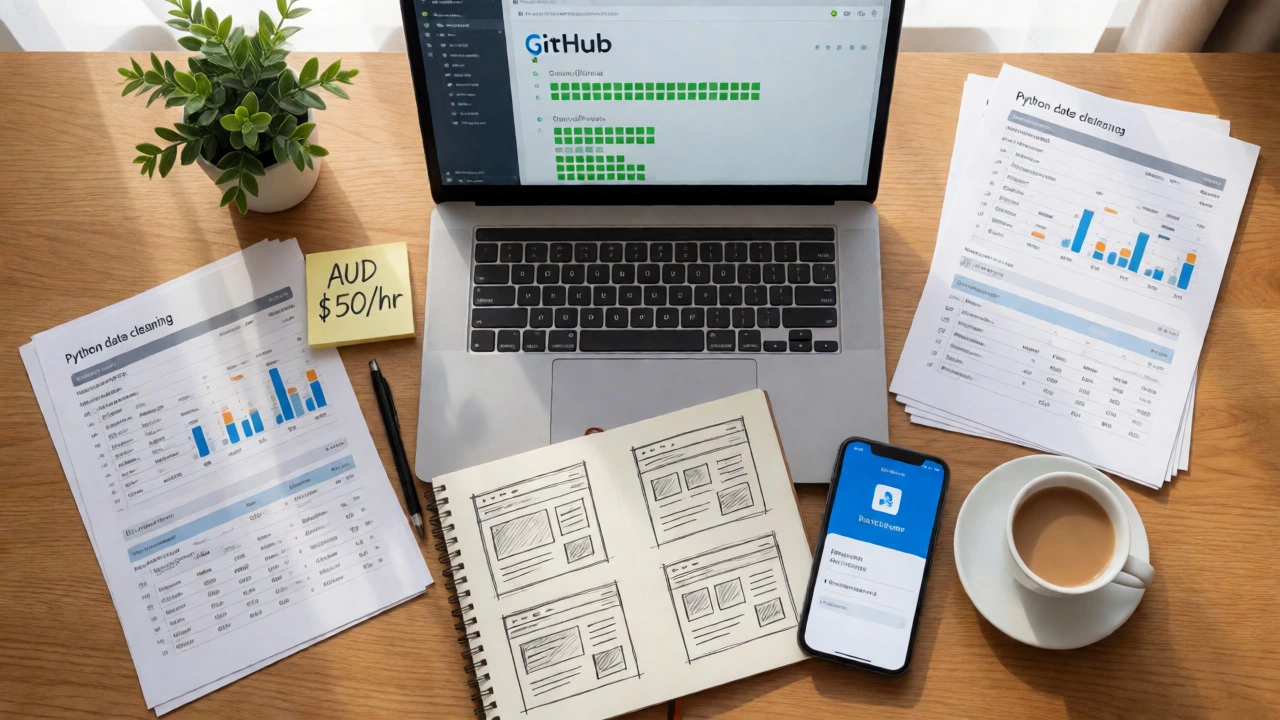
- Data Cleaning with Python: Small marketing agencies often have messy Excel sheets. They need data formatted for their CRM. If you know how to use Pandas in Python to clean, deduplicate, and format CSV files, you are valuable. This isn’t glamorous work, but it solves a painful business problem.
- Simple Automation Scripts: Can you write a script that automatically renames 500 photos based on their date taken? Or one that moves files from a download folder to organized directories? Local businesses or individuals will pay for these micro-automations because they save them hours of manual labor.
- Tutoring Other Beginners: This is ironic but true. Teaching what you learned last month is one of the best ways to reinforce your own knowledge. Platforms like Preply or local community boards allow you to teach basic JavaScript or Python logic to absolute novices. Your rate might be lower than a senior dev’s, but your explanation style is likely fresher and more relatable.
Realistic Income Expectations for 2026
Let’s talk numbers. Don’t expect to replace your full-time income immediately. Here is a realistic breakdown of what a beginner coder can expect to earn per month while working part-time (10-15 hours a week).
| Activity Type | Average Hourly Rate (AUD) | Monthly Potential (10 hrs/wk) | Difficulty Level |
|---|---|---|---|
| Freelance Web Fixes (HTML/CSS) | $40 - $60 | $1,600 - $2,400 | Low |
| Data Cleaning/Automation | $50 - $75 | $2,000 - $3,000 | Medium |
| Coding Tutoring | $35 - $50 | $1,400 - $2,000 | Low |
| Junior Internship (Paid) | $25 - $35 | $1,000 - $1,400 | High (Competition) |
Notice the trend? Direct client work (fixes and automation) pays better than internships initially because there’s no middleman taking a cut. However, finding those clients takes effort. You aren’t just coding; you’re also selling yourself.
The Portfolio Paradox: How to Show Value Without Experience
You might be thinking, "But I don't have any projects to show!" That’s your biggest hurdle. Clients don’t care about your certificate; they care about whether you can do the job. Since you lack commercial experience, you must manufacture proof of competence.
Stop building generic To-Do lists. Build things that solve real problems. Did you notice your local bakery’s website was slow? Fix it. Take screenshots before and after, measure the load time improvement, and put that case study on your portfolio. Did you automate a task for a friend’s non-profit? Document the process.
Your portfolio needs to answer one question: "Can this person deliver results?" Use GitHub not just as a storage bin, but as a showcase. Write clear README files. Explain why you chose a certain library. Comment your code. A messy repo suggests a messy mind; a clean repo suggests professionalism. This attention to detail is what separates a student who gets ignored from a beginner who gets hired.
Platforms vs. Networking: Where to Look?
There are two main channels for finding work, and they require different strategies.
Online Freelance Platforms: Sites like Upwork, Freelancer, and PeoplePerHour are global marketplaces. The advantage is volume-there are thousands of jobs posted daily. The disadvantage is competition. You are bidding against the world. To win here, you need to specialize. Don’t say "I am a web developer." Say "I specialize in fixing responsive design issues for Shopify stores." Specificity wins bids. Also, your profile needs to be flawless. Testimonials are gold, so consider doing your first two or three jobs for free or at a steep discount just to get five-star reviews.
Local Networking: This is underrated. Go to meetups. In Sydney, groups like SydneyJS or PyData Sydney are active. Talk to people. Tell them you are looking for small projects. Often, the best gigs come from word-of-mouth. A small business owner might mention they need help with a spreadsheet, and you can offer to script it. These jobs often pay better and have less competition because you’re not fighting for them online. Plus, face-to-face trust builds faster than digital profiles.

Common Pitfalls That Kill Beginner Earnings
Many beginners fail to monetize their skills not because they can’t code, but because they treat freelancing like a hobby. Here are the mistakes to avoid.
- Scope Creep: A client asks for "just one small change," which turns into three days of work. Always define the scope in writing. If they want more, they pay more. Learn to say, "That falls outside our agreed scope, but I can quote you for it."
- Underpricing Yourself: Beginners often charge $15/hour because they feel insecure. But low prices attract difficult clients who don’t respect your time. Start higher. You can always lower your rate later if you aren’t getting bites, but raising rates is harder.
- Ignoring Soft Skills: Coding is 50% technical, 50% communication. Can you explain why a bug happened in plain English? Are you responsive to emails? Do you meet deadlines? A mediocre coder who communicates well will often out-earn a brilliant coder who ghosts clients.
- Tax Neglect: If you are in Australia, remember that freelancing income is taxable. Set aside 30% of every payment for tax time. Don’t spend it all on new hardware.
Should You Keep Studying While Working?
Absolutely. Making money doesn’t mean you stop learning. In fact, earning money accelerates your learning. When you are paid to solve a problem, you learn faster because the stakes are real. You won’t skip documentation when a client is waiting. You won’t ignore edge cases when a bug costs you reputation.
Use your earnings to reinvest in your education. Buy a course on a technology you keep seeing in job ads. Attend a workshop. Upgrade your laptop if it slows you down. Treat your skill set as a business asset that needs maintenance.
The journey from beginner to professional isn’t a sprint. It’s a series of small wins. You land a $100 gig, then a $500 project, then a retainer contract. Each step builds confidence and credibility. So, can beginner coders make money? Yes. But you have to go out and find the problems worth solving, rather than waiting for someone to hand you a ticket number.
How much can a beginner coder earn per hour?
Beginners typically earn between AUD $30 and $60 per hour depending on the complexity of the task and the client's budget. Simple HTML/CSS fixes might command lower rates ($30-$40), while specialized Python automation or data cleaning tasks can fetch higher rates ($50-$75). Rates increase rapidly once you have 2-3 positive testimonials.
Do I need a degree to make money coding?
No, a degree is not required to start earning money as a beginner coder. Most freelance clients care about your ability to solve their specific problem, not your educational background. A strong portfolio demonstrating completed projects and good communication skills are far more important than a university diploma for entry-level freelance work.
What is the easiest language for beginners to monetize?
JavaScript (specifically for web development) and Python are the most accessible languages for beginners to monetize. JavaScript allows you to take on front-end web fixes and small interactive features, which are in high demand for small businesses. Python is ideal for data cleaning, automation scripts, and backend tasks that appeal to non-tech businesses needing efficiency improvements.
How long does it take to get the first paying client?
With active networking and a polished portfolio, beginners can secure their first paying client within 2 to 6 weeks. Relying solely on passive applications to large freelance platforms may take longer due to high competition. Proactive outreach to local businesses or offering services to friends' networks usually yields faster results.
Is it better to freelance or get an internship?
For immediate income, freelancing often pays better per hour but requires self-discipline and sales skills. Internships provide structured mentorship and team experience but often pay less or are unpaid. Many beginners benefit from a hybrid approach: keeping a part-time internship for experience while taking small freelance gigs for extra cash and portfolio variety.